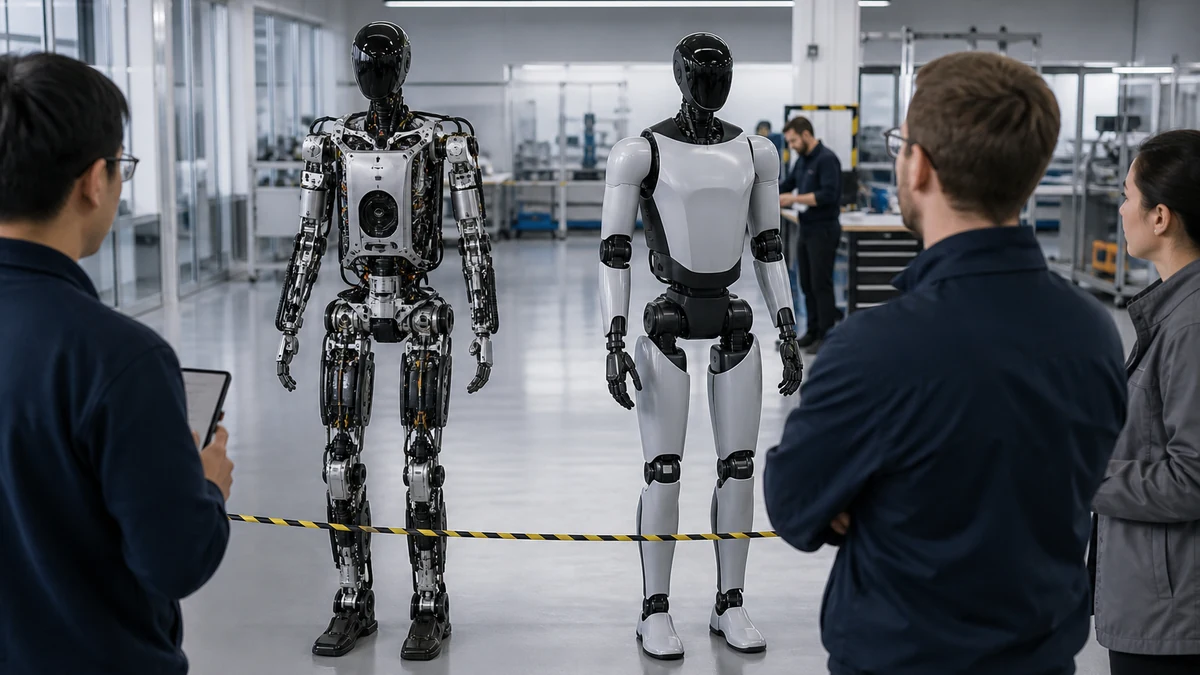
Tesla's official record supports a limited comparison. The official Gen 2 video introduced the December 2023 version with Tesla-designed actuators and sensors, improved hands, faster walking, lower total weight and an articulated neck. By January 2026, Tesla's Q4 2025 update described Gen 3 as a major upgrade from version 2.5, including its latest hand and the first Optimus design intended for mass production. Tesla has not published the numerical Gen 3 hand, speed, payload, weight or battery specifications needed for a conventional spec-versus-spec table.
The production story is also a plan rather than a delivered consumer product. Tesla's Q2 2026 update said the first-generation Fremont production lines were being installed and production was anticipated later in 2026, with initial builds intended for Optimus Academy training data and functionality development. There is still no public Gen 3 price, order route or customer delivery schedule. For the broader availability question, read the Tesla Optimus price and release guide.
Gen 2 documents the prototype; Gen 3 targets production
Tesla's December 2023 Gen 2 video and Q4 2023 update document the second generation as a prototype iteration with company-designed actuators and sensors and improved AI. The video description also identifies faster walking, lower total weight, faster and more capable hands, and an articulated neck. It does not provide the numerical values needed to reproduce or independently benchmark those improvements.
Tesla's Q4 2025 update uses a different comparison point for Gen 3: version 2.5. It says Gen 3 would bring major upgrades from version 2.5, include the latest hand and become the first design intended for mass production. Therefore, a headline that treats Gen 2 and version 2.5 as identical, or assigns an undisclosed Gen 3 number by subtraction, goes beyond the official record.
| Stage | Officially disclosed | Not publicly disclosed |
|---|---|---|
| Gen 2, December 2023 | Tesla actuators and sensors, improved hands and AI, faster walking, lower weight, articulated neck | Numerical hand DoF, speed, payload, weight, runtime and commercial price |
| Version 2.5 | Named by Tesla as the baseline from which Gen 3 makes major upgrades | A complete public specification sheet or a formal mapping to Gen 2 |
| Gen 3 plan, 2026 | Latest hand, mass-production intent, production-line plans | Numerical specifications, sale price, order page and customer delivery date |
The hand is central to the plan, but its numbers remain unpublished
Hands matter because a general-purpose humanoid must turn perception into stable contact across many object shapes. Tesla calls out faster and more capable hands for Gen 2 and the latest hand for Gen 3. Those descriptions support the direction of development; they do not reveal finger count, degrees of freedom, force range, tactile-sensor layout, cycle life or grasp-success distribution.
That missing detail is not a reason to invent a comparison. A meaningful hand evaluation would test representative objects, contact forces, two-handed coordination, recovery after slip and sustained cycle performance. The engineering issues are explained in why humanoid robot hands are hard and the robot tactile sensor guide. Until Tesla publishes measurements, videos show capability examples rather than a complete Gen 3 specification.
Tesla's 2026 timeline moved from reveal language to line installation
The Q4 2025 update, released January 28, 2026, said Tesla planned a Q1 Gen 3 reveal and planned to start production before the end of 2026. The Q1 update described production lines under construction in California and Texas. The Q2 update, released July 22, said the former Model S and X space in Fremont was being converted and first-generation Optimus lines were being installed, with production anticipated later in 2026.
These statements show a progressing factory plan, not verified commercial output. The July update says initial builds are meant to generate Optimus Academy training data and support functionality development. That purpose is materially different from shipping finished robots to external customers.
| Official update | Tesla statement | Evidence boundary |
|---|---|---|
| Q4 2023 | Second-generation Optimus introduced with Tesla actuators, sensors and improved AI | Prototype-generation disclosure, not a sales launch |
| Q4 2025, published January 2026 | Gen 3 reveal planned for Q1; production start planned before end of 2026 | Forward-looking schedule |
| Q1 2026 | California and Texas Optimus lines under construction | Line construction and designed capacity, not actual output |
| Q2 2026 | Fremont lines being installed; production anticipated later in 2026 | Company expectation; first builds intended for internal data and development |
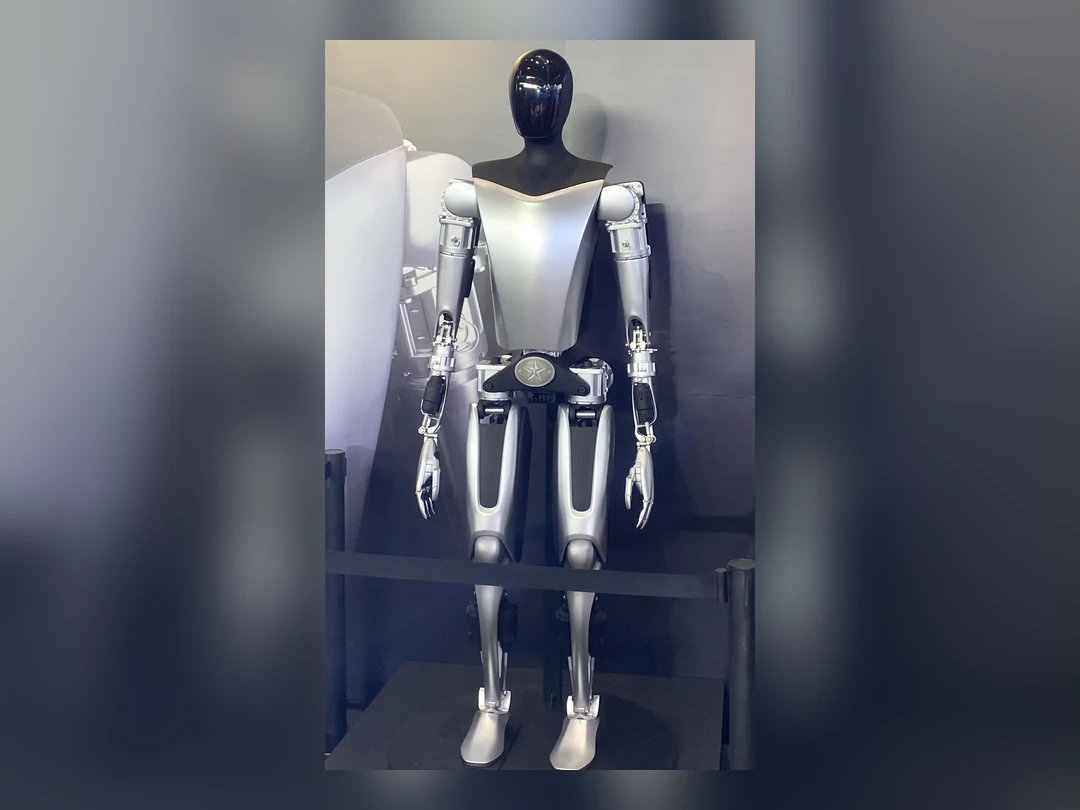

One million per year describes line design, not robots already produced
Tesla's Q1 2026 materials describe the first-generation Fremont line as designed for one million units per year and a second-generation Texas line with a long-term design of ten million units per year. Capacity design is a target for a line and its supply system. It is not the same as installed capacity, current production rate, saleable yield or annual deliveries.
A credible production assessment would separately track equipment installation, supplier qualification, pilot builds, takt time, yield, rework, reliability testing and external deliveries. Until Tesla reports those stages, phrases such as one million robots produced are incorrect. The robot data factory guide also helps explain why early internal units can be valuable for data collection before they become a customer-ready product.
Gen 3 is not publicly orderable
As of the checked date, Tesla has not posted a public Optimus Gen 3 product order page, numerical list price, customer delivery schedule or standard configuration. Production plans and corporate presentations do not create a reservation. A buyer therefore cannot compare a confirmed Gen 3 quote with Gen 2 on warranty, service, software entitlement or total deployment cost.
Any price, preorder date or customer delivery date circulating without a Tesla sales document should be labeled an estimate or rumor. The accurate purchasing status is ‘not publicly orderable.’ Organizations can still prepare tasks, safety requirements and integration boundaries, but they should not build a committed deployment budget around an unofficial unit price.
Evaluate demonstrations by intervention, continuity and task boundary
A polished video can establish that a demonstrated action occurred; it cannot by itself establish autonomy level, repeatability or production readiness. Record whether the sequence is continuous, how many trials are shown, whether teleoperation or human reset is disclosed, which objects and environments are allowed, and how failures are counted. The humanoid demo evaluation guide provides a reusable evidence checklist.
For a factory trial, define a narrow task and measure successful cycles, intervention minutes, recovery time, damage, safety stops and useful throughput over a full shift. Apply the physical AI proof-of-concept framework before expanding scope. That evidence will remain useful whether the deployed hardware is called Gen 3 or a later production revision.
Watch the next filings for specifications, yield and external access
The next high-value disclosures are a dated Gen 3 specification sheet, the exact status of Fremont pilot production, saleable yield, reliability results, the role of the Texas line and any external customer or order channel. A reveal video without those items would improve visual understanding but would not complete a procurement comparison.
Keep three labels in every update: official fact, forward-looking company plan and undisclosed. Gen 2 features shown in Tesla material belong in the first category. Production timing and designed capacity belong in the second. Gen 3 numerical hand specifications, price and delivery belong in the third until Tesla publishes them.
Frequently asked questions
What is officially different between Tesla Optimus Gen 2 and Gen 3?
Tesla documented Gen 2 with company-designed actuators and sensors, improved hands and AI, faster walking, lower weight and an articulated neck. For Gen 3, Tesla has disclosed a latest hand, major upgrades from version 2.5 and mass-production intent, but not a numerical specification sheet.
Is Tesla already producing one million Optimus robots per year?
No. Tesla described the Fremont line as designed for one million units per year and said lines were being installed with production anticipated later in 2026. Designed capacity is not actual output, yield or customer deliveries.
Can customers order Optimus Gen 3 now?
Tesla has not published a Gen 3 order page, numerical list price or customer delivery schedule in the cited official materials. Its 2026 disclosures concern development and production plans rather than a public commercial launch.
Official sources checked
- Tesla AI and Robotics
- Tesla: Optimus Gen 2 official video
- Tesla Q4 2023 update
- Tesla Q4 2025 update, published January 28, 2026
- Tesla Q1 2026 update
- Tesla Q2 2026 update
Last checked: August 6, 2026