NEURA’s acquisition announcement does not mean every ACTIVE Shuttle changed software overnight. The official release sets October 1, 2026 as the effective date and separates the transfer of hardware, software, and future customer service from a longer-term plan to connect the platform with NEURA’s Physical AI ecosystem.

What the acquisition announcement actually confirms
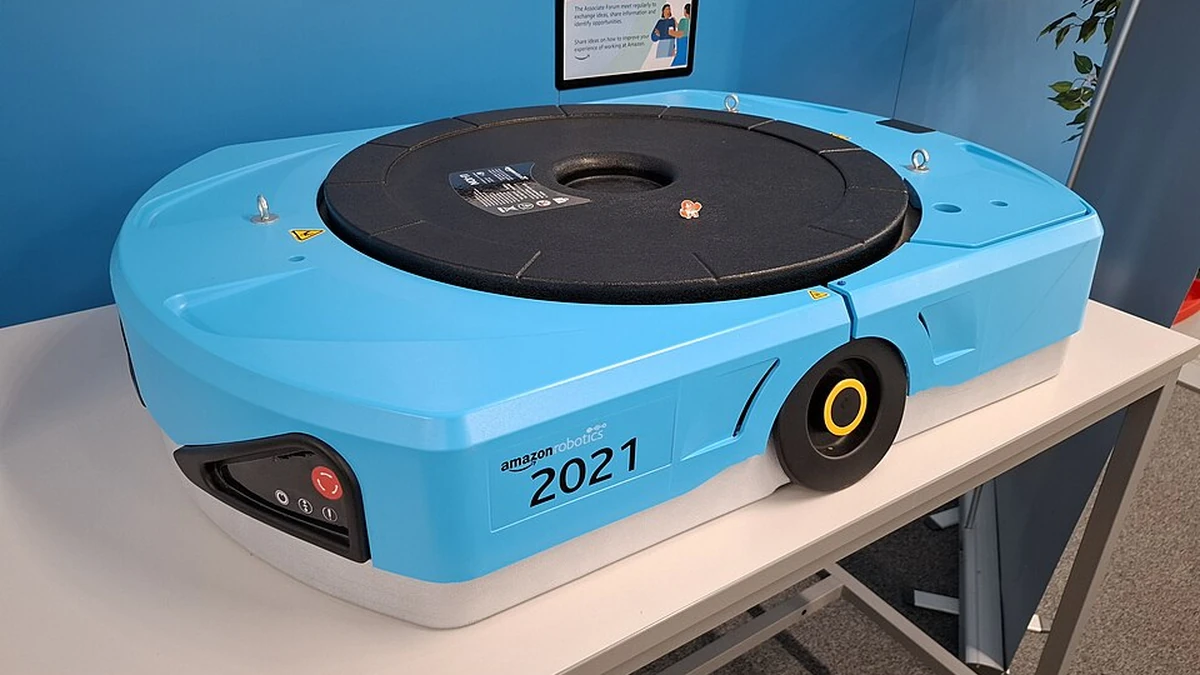
NEURA Mobile Robots is set to take over ACTIVE Shuttle hardware and software and provide customer service after the transaction becomes effective. ACTIVE Fleet Manager and ROKIT navigation remain part of the solution. The release does not publish a new AI feature list, benchmark, price, supported-model matrix, or delivery schedule, so ownership transfer, operational handover, and product modernization belong on separate lines of the record. A planned integration must not be written as a current feature.
The Bosch Rexroth operating baseline still matters
Bosch Rexroth describes ACTIVE Shuttle as an AMR for moving material and small load carriers inside factories. That installed use case—dispatching transport jobs, navigating shared aisles, docking, charging, and recovering from exceptions—remains the baseline against which any later integration must be measured. The AMR-versus-AGV guide is useful here because vehicle autonomy and fleet orchestration are related but not interchangeable capabilities. The baseline is the working logistics system, not the new owner’s brand.
Continuity and future integration are different promises
Keeping ACTIVE Fleet Manager and ROKIT while planning a Neuraverse connection is not a contradiction. A supplier can preserve a validated navigation and service stack while adding interfaces in stages. Customers should ask which firmware branch remains supported, whether configuration exports survive the handover, who owns open tickets, and whether old installations can decline or roll back an update without losing support. Continuity claims require contract-level evidence.
| Date or phase | Confirmed state | Not yet established |
|---|---|---|
| August 2026 announcement | Agreement to transfer ACTIVE Shuttle technology | Transaction effectiveness |
| October 1, 2026 | Hardware, software, and service handover takes effect | Simultaneous release of every AI function |
| Longer-term roadmap | Planned links to NEURA tools and ecosystem | Feature dates, supported models, or performance gains |
Where Physical AI could enter the fleet stack
A learned model might propose transport priorities, classify an obstruction, or help an operator interpret a recurring exception. It should not bypass deterministic speed limits, protective scanners, intersection rules, or the controller that stops the vehicle. The VDA 5050 overview also shows why a task-order interface cannot be treated as proof that every safety state or vendor-specific recovery action is standardized. Learned planning and certified protection remain different control layers.
The handover checklist for installed fleets
The effective date creates administrative as well as technical work. Fleet maps, job history, certificates, API credentials, remote-support accounts, spare-parts contracts, and service-level agreements need named owners. Exporting the pre-handover configuration and performance baseline gives the plant a reference when a later software update changes docking repeatability, wireless recovery, or manual-intervention time. Credential and data custody can fail even when vehicles keep moving.
How buyers should convert the announcement into evidence
A purchase file should label each item as available now, optional under a named version, or planned without a committed date. For the current product, measure aisle clearance, representative payloads, docking distribution, person-mixed zones, communication loss, and restart time. When a new perception or AI function arrives, repeat the same run and compare intervention rate and exception duration instead of comparing two marketing descriptions.
Manufacturer direction is not an independent productivity result.
| Claim | Evidence available now | Evidence still needed |
|---|---|---|
| Customer continuity | Official service-transfer statement | Regional SLA, parts, and escalation map |
| AI enhancement | Staged integration direction | Release notes, regression tests, and rollback |
| Common ecosystem | Neuraverse availability is planned | Documented APIs, permissions, and version policy |
| Mixed fleet | Existing fleet technology remains | Site interoperability and deadlock results |
Signals to watch after October 1
After October 1, release notes and customer-transition documents will be more informative than ecosystem language. Watch for a supported API between ACTIVE Fleet Manager and Neuraverse, authentication and permission boundaries, fallback behavior when an AI service is unavailable, mixed-fleet deadlock tests, regional spare-parts coverage, and a published end-of-support policy for existing installations. Until then, performance gains remain unestablished.
A later field result should name the exact vehicle, version, site, and denominator.
- VDA 5050 scope
- fallback navigation
- customer acceptance
- the legal effective date
- the service owner
Questions readers ask next
What, if anything, changes for an installed ACTIVE Shuttle fleet when the transaction takes effect on October 1, 2026?
ACTIVE Shuttle is already an operating product, but the acquisition takes effect on October 1, 2026. The announcement does not provide a price, specification, or release date for a separate NEURA AI edition. Buyers should ask the regional seller about current supply and future software separately.
Which hardware, software and service responsibilities are confirmed to transfer, and which Neuraverse integrations remain on the roadmap?
Start with the customer-transition notice and the first post-handover release notes. They should identify the support owner, compatible versions, data migration, API authentication, fallback behavior, and rollback process. Those details show whether ownership transfer has become product integration.
Official source trail: