On a shift, a dexterous hand is judged by what it drops, damages, or cannot recover—not by a slow-motion demo. NEO’s hand architecture targets varied contact work, but its specifications still need task conditions and a failure denominator.
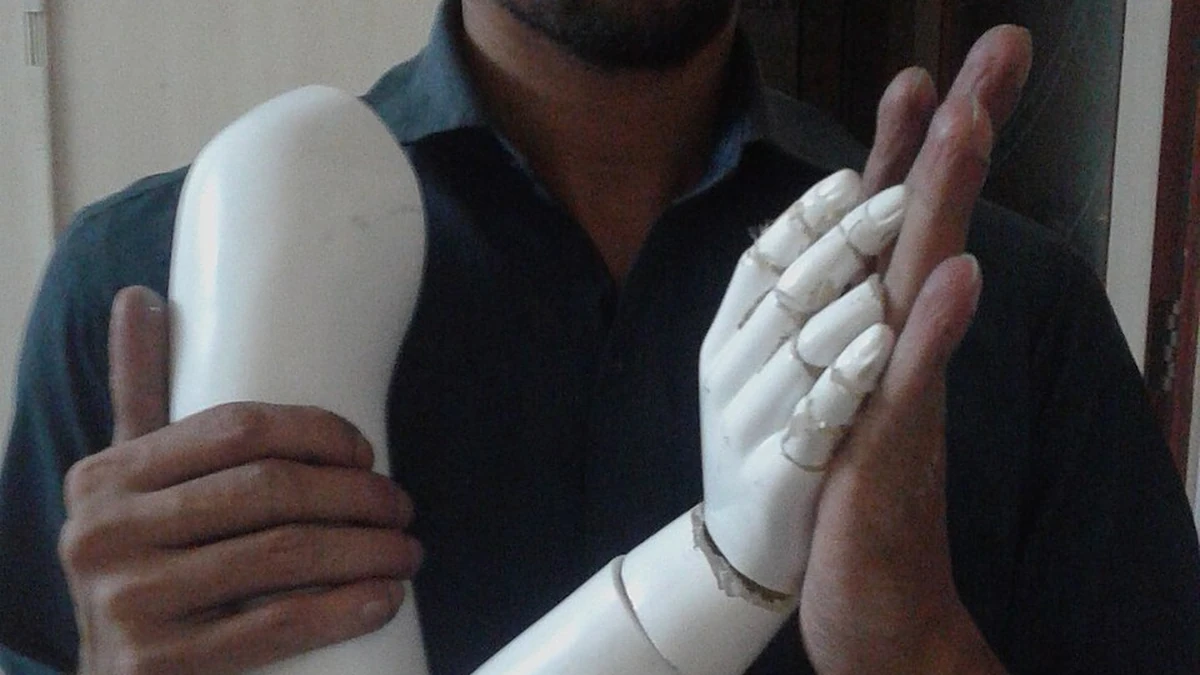

The 1X engineering announcement defines 25 degrees of freedom as 22 across the hand and palm plus three at the wrist. It also describes forearm-mounted motors, tendon transmission, force-controlled backdrivable joints, tactile coverage, IP68 sealing, and capacity to produce 10,000 hands in 2026. None of those statements is a shipment count or a whole-robot safety result.
Define the manipulation job before comparing hands
The 25-DoF label does not mean 25 motors sit inside each hand. A pilot should describe the object, approach direction, required contact force, allowed damage, target cycle time, and recovery action. Transparent film, a wet cup, thin paper, coins, fasteners, and deformable packaging reveal different contributions from vision, tactile sensing, wrist motion, and finger compliance. The dexterous-hand engineering guide explains why actuation, sensing, durability, and control errors compound. A human-like appearance is not a measurable task definition.
Build a site baseline that the specification sheet cannot supply
1X says the finger drives use quasi-direct transmission with ratios from 5:1 to 15:1 and that every joint is force controlled and backdrivable. Compliance can reduce impact energy, but it is not a certification of the complete NEO robot. The cell still needs independent speed and force limits, safe-stop behavior, guarded work zones, a fixed object set, controlled lighting, and documented cleaning conditions before results can be compared between shifts. Backdrivability changes contact behavior but does not remove the hazard analysis.
| Readiness item | Pilot requirement | Failure if omitted |
|---|---|---|
| Object set | Fixed materials, sizes, wetness, and deformation | Easy objects inflate success |
| Cell | Standard height, light, background, and access | Vision conditions dominate the result |
| Cleaning | Named chemistry, temperature, drying, and inspection | IP68 is mistaken for hygiene approval |
| Safety | Independent force, speed, stop, and intervention rules | Joint compliance is overstated |
Price the calibration and contact-control workload
More articulation expands the set of possible hand shapes while adding tendon tension, tactile offsets, skin wear, thermal drift, and calibration points. 1X publishes company test figures including up to 3.5 Nm at the thumb CMC joint, 2.6 Nm at finger MCP joints, up to 45 N distal flexion force, 17.75 Nm wrist torque, and ±0.2 mm positional accuracy. Those values need posture, speed, load, and thermal context before cross-vendor ranking. Published maxima remain company figures until reproduced under a comparable setup.
Treat sealing and cycle tests as bounded evidence
IP68 addresses dust and water ingress under specified test conditions. It does not by itself establish detergent compatibility, microbial control, repeated-wash aging, or compliance with every food or industrial hygiene requirement. Likewise, millions of component cycles and more than two million high-load wrist cycles are not the same as millions of complete work cycles. Load spectra, speed, failure distribution, and replacement criteria determine maintenance value. A sealing code and a sanitation protocol answer different questions.
Set an acceptance threshold across the failure distribution
Expand only when the hand completes representative tasks without concentrating failures on a hard material or environmental condition. Count successful completion, dropped objects, cosmetic damage, recovery time, human interventions, recalibration, and part replacement separately. Compare joint-estimated force with a reference load at the contact surface because tendon friction and posture can make the same command produce a different fingertip force. The end-effector safety review keeps hand, arm, tool, and workpiece hazards in one cell-level assessment. Edited successes must not replace a full run log.
| Acceptance metric | How to measure it | Scale question |
|---|---|---|
| Task outcome | Separate completion, damage, and drop | Do failures cluster by object? |
| Recovery | Time from first fault to normal work | How often does a person intervene? |
| Tactile stability | Offsets before and after heat and cleaning | Is recalibration practical per shift? |
| Durability | Cycles to tendon, skin, or sensor replacement | Are parts and swap times available? |
| Safety | Independent stop and force-limit tests | Does the assessment include the entire robot? |
Separate factory capacity from field availability
1X reports that its dedicated line has produced hundreds of hands and has capacity for 10,000 during 2026. Capacity is an asserted production ceiling, not orders, good units shipped, complete NEO robots, or customer deployments. Procurement should request monthly good-unit output, calibration rework, early failures, spare-hand lead time, software compatibility, and field-replacement time before treating scale as service readiness.
Supply capacity becomes operational value only when good units and support reach customers.
- good-unit yield
- software version
- arm-level safety
- worst-case posture
- continuous-duty heat
Questions readers ask next
How do 22 hand-and-palm degrees of freedom plus three wrist degrees of freedom change NEO’s manipulation envelope and calibration burden?
A four-week pilot can expose basic integration and cleaning issues, but duration should be set by cycles and environmental variation, not calendar alone. Include hundreds of repetitions per object, continuous-duty heat, cleaning, deliberate faults, and at least one full maintenance and recovery exercise.
What evidence beyond IP68 and component cycle tests is needed to judge cleanability, durability and safe operation of the complete robot?
Scale when the worst-condition success, damage, intervention, and recovery distributions meet the cell target and spare-part support is documented. A polished dexterity demonstration or a production-capacity claim is not a scale trigger.
Official source trail: