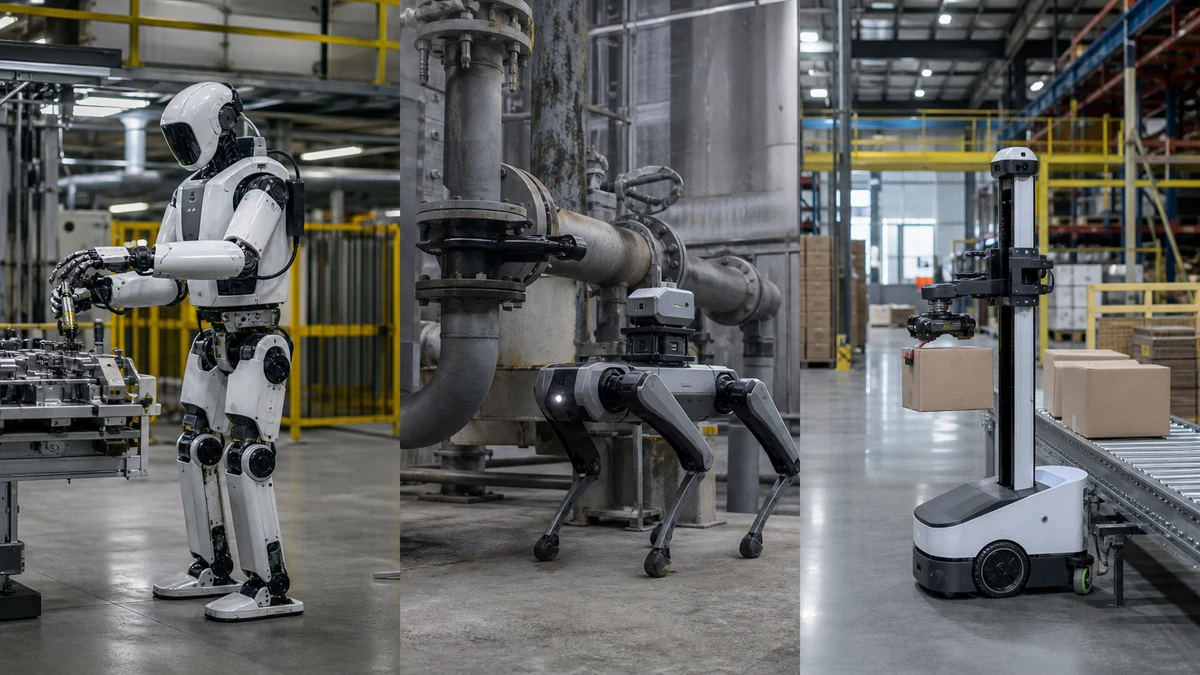
Boston Dynamics Atlas, Spot and Stretch are not three performance tiers of the same robot. Atlas is a humanoid aimed at flexible industrial material handling, Spot is a quadruped platform for mobile sensing and inspection, and Stretch is a mobile manipulator for unloading and picking boxes in warehouses.
Start with the workflow, not the most famous robot. On August 7, 2026, Spot and Stretch were commercial products routed through Contact Sales, while Atlas was expanding through Hyundai field testing and selected early adopters. Individual price, specification and deployment evidence belongs on each product page rather than in a single winner ranking.
The three robots differ most in the work they own
Atlas uses a human-scale body and two arms to address material handling around equipment designed for people. Spot moves sensing payloads along repeat routes, while Stretch uses a mobile base and long arm to move cases from trailers, containers and warehouse aisles.
A shared speed or degree-of-freedom table would not make them comparable. Inspection depends on repeatable routes and useful data, warehouse handling depends on package coverage and flow, and humanoid work depends on adaptation and whole-body manipulation.
| Robot | Body | Primary job | Typical environment |
|---|---|---|---|
| Atlas | Biped humanoid with two arms | Material handling and process work | Manufacturing and enterprise sites |
| Spot | Quadruped mobile platform | Visual, thermal and acoustic inspection | Plants, construction and hazardous areas |
| Stretch | Mobile base with long arm | Trailer unloading and case picking | Distribution centers and warehouses |
Atlas is an industrial humanoid in an early scaling phase
The Atlas product page describes material handling, barcode and workflow integration, autonomous charging and battery swapping. It also reports field testing at a Hyundai facility on real sequencing work, with machine tending and order building among later applications.
That is evidence of commercial progress, not proof that every buyer can order a fleet for immediate delivery. Boston Dynamics says it is starting with selected early adopters. Current availability and specifications are covered in the Atlas 2026 buying guide.
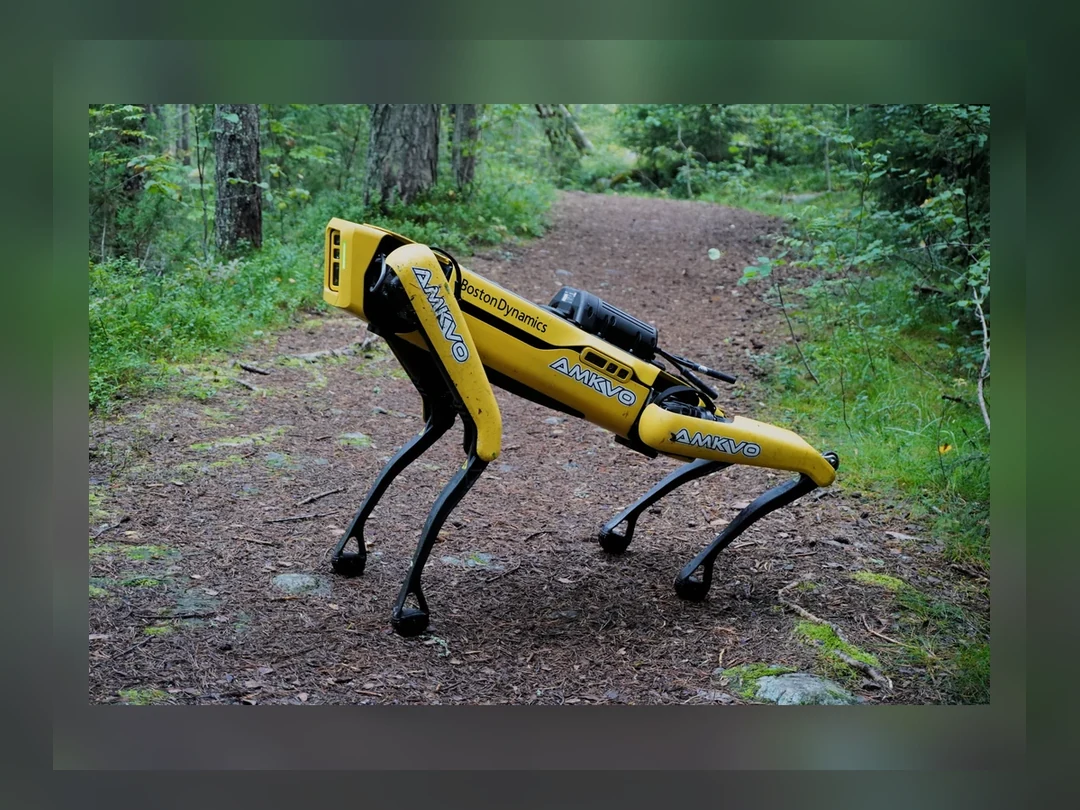
Spot is a moving sensor platform before it is a robot dog
Spot's core job is to carry visual, thermal, acoustic and 3D sensing through a work site. Repeat patrols can document changes and inspect places that are remote, repetitive or unsafe for people, leaving operators to interpret and act on the data.
An arm and other payloads can add manipulation, but a deployment normally begins with sensor mission, route, docking and data integration. The options and cost structure are explained in the Spot purchase, lease and TCO guide.

Stretch goes narrow and deep on warehouse case flow
Stretch concentrates on unloading trailers or containers and picking cases in warehouses. Boston Dynamics positions it for relatively quick implementation in existing infrastructure and handling varied box arrangements and packages up to 50 pounds.
It is not a general humanoid for inspection rounds or arbitrary production work. Its value depends on inbound or outbound flow, conveyors, pallets and WMS integration. See the Stretch deployment guide for the detailed commercial questions.
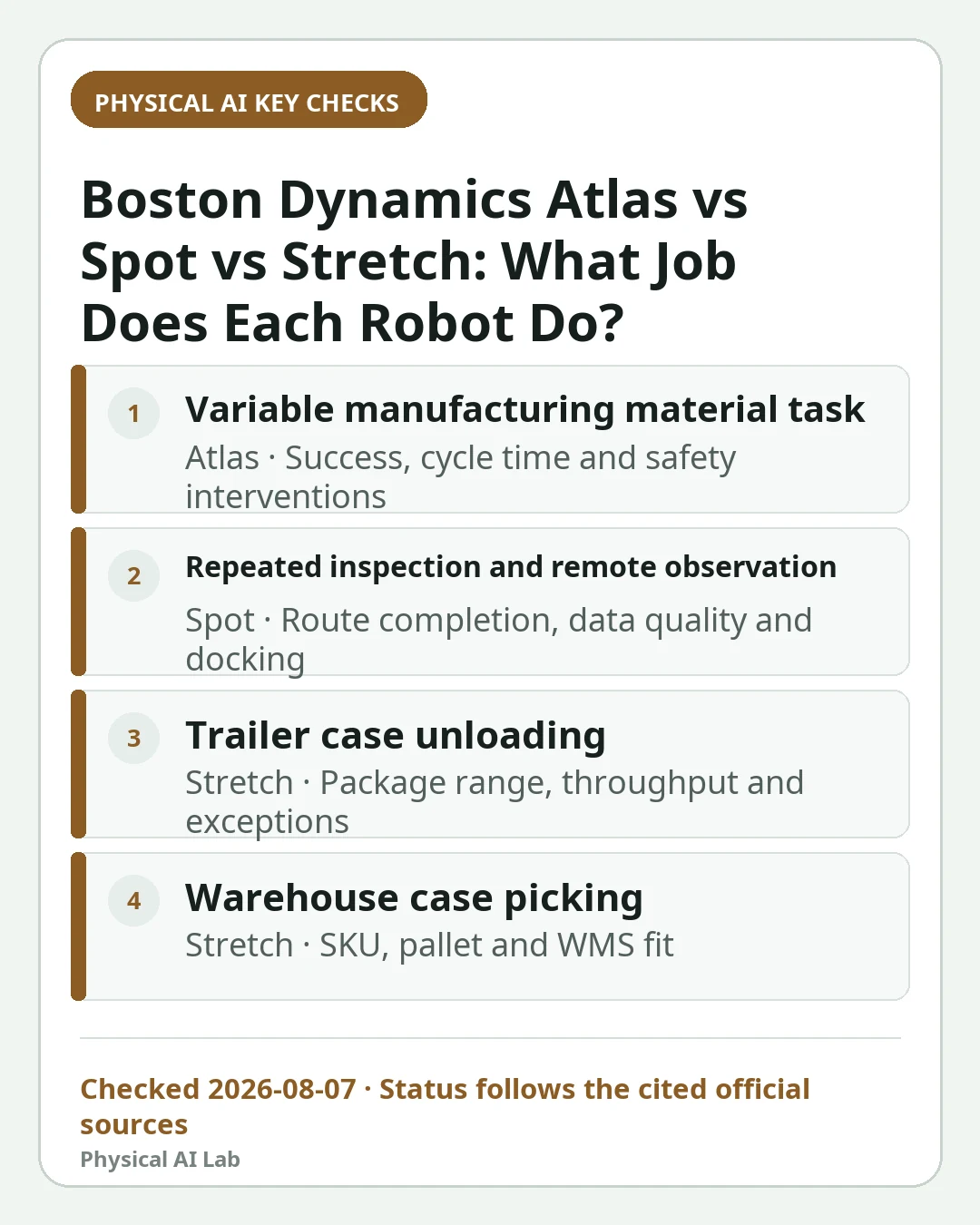
| Site problem | First robot to evaluate | Measure first |
|---|---|---|
| Variable manufacturing material task | Atlas | Success, cycle time and safety interventions |
| Repeated inspection and remote observation | Spot | Route completion, data quality and docking |
| Trailer case unloading | Stretch | Package range, throughput and exceptions |
| Warehouse case picking | Stretch | SKU, pallet and WMS fit |
Commercial status and quote paths are not identical
Spot and Stretch provide customer evidence and Contact Sales routes, but a visible base figure would not establish installed cost. Sensors, arms, docks, software, integration, training and service vary by mission and site.
Atlas conversations can begin as well, yet the company describes a selected early-adopter path. Separate sales contact from stock availability, then request evidence for assessment, contract, integration, safety approval and deployment.
Choose by workflow rather than robot name
Decide whether the task requires locomotion alone, a mobile sensor, object manipulation or adaptation to human workstations. Convert the answer into requirements for environmental variation, payload, throughput, intervention, safe stops and MES or WMS integration.
A facility may use all three, but that does not make them substitutes. Compare body architectures in the types of humanoid robots guide and turn the selected workflow into measurable gates with the physical AI proof-of-concept guide.
Frequently asked questions
Which is the most capable robot: Atlas, Spot or Stretch?
There is no useful single ranking. Atlas targets industrial whole-body manipulation, Spot mobile inspection and Stretch warehouse case handling, so each should be measured against its own task and operating cost.
Can Spot unload warehouse boxes like Stretch?
Spot can use an arm for some manipulation, but Stretch is purpose-built around trailer unloading and case picking. Do not assume the same package coverage or throughput.
Can businesses buy all three robots immediately?
Spot and Stretch are commercial Contact Sales products. Atlas is scaling through field testing and selected early adopters, so a sales conversation is not the same as general immediate delivery.
Official sources checked
- Boston Dynamics Atlas official product page
- Boston Dynamics Spot official product page
- Boston Dynamics Stretch official product page
Last checked: 2026-08-07