A wider gripper opening can clear an off-center object during approach without correcting its position during closing. In this Blender test, a 74 mm starting opening let the modeled gripper descend around a 60 mm cube offset by 6 mm in X. Closing then stopped at a 72 mm opening when the nearer pad reached a contact candidate, leaving a nominal 12 mm gap at the opposite pad.
Codex operated this virtual geometry study in Blender 5.2.2 LTS on October 5, 2026. It compared 20 combinations of starting opening and cube position, using prescribed movements of the modeled gripper. The cube stayed fixed: the test did not push it into alignment or simulate gripping force. A contact candidate marks a numerical geometric boundary, not a confirmed physical contact or a secure grasp.
This comparison uses the C arrangement from the camera-and-approach layout study, with the divider behind the target. Here the variables are pad opening and object offset.
The same starting opening reached two different stops
The clearest comparison starts both grippers at a 74 mm opening and lowers them by 200 mm. Neither the centered condition nor the 6 mm offset condition produced contact or penetration in the sampled approach. Their closing results then diverged.
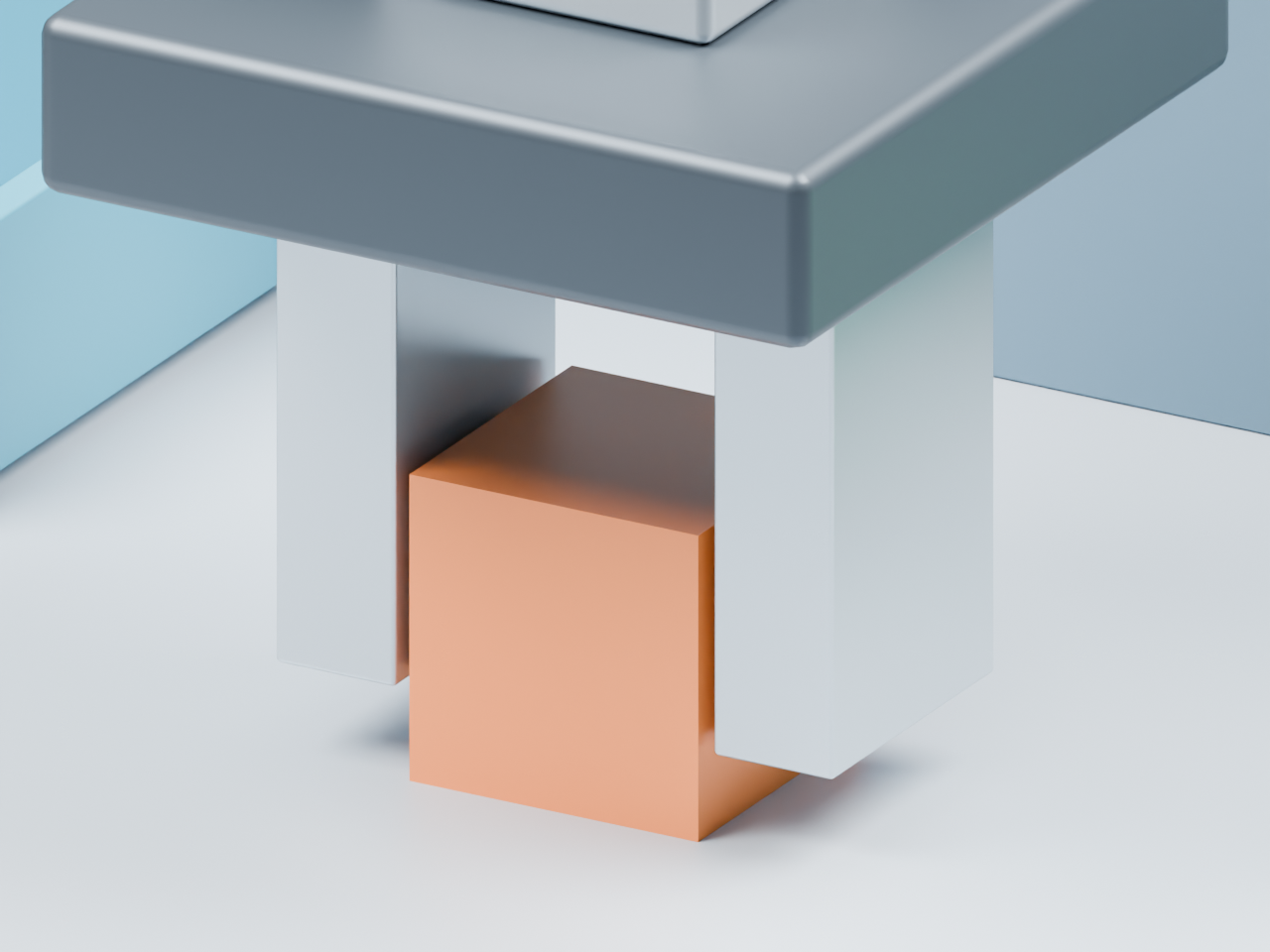
With the cube centered between the pads, closing stopped at a 60 mm aperture. Both pads were classified as contact candidates at that sampled pose. The centered raw record records zero nominal gap on either side.
With the cube displaced 6 mm in X, the nearer pad reached a contact candidate at a 72 mm aperture. The opposite pad still had a nominal 12 mm gap. Closing stopped there; the cube did not move toward the gripper center. The offset raw record preserves that one-sided result.
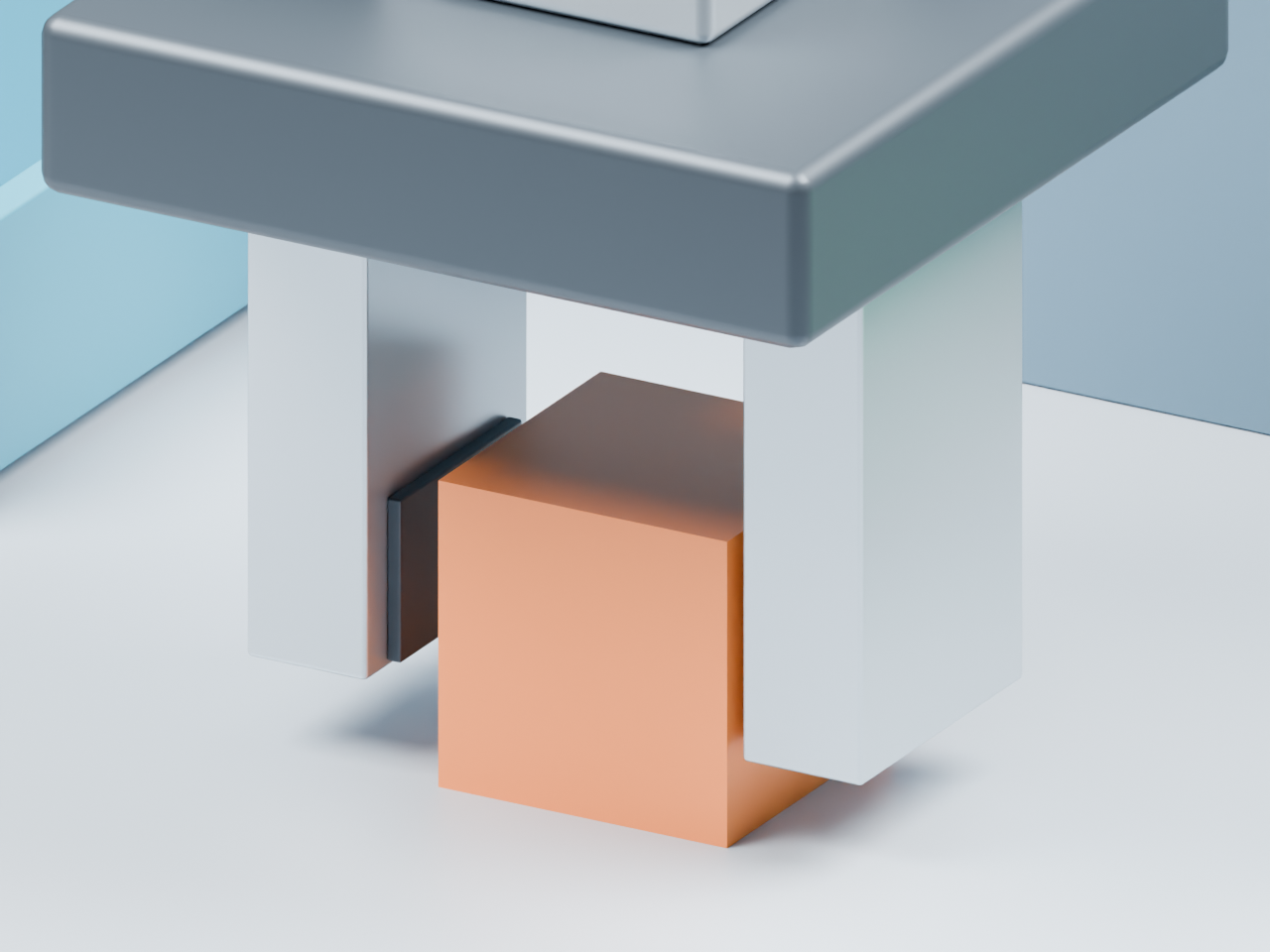
These renders use the same diagnostic camera and final approach height, as recorded in the package verification. They show different reached apertures, not two grippers still open to 74 mm. The upper gripper is cropped, so these images cannot establish clearance for the whole gripper or a robot arm.
Opening wider changed the approach result
Here, opening means the distance between the inner pad planes. It is not the gap between the finger bodies or a manufacturer’s stroke specification. The fingers and pads moved symmetrically about the gripper center.
The study kept the 60 mm cube, its zero yaw angle, the finger and pad geometry, the surrounding workbench arrangement, and the 200 mm vertical approach unchanged. It varied five starting apertures against four target X offsets. The cube had no Y offset or rotation error.
The downloadable opening-and-centering experiment files (ZIP) contain the starting scene export, unchanged experiment script, and all 20 raw condition records. This table shows where widening the aperture changed the sampled approach outcome:
| Starting aperture | X = 0 mm | X = 3 mm | X = 6 mm | X = 10 mm |
|---|---|---|---|---|
| 58 mm | Penetration | Penetration | Penetration | Penetration |
| 60 mm | Contact boundary | Penetration | Penetration | Penetration |
| 64 mm | No contact detected | Penetration | Penetration | Penetration |
| 74 mm | No contact detected | No contact detected | No contact detected | Penetration |
| 90 mm | No contact detected | No contact detected | No contact detected | No contact detected |
Every cell describes the sampled approach only. There were 11 conditions with detected penetration, one contact-boundary condition, and eight with no contact detected in the approach samples. None of these labels reports grasp success.
The 74 mm aperture accommodated the 6 mm offset during the sampled descent, but the same aperture produced penetration with a 10 mm offset. Increasing the starting aperture to 90 mm removed that detected approach interference at 10 mm. It did not remove the offset itself.
The experiment code checked approach positions every 2 mm and refined the first detected penetration interval in 0.1 mm steps. Conditions without approach penetration then closed in 0.5 mm aperture steps until a contact candidate or penetration was found. The intervals between tested poses were not proven clear.
These checks used the evaluated meshes of individual modeled components, including their bevels. A projection-separation screen identified potentially overlapping pairs; Blender’s Boolean intersection operation then checked for positive intersection volume. Penetration required a signed projection margin below −0.001 mm and computed intersection volume above 0.000001 mm³. Near-zero projection margins were treated as contact candidates. Those are numerical classification thresholds, not manufacturing allowances. The stored projection margin is not a general shortest surface distance or contact force.
Centering still matters after the approach
The 90 mm starting aperture lets all four tested offsets reach the closing phase without detected approach contact, so it provides a consistent comparison of what closing can—and cannot—change in this model.
| Cube X offset | Closing stop aperture, from a 90 mm start | Nominal gap at the opposite pad |
|---|---|---|
| 0 mm | 60 mm | 0 mm; both pads are contact candidates |
| 3 mm | 66 mm | 6 mm |
| 6 mm | 72 mm | 12 mm |
| 10 mm | 80 mm | 20 mm |
The 90 mm-start records match a simple relation for this fixed, axis-aligned cube and symmetric pad motion. If X is the cube’s center offset in millimetres:
Nominal first-contact aperture = 60 + 2|X| mm
Nominal opposite-pad gap = 2|X| mm
The nearer face sits farther from the gripper center by the offset amount. Symmetric closing brings the near pad to that face while leaving the far pad short by twice the offset. For X = 6 mm, the relation gives a 72 mm aperture and a 12 mm opposite gap, matching the sampled stop shown above.
This is a geometric relation for the assumed dimensions and motion. Only X = 0, +3, +6, and +10 mm were tested. It is not a general grasp law, a validated positioning tolerance, or evidence that a real gripper would stop at these apertures. Pad compliance, friction, object sliding, and self-centering behavior were not modeled.
If interference appears during descent, changing the starting aperture is one layout variable to test while holding object position fixed. If descent clears but closing reaches one pad first, record the offset and opposite-pad gap before treating a wider opening as the solution. Correcting the modeled relative position is a separate design choice; a physical method for finding or correcting that position would need its own test.
For this cube, the larger aperture expanded the set of sampled approaches without contact. It did not establish a centered, force-bearing, retained grasp. The next useful comparison is the closing result at the intended alignment, followed by tests of the actual gripper’s stroke, contact behavior, and ability to hold the object.