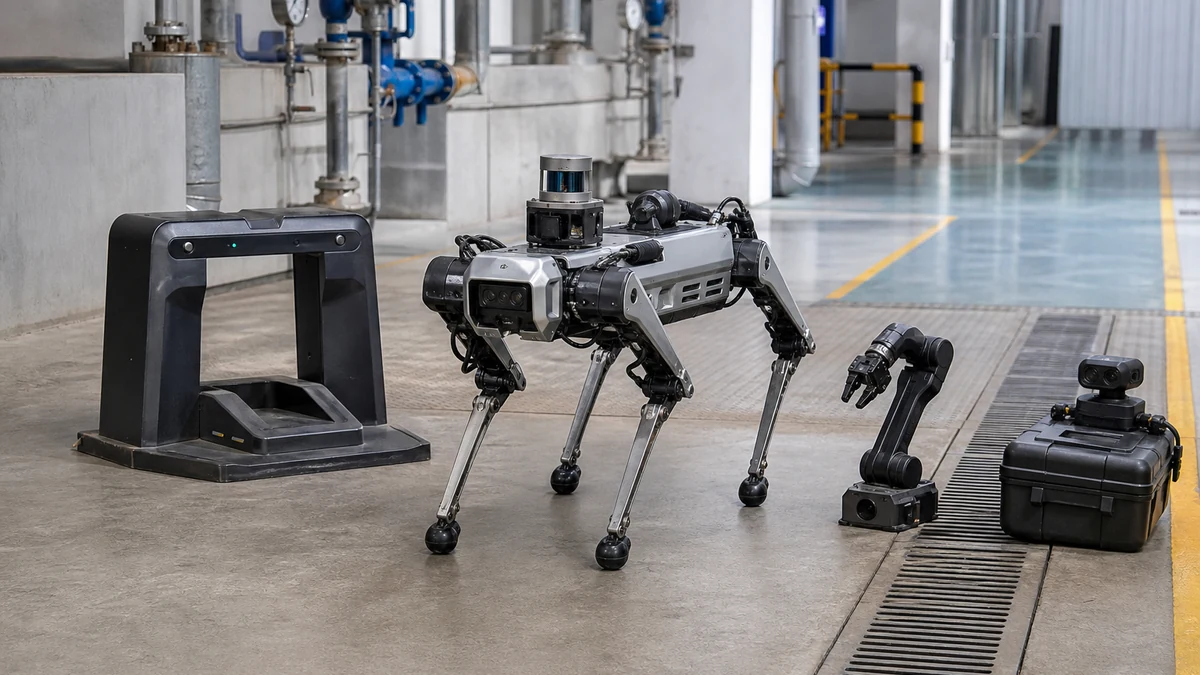
Boston Dynamics does not publish a current numerical list price or a standard monthly lease rate for Spot as of August 6, 2026. Spot remains a commercial product, but its official sales page routes buyers to Contact Sales. The sale terms put the robot, payloads, software, accessories, services, price and delivery details in an individual Sales Order; the lease terms do the same through a Lease Order. A precise 2026 answer is therefore quote required, not a recycled reseller number.
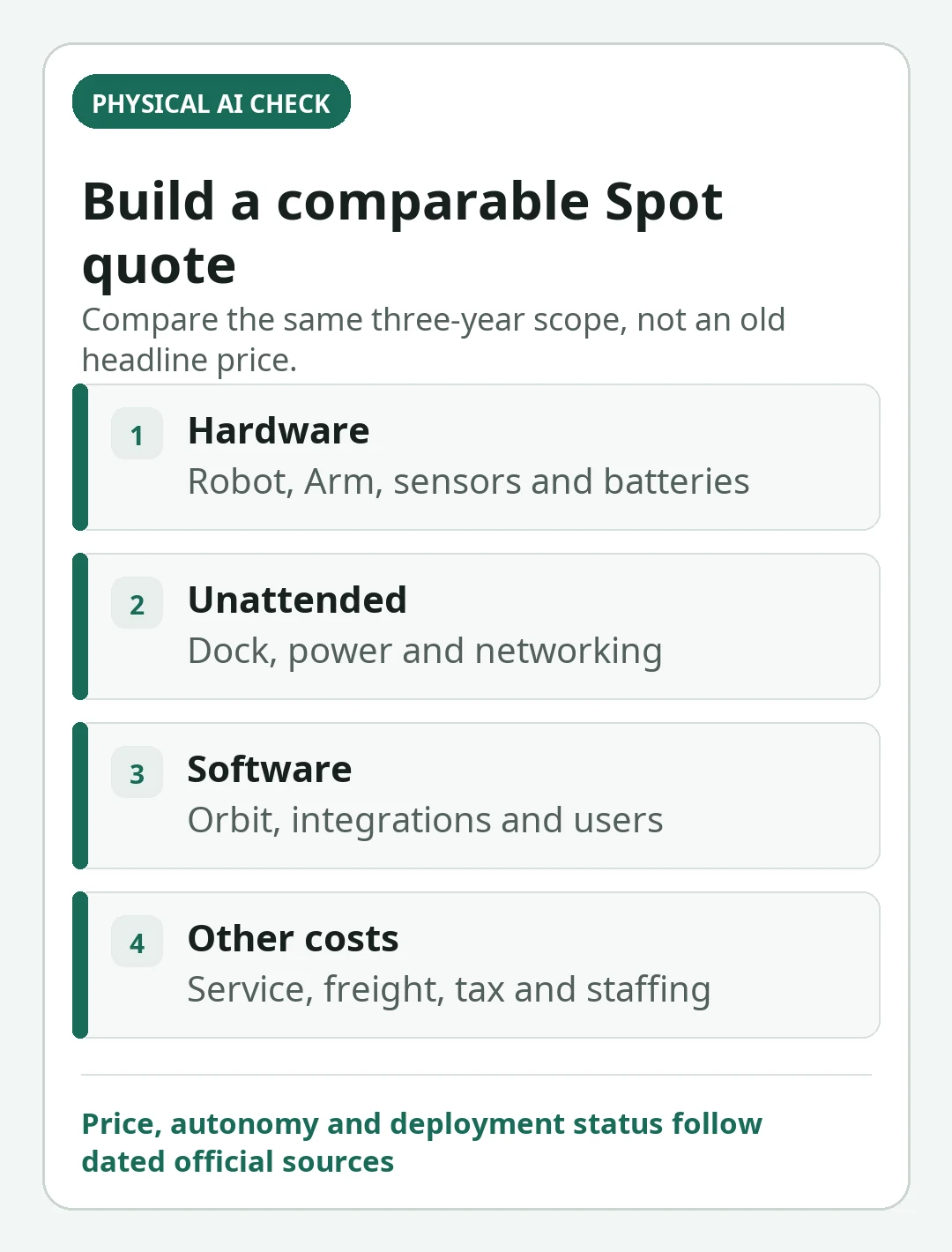
The quote is only the first layer of cost. Spot Arm, Spot Dock, Orbit, service coverage, integration, training, freight, taxes and site work can change the budget more than a bare robot comparison suggests. Build a three-year model around the mission and request matched buy and lease configurations. If the project is still exploratory, define the acceptance test with our physical AI proof-of-concept guide before asking vendors to price a production fleet.
There is no public Spot number to copy into a 2026 budget
The official Spot sales page presents a sales-contact path, not an online checkout price. Boston Dynamics' terms of sale say that the applicable Sales Order identifies the purchased robot, payload, software, accessory and service items together with pricing, shipping and billing information. That structure is evidence that Spot is available commercially; it is not evidence for any one public dollar figure.
The same distinction applies to leasing. The official Spot lease terms provide a contractual route for leasing robots and related items, but the upfront payment, periodic schedule, lease term and configuration belong to the individual Lease Order. A claim that every customer can lease Spot for a fixed monthly amount would go beyond the published source.
Ask every quote to state its validity date and currency. A number from a different year, country, payload bundle or service plan is not a current Spot price, even if it once appeared in a legitimate transaction.
| Question | Official position on August 6, 2026 | What the buyer must obtain |
|---|---|---|
| Can Spot be bought? | Yes, through commercial sales | A Sales Order with the exact configuration and price |
| Is there a current public list price? | No numerical price appears on the cited product and sales pages | A dated vendor quote rather than an estimated web figure |
| Can Spot be leased? | Yes, official lease terms exist | A Lease Order with term, payments, return conditions and included items |
| Are Arm, Dock and Orbit automatically included? | No public source says that they are standard in every order | An itemized inclusion and exclusion list |
| Are taxes and duties included? | The sale terms exclude taxes, VAT, customs, duties and similar fees from stated prices | A landed-cost estimate for the destination and buyer |
| Does an old public figure establish 2026 price? | No | Current written confirmation from Boston Dynamics or its authorized sales route |
Start with the job, then specify the smallest workable Spot configuration
A mobile inspection mission may need Spot, mission-specific sensors and integration but no manipulator. Turning a valve, opening a door or moving an object may require Spot Arm. Repeated missions without an operator present may justify Dock and remote operations software. The quote should follow that functional boundary instead of beginning with every available option.
Separate a demonstration from a deployable system. A safe pilot needs a mapped work area, network plan, operator training, recovery procedure and measurable acceptance criteria. The Spot and Gemini Robotics ER 2 demo analysis shows how a high-level AI layer can call existing Spot capabilities, but it does not establish a packaged commercial integration or a price for that architecture.
Write the mission as a set of repeatable routes, observations and physical interactions. Record the required sensor field of view, data retention, stair or terrain conditions, payload power draw, human access and response after a failed mission. Those choices tell sales engineering which hardware and services belong in the order.
Arm, Dock and Orbit change different parts of the cost model
The optional systems are not interchangeable upgrades. Spot Arm adds six degrees of freedom, about one metre of reach and published maximum figures of 11 kg lifting and 25 kg dragging. Those figures help screen a task, but they are not guarantees for every pose, grasp or dynamic movement. End-effector design, reach, stability and object geometry still need a task trial.
Spot Dock documentation describes automatic charging and specifies a sheltered installation. Dock creates site work: floor placement, power, network, approach clearance and recovery access. Orbit is the fleet and data-management layer. Boston Dynamics describes cloud, a 1U on-premises Site Hub and a virtual-machine route, but publishes no common price for those deployment choices.
Itemize these options because each drives a different downstream expense. Arm expands manipulation engineering and safety analysis; Dock changes infrastructure and fleet availability; Orbit changes software, hosting, identity, integration and data-governance work.
| Component | What it adds | Costs to request separately | Public price status |
|---|---|---|---|
| Spot base | Mobile robot platform for inspection and payload integration | Robot, batteries, charger, transport case, required software and support | Not published |
| Spot Arm | Mobile manipulation and object interaction | Arm hardware, end effector, task engineering, guarding and training | Not published |
| Spot Dock | Automatic charging for repeated or remote missions | Dock quantity, power, network, shelter, installation and recovery access | Not published |
| Orbit cloud | Fleet, mission and data management on AWS-hosted infrastructure | Subscription scope, sites, users, data volume, integration and retention | Not published |
| Orbit Site Hub | A 1U on-premises appliance | Appliance, rack, network, maintenance, backup and support | Not published |
| Orbit virtual machine | OVA deployment for VMware, Hyper-V, Azure or Google Cloud | Compute, storage, administration, security and vendor support boundary | Not published |

A three-year model needs landed, integration and operating costs
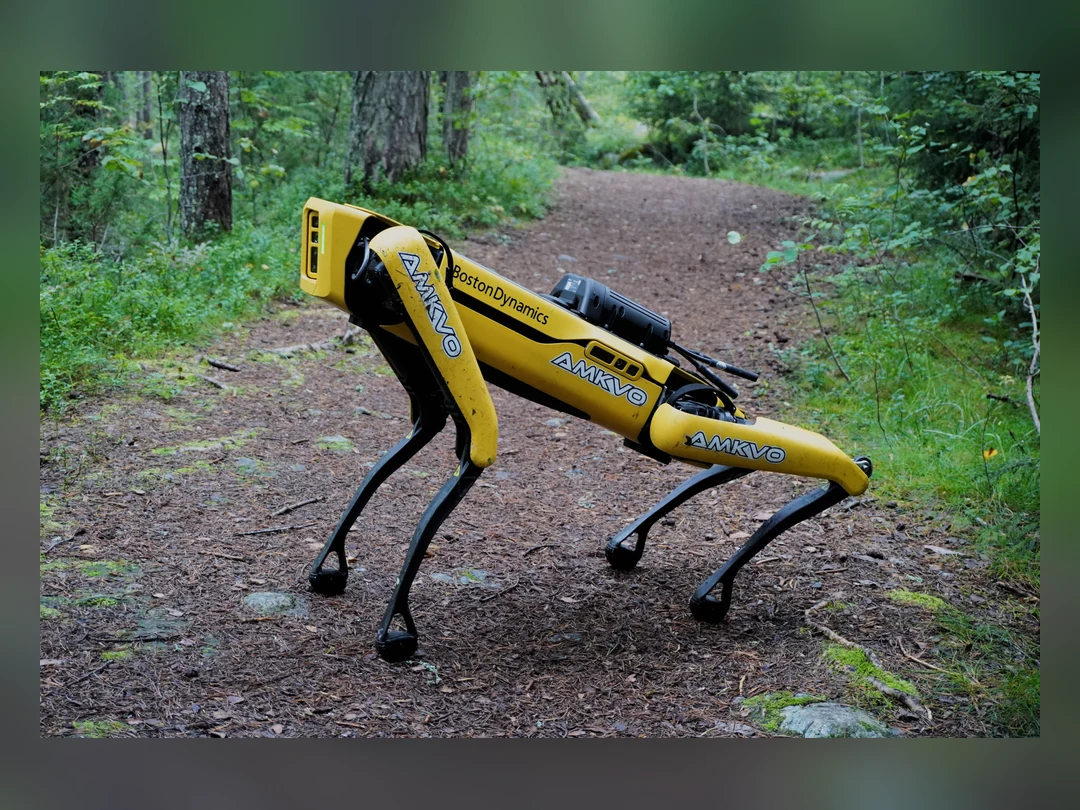
Use a boundary that both procurement routes can share: three-year total cost equals initial hardware and software, plus freight and import costs, plus site integration and training, plus recurring software and service, plus internal operations, minus any contractually supported residual value. Do not subtract an assumed resale value unless the organization has evidence for it. A specialized robot may have a thin secondary market and transfer restrictions.
The sale terms explicitly separate taxes, VAT, customs, duties and fees from the price. Freight insurance, customs brokerage, currency exposure and local certification work may also matter. Integration can include payload mechanics, calibration, networking, identity management, dashboards, API work, maps, data validation and a formal site acceptance test. Internal labour is real cost even when no supplier invoices it.
Service needs its own line. The standard sale terms describe a 12-month warranty from initial shipment and a 90-day period for certain consumable or wear parts, subject to the complete terms. The optional Spot CARE terms define additional service treatment and exclusions, but no public price. Batteries, chargers, cables and consumables should not be assumed covered merely because a service plan is present.
| Cost layer | Examples to include | Common budgeting error |
|---|---|---|
| Acquisition | Spot, Arm, Dock, payloads, batteries, charger, case and initial software | Using a bare robot figure as the configured system price |
| Landed cost | Freight, insurance, tax, VAT, customs, duties and brokerage | Treating the quoted amount as delivered cost |
| Site integration | Power, network, shelter, maps, payload mounting, API work and acceptance testing | Calling internal engineering free |
| People | Training, procedures, mission review, response and change control | Assuming autonomy removes operating labour |
| Recurring platform | Orbit, hosting, support, service plans and connectivity | Comparing a subscription with a one-time purchase only |
| Maintenance and spares | Batteries, wear items, repair logistics, downtime and loaner arrangements | Assuming every failure is covered by warranty |
| End of term | Lease return, damage assessment, removal, data export and decommissioning | Ignoring exit conditions until the last month |
Buying and leasing compare cleanly only under the same boundary
Buying usually concentrates cash at the start and leaves the buyer responsible for asset life, upgrades and disposal. Leasing spreads contract payments and may reduce commitment to a platform, but it can include use restrictions, return duties and end-of-term exposure. Neither structure is automatically cheaper. The answer depends on the quoted term, included support, utilization and the value of flexibility.
Request a matched pair: the same Spot generation, batteries, Arm, Dock, Orbit scope, support level, freight destination, installation work and training. Then compare discounted cash flows and operational risks. A lease for a base robot cannot be fairly compared with a purchase that includes a Dock, service plan and integration package.
Spot's official lease is a vendor contract, not automatically the same thing as the broader Robotics as a Service model. A RaaS agreement may sell an outcome, uptime or managed operation; a lease may principally grant use of specified equipment. Read the service boundary and SLA instead of inferring it from the label.
| Decision factor | Buy route | Lease route | Evidence needed |
|---|---|---|---|
| Cash timing | Larger initial outlay | Upfront and periodic payments defined by Lease Order | Payment schedule and discount rate |
| Configuration | Owned items listed in Sales Order | Leased items listed in Lease Order | Matched bill of materials |
| Support | Warranty and purchased service plan control | Only the lease documents establish included service | Response, repair, loaner and exclusion terms |
| Technology change | Buyer carries obsolescence risk | Shorter commitment may offer flexibility | Term, renewal and upgrade language |
| End of use | Buyer stores, resells or decommissions | Return and condition requirements may apply | Removal, shipping and damage terms |
| Best fit | Stable, well-used mission with long life | Pilot, uncertain utilization or time-bounded program | Utilization scenarios rather than one forecast |
Runtime, charging and payload choices become operating economics
Boston Dynamics' current Spot specifications list 33.8 kg including the battery and about 90 minutes of typical runtime. The same support material gives about 60 minutes when a payload draws maximum available power. Those are planning values, not a promised mission duration. Terrain, stops, computation, radios, temperature and battery age can change the result.
The public product page states 14 kg payload capacity, while the support specifications list 20.43 kg as a maximum recommended payload mass. Do not silently choose the larger number. Ask Boston Dynamics which limit applies to the quoted hardware, payload placement and mission, and require a centre-of-mass and power review. Payload mass and payload power constrain the system in different ways.
Dock charging also depends on temperature. The Dock sheet gives approximately 50 minutes to 80% and two hours to 100% at 25 degrees C; at 35 degrees C it gives about 2.5 hours to 80% and 3.5 hours to 100%. Fleet calculations should use the site's temperature and route schedule. A second robot, extra battery or revised mission cadence may cost less than designing around an unrealistic duty cycle.
Send sales a quote request that can survive procurement review
State the site, mission, route length, terrain, stairs, inspection payload, manipulation requirement, shifts, missions per day, expected project life and privacy constraints. Ask for the exact Spot hardware revision; battery and charging quantities; every payload, cable and mount; Arm and Dock inclusions; Orbit deployment mode; software term; training; integration; warranty; service response; shipping terms; taxes; lead time and quote expiration.
For a buy-versus-lease decision, ask for both structures on that same scope and require a line-by-line list of exclusions. Record who provides shelter, electrical work, network changes, remote support access, replacement shipping and on-site recovery. If people share the work area, connect procurement to a qualified risk assessment; our robot functional-safety guide explains why a robot feature list is not a cell-level safety claim.
The defensible 2026 conclusion is deliberately narrow: Spot is commercially sold and an official lease route exists, but current public pages do not establish a universal purchase price, lease payment or bundle. A matched quote plus a site-specific operating model is the only reliable TCO comparison. Spot is also a different product from the humanoid covered in our Boston Dynamics Atlas 2026 guide; one platform's availability or price cannot be transferred to the other.
Frequently asked questions
How much does Boston Dynamics Spot cost in 2026?
Boston Dynamics does not publish a current numerical Spot list price on the cited product and sales pages. Buyers need an itemized Sales Order covering the robot, payloads, software, accessories, services, shipping and applicable exclusions.
Can a company lease Spot instead of buying it?
Yes. Boston Dynamics publishes official Spot lease terms, but the lease length, upfront amount, periodic payments, included configuration and return conditions are defined in the individual Lease Order. No universal public monthly rate is stated.
Do all Spot deployments need Arm, Dock and Orbit?
No. Inspection may need only a sensor payload, manipulation may require Arm, repeated remote missions may justify Dock, and fleet or data management may require Orbit. Quote each option against the mission instead of assuming a standard bundle.
Official sources checked
- Boston Dynamics: Spot sales
- Boston Dynamics: Spot terms and conditions of sale
- Boston Dynamics: Spot terms and conditions of lease
- Boston Dynamics Support: Spot specifications
- Boston Dynamics: Spot Arm
- Boston Dynamics: Spot Dock specification sheet
- Boston Dynamics: Orbit
- Boston Dynamics: Spot CARE terms and conditions
Last checked: August 6, 2026