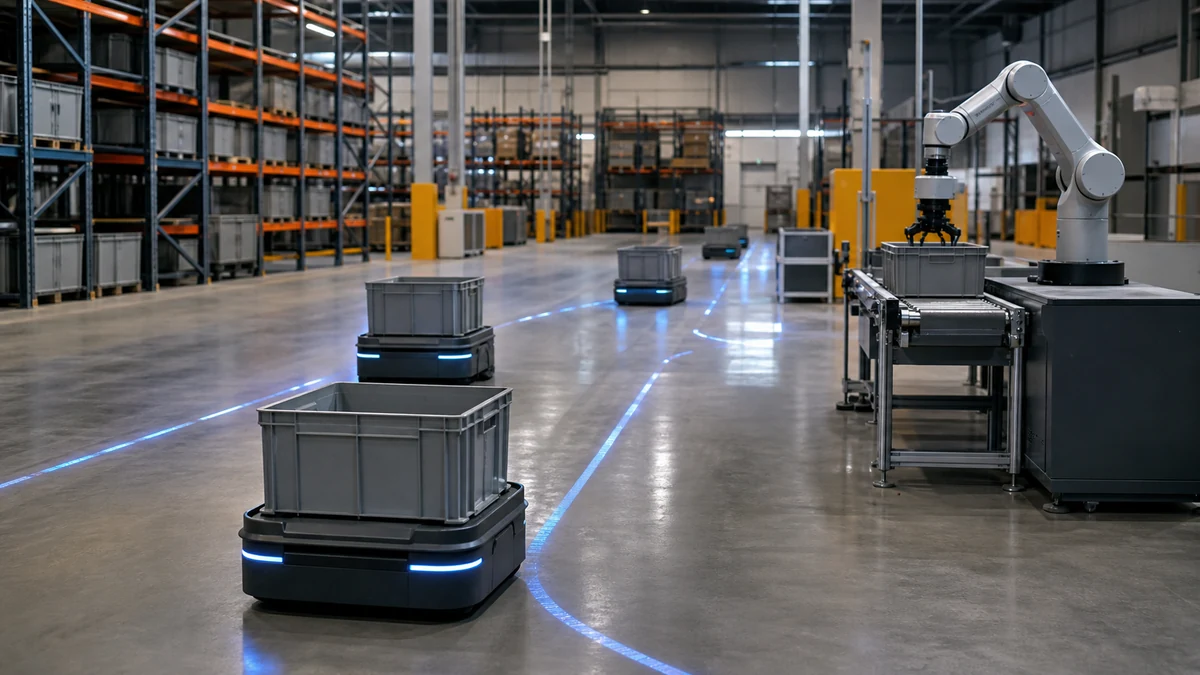
Skild AI announced on April 15, 2026 that it had acquired Zebra Technologies' robotics automation business, the operation previously known as Fetch Robotics. Zebra issued its own announcement, so the acquisition should be described as completed rather than merely proposed.
What changes next is less settled. Skild says it plans to deploy its omni-bodied Skild Brain across warehouse robots and expand the Symmetry Fulfillment platform. Those are future integration goals; no official source yet supplies a standardized before-and-after productivity result for the combined system.
The deal joins a robot fleet with a generalist control ambition
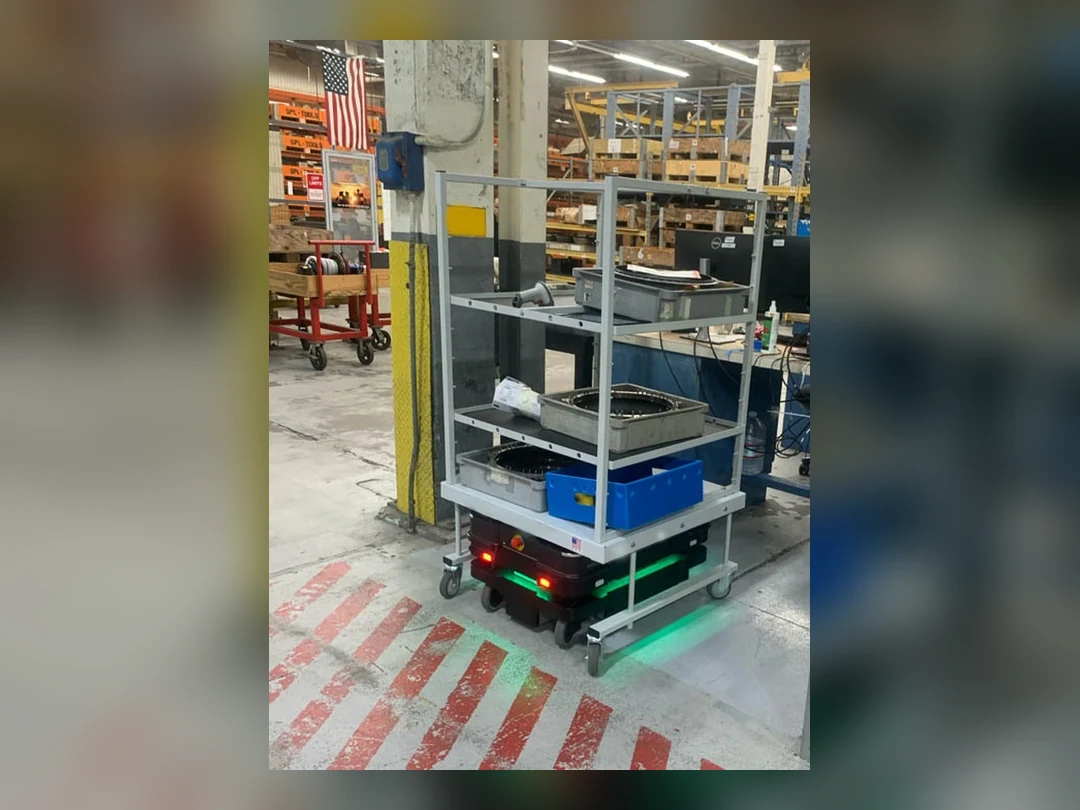
The acquired business traces back to Fetch Robotics, whose AMRs and cloud software supported material movement and fulfillment workflows. Zebra had integrated that portfolio with frontline devices and orchestration tools after acquiring Fetch in 2021.
Skild's general-purpose robotic-brain strategy is designed to operate different robot bodies. The acquisition gives that strategy an installed logistics platform and operating data, but ownership alone does not establish that every existing robot now runs the Skild Brain.
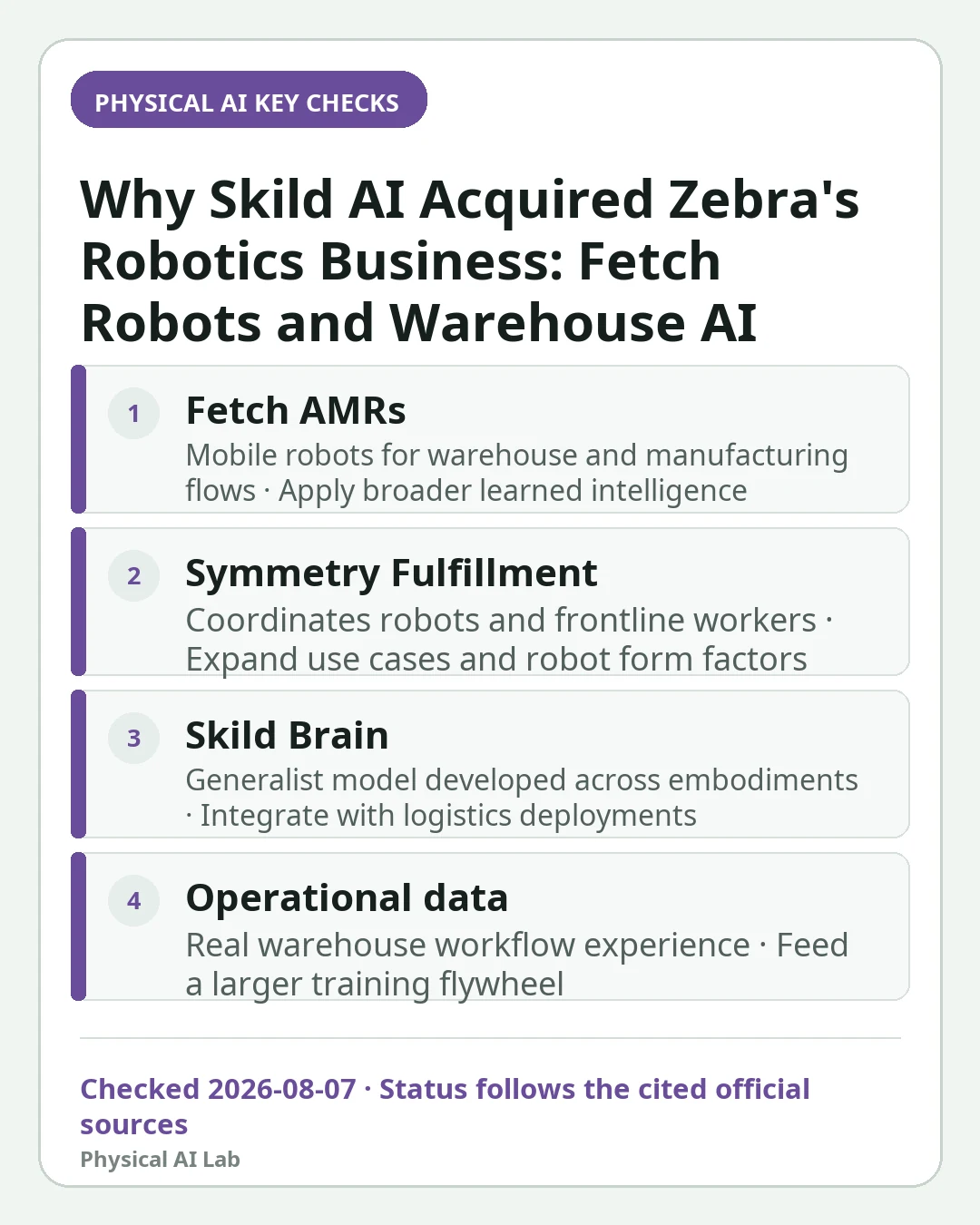
| Element | Established before the deal | Skild's stated direction |
|---|---|---|
| Fetch AMRs | Mobile robots for warehouse and manufacturing flows | Apply broader learned intelligence |
| Symmetry Fulfillment | Coordinates robots and frontline workers | Expand use cases and robot form factors |
| Skild Brain | Generalist model developed across embodiments | Integrate with logistics deployments |
| Operational data | Real warehouse workflow experience | Feed a larger training flywheel |
Fetch and Symmetry are the operational base being acquired
Fetch's legacy matters because warehouse autonomy is more than navigation. Fleet management, charging, task assignment, worker handoff and integration with warehouse systems determine whether a mobile robot completes useful work.
Skild specifically names Symmetry Fulfillment as an orchestration platform that coordinates robots and frontline workers using real-time data from Zebra devices. For the basic fleet distinction, see our AMR versus AGV guide.
The completed transaction and future integration are separate facts
The completed event is the transfer of Zebra's robotics automation business to Skild AI. Skild's announced intention is to add its model to that foundation, broaden form factors and deploy into more warehouse and fulfillment settings.
Until product documentation identifies supported robot versions, software releases and rollout dates, do not describe the planned layer as already active on every Fetch deployment. Customers should request a versioned migration statement rather than infer it from the acquisition headline.
| Statement | Status | Evidence needed next |
|---|---|---|
| Skild acquired the robotics automation business | Completed and announced by both sides | Transaction announcements |
| Skild Brain will be added to the platform | Stated integration direction | Release notes and supported-hardware list |
| Symmetry will expand to new verticals | Roadmap intention | Named deployments and dates |
| The combination creates massive productivity gains | Company expectation | Comparable site-level measurements |
Warehouse buyers should protect continuity during integration
Existing customers should confirm support ownership, spare parts, cloud tenancy, security updates, APIs and service-level terms. A change in corporate owner can affect contracts even when the physical robot remains unchanged.
Ask whether current workflows can remain on their existing software version and whether any model-enabled feature is opt-in. Our warehouse picking deployment guide adds the throughput, exception and human-handoff questions a site should preserve.
Productivity claims need a controlled site baseline
Skild predicts large productivity gains, while older Zebra case material reports improvements for particular Fetch configurations and customers. Neither proves the incremental effect of the newly combined Skild system.
A fair trial should compare the same order mix, travel distance, staffing and exception load. Report picks or moves per labor hour, intervention rate, blocked time and recovery time, not only the number of robots deployed.
Watch releases, contracts and named deployments
The next meaningful evidence will be a product release that names compatible Fetch hardware, the Symmetry version, data flows and safety boundaries. A named warehouse deployment with a pre-deal baseline would be stronger than another general demonstration.
The transaction also belongs in the broader physical AI company ecosystem, but this article should remain an acquisition fact-check. Valuation, unannounced deal terms and future ROI should not be invented from the strategic rationale.
Frequently asked questions
Did Skild AI acquire all of Zebra Technologies?
No. The announcements concern Zebra's robotics automation business, previously known as Fetch Robotics, not Zebra Technologies as a whole.
Are all Fetch robots already running the Skild Brain?
The official announcement states an intention to deploy and integrate the Skild Brain. It does not document that every installed Fetch robot has already been upgraded.
Does the acquisition prove warehouse productivity will rise?
No. It creates an integration opportunity, but the incremental result must be measured at comparable sites with throughput, intervention, downtime and labor baselines.
Official sources checked
- Skild AI acquisition announcement
- Zebra announcement of the Skild transaction
- Zebra's 2021 Fetch Robotics acquisition announcement
- Skild AI general-purpose robotic brain article
Last checked: August 7, 2026