Pre-event WRC 2026 material described a first Robot Shopping Street with robot chefs preparing food and drinks alongside other consumer experiences. The useful question is how the announced setup would handle throughput, hygiene, human intervention and fault recovery; the announcement alone does not establish commercial performance.
What the announced experience was meant to test
Pre-event information described a planned on-site consumer festival with robotic cooking and cultural-product experiences. A successful event activation does not prove that the same system is available for home purchase or profitable in an unattended store.
This article distinguishes reported facts from analysis. We keep event and company figures within the date and scope of their sources, and treat undisclosed prices, lead times and success rates as unknown.
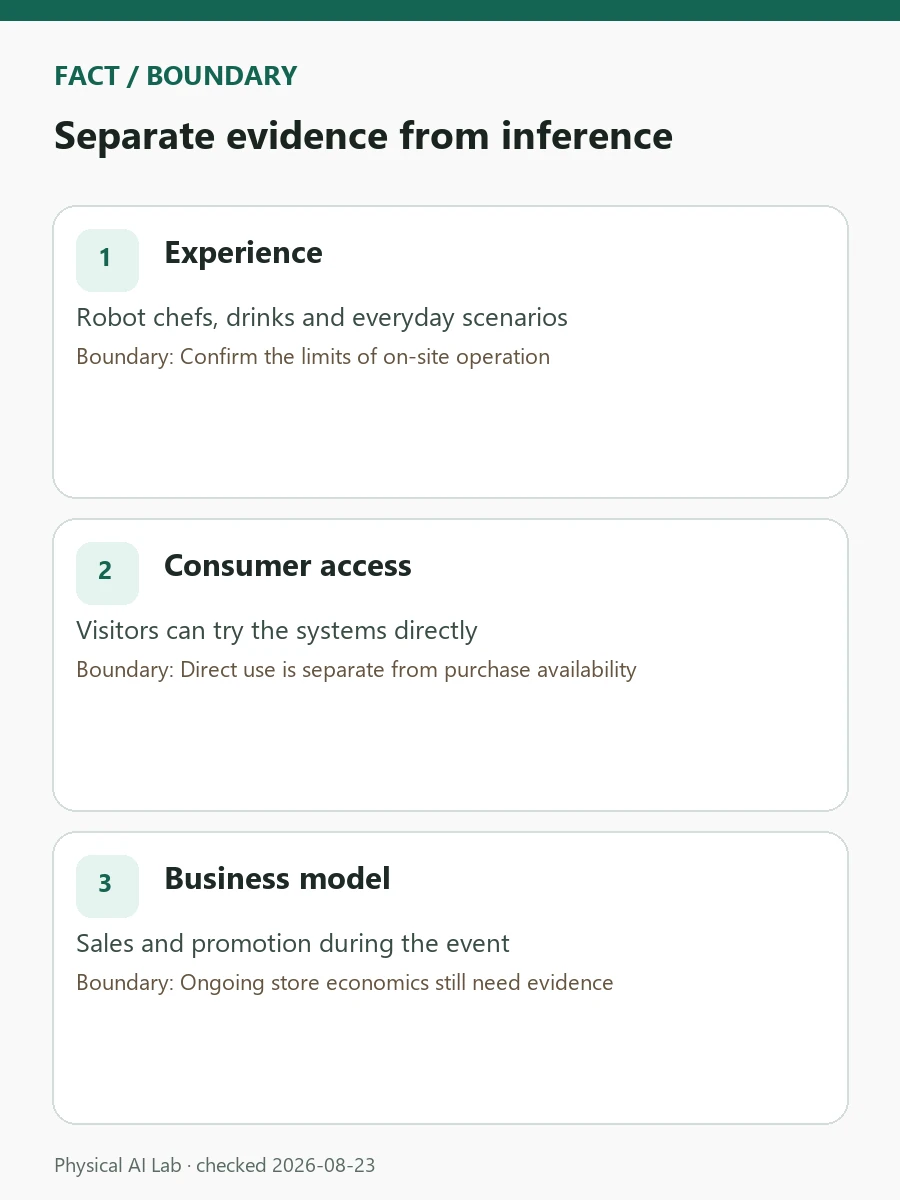
| Dimension | What is confirmed | What it does not prove |
|---|---|---|
| Experience | Robot chefs, drinks and everyday scenarios | Confirm the limits of on-site operation |
| Consumer access | The announcement described direct visitor use | Direct use is separate from purchase availability |
| Business model | Planned sales and promotion during the event | Ongoing store economics still need evidence |
Retail automation reaches far beyond robot manipulation
A retail robot must connect perception and manipulation with payments, inventory, queues, food safety, cleaning and customer service. The economics depend heavily on whether one person can supervise several machines.
The physical AI loop also needs sensor time synchronization, state estimation, planning, low-level control, safety limits and failure recovery to work continuously. A capable perception model cannot carry the operation by itself.
Measure the shift, not the highlight clip
Ask how the system fails and recovers during repeated orders. The number of task attempts, timing of human intervention and recovery time after a stop reveal whether the experience can become a stable operation.
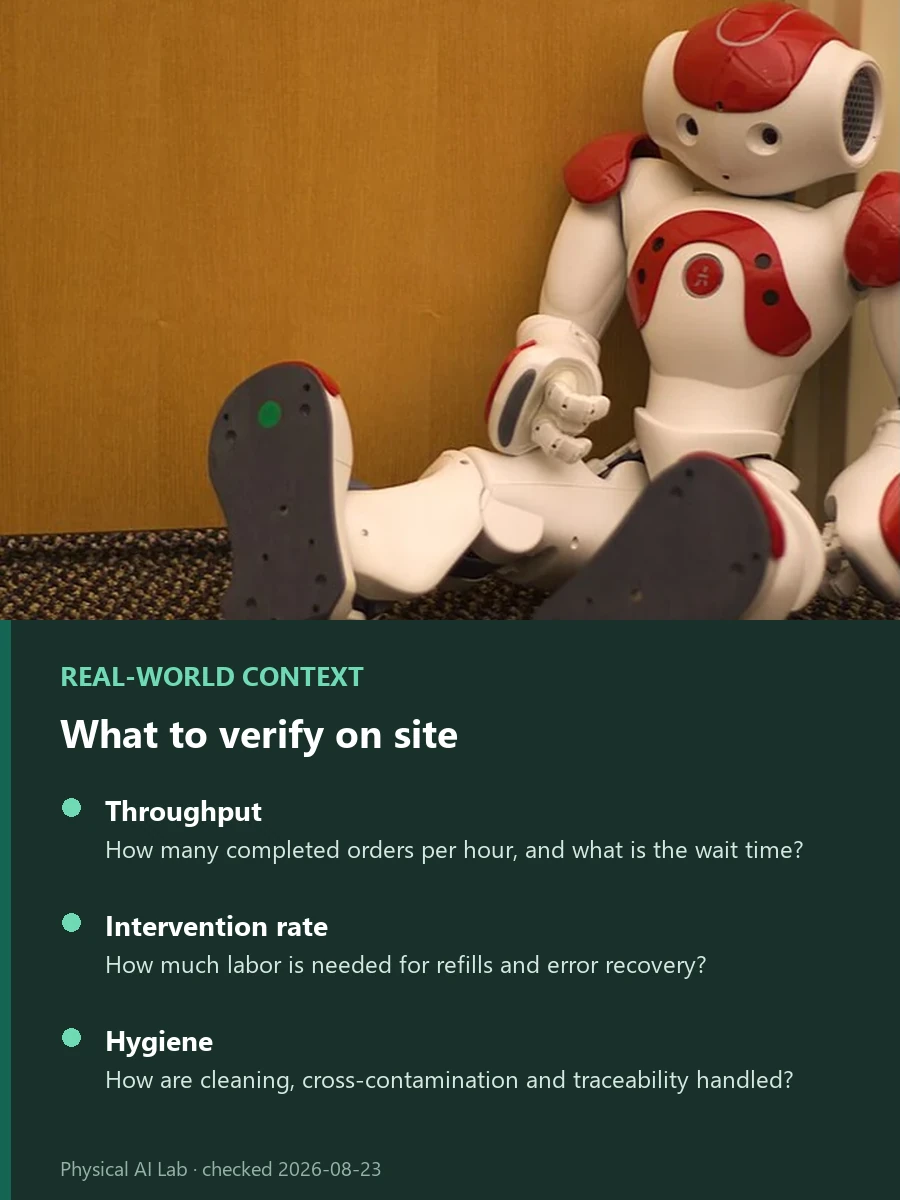
| Operating check | Question to ask |
|---|---|
| Throughput | How many completed orders per hour, and what is the wait time? |
| Intervention rate | How much labor is needed for refills and error recovery? |
| Hygiene | How are cleaning, cross-contamination and traceability handled? |

One perfect drink is not a peak-hour test
A video of one successful drink matters less than continuous peak-hour orders, ingredient shortages, shifted containers, contamination events and cleaning cycles.
The current sources describe an event and its program. Update the commercial judgment if customer-site records, independent testing or regulatory documentation becomes available.
Related systems behind a consumer robot venue
Our warehouse picking robot guide explains task completion, Open-RMF multi-robot integration covers shared facilities and VIO versus SLAM separates localization choices. This August 2026 article brings those operating questions into a consumer venue.
What the announced Robot Shopping Street could have tested
The announced WRC 2026 Robot Shopping Street was designed to expose consumer-facing robots to real orders, food and drink preparation, and everyday interactions. Useful post-event evidence would show repeatable service under disclosed conditions rather than only the novelty of the event.
Frequently asked questions
What evidence would make Robot Shopping Street relevant to a retailer?
Ask for a full operating-period record covering completed orders, queue time, replenishment, cleaning, waste, failed handoffs and staff intervention. That record is more useful than a successful serving demonstration.
What should I measure in a robot-chef trial?
Combine task success with human-intervention rate, mean recovery time, continuous operating time and failure conditions. Those four measures show whether service can continue after the first successful order.
Can a robot-chef event predict restaurant economics?
Only partially. Measure orders per hour, labor required for refills and recovery, waste, cleaning time, downtime and food-safety controls across a full operating period.
Official sources checked
- Beijing municipal government's official WRC 2026 event guide
- Invest Beijing's WRC 2026 industry overview
- World Robot Conference official service platform
Last checked: August 23, 2026