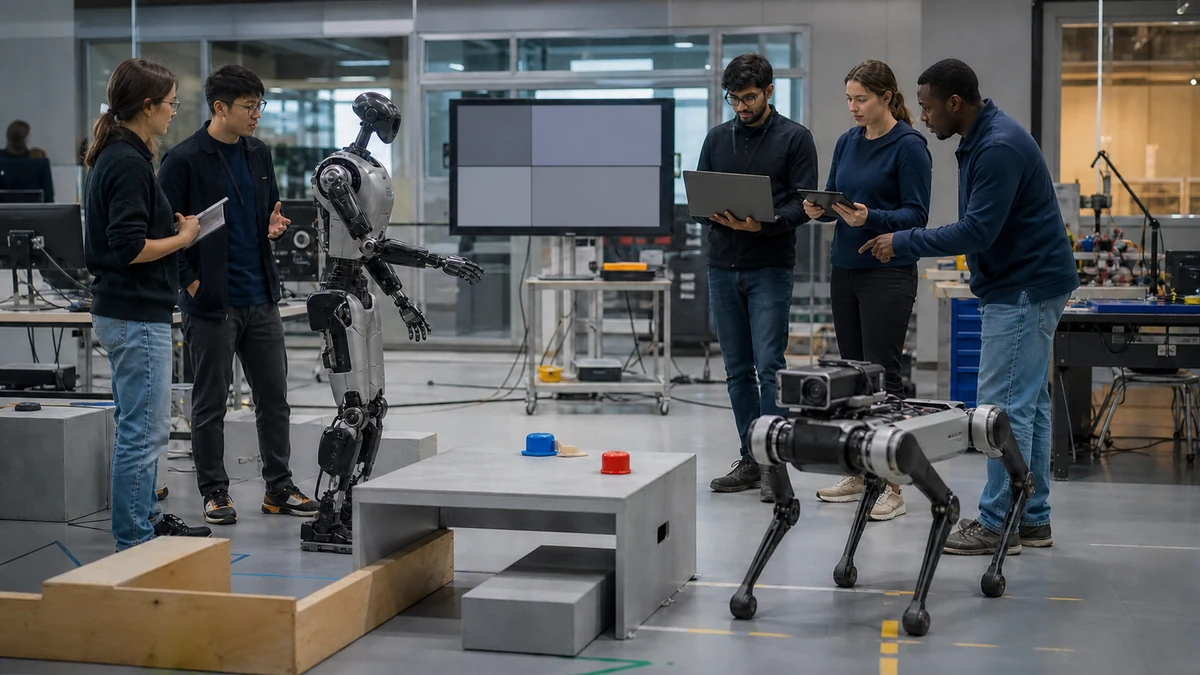
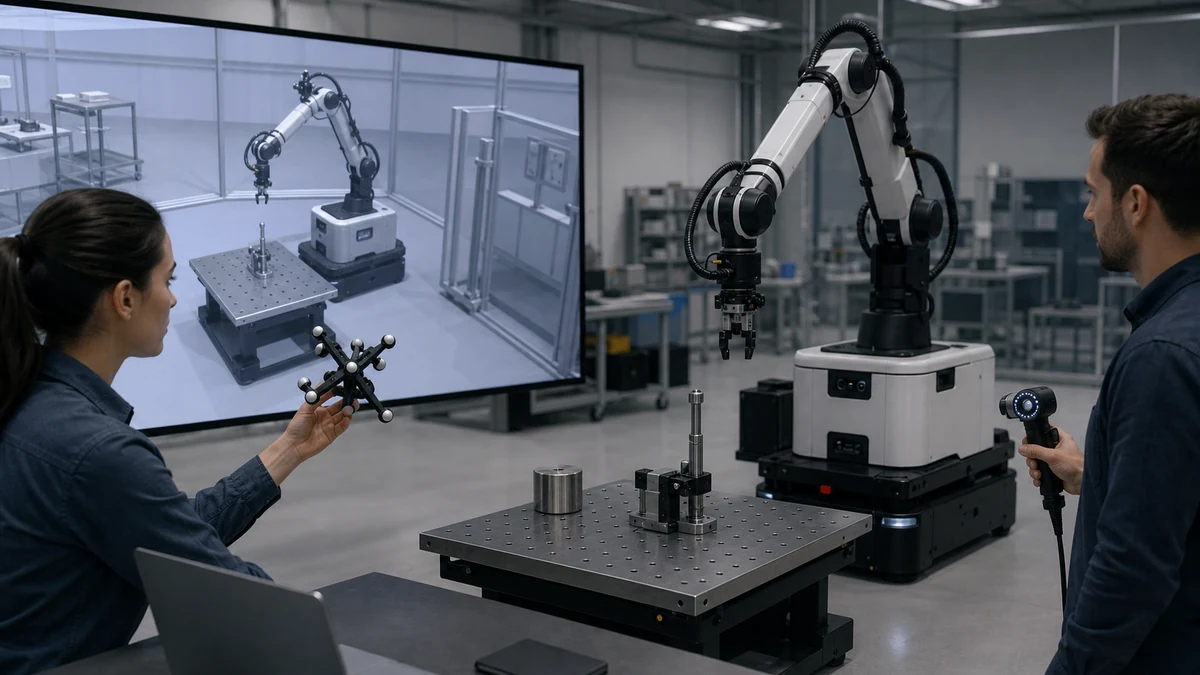
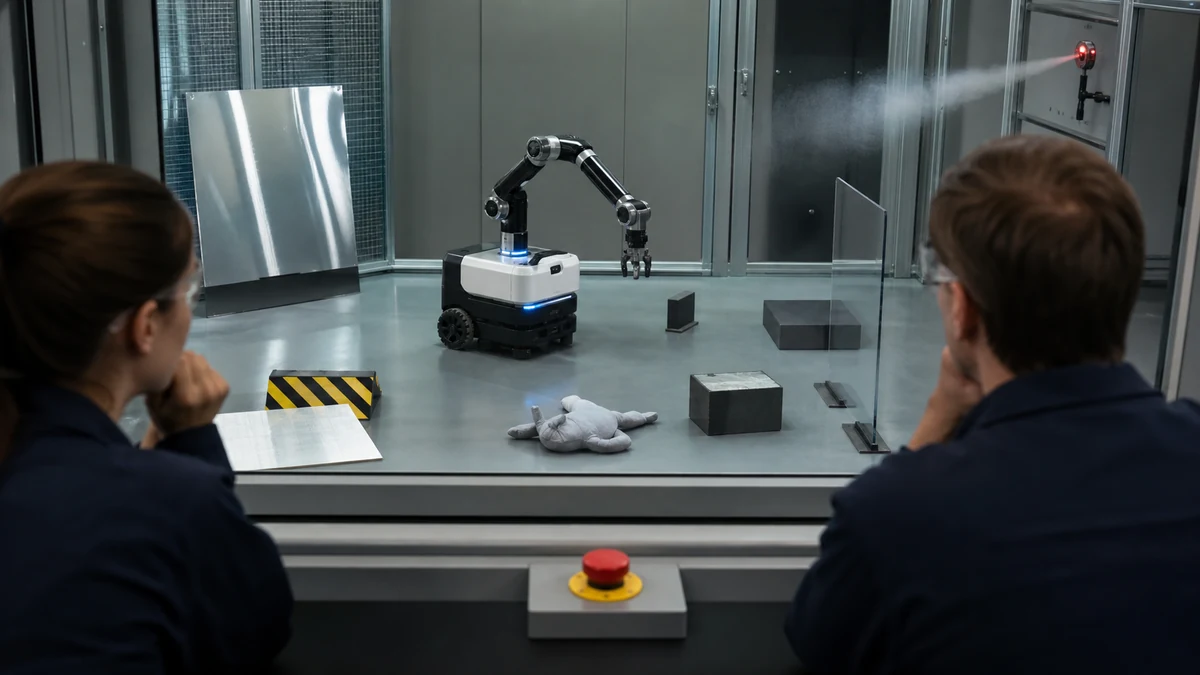
Physical AI Proof of Concept: Scope, Metrics, Trials and Deployment Gates
Plan a Physical AI proof of concept with scoped tasks, baselines, repeated trials, failure taxonomy, operational metrics and deployment gates.
Learn QDD actuator design across low-ratio gearing, motor sizing, current, heat, backdrivability, torque estimation, control and validation.
Learn Gemini Robotics-ER 1.6 spatial reasoning, grounded outputs, API workflow, coordinate handling, motion planning and robot validation.
Learn the harmonic drive working principle, including wave generator, flexspline, circular spline, ratio, backlash, stiffness and validation.
Compare robot actuator types including electric rotary and linear, hydraulic, pneumatic and compliant systems by task-level engineering needs.
Learn robot force torque sensor placement, range, cross-talk, drift, overload, calibration, coordinate transforms, filtering and control validation.
Choose robot encoders by absolute or incremental output, optical or magnetic sensing, accuracy, latency, dual feedback and validation.
Learn frameless robot motor integration, including rotor, stator, air gap, bearings, cooling, feedback, commutation and joint validation.
Compare robot reducer types by ratio, backlash, stiffness, efficiency, shock load, packaging, control behavior and lifetime validation.
Learn robot actuator structure from motor and transmission to encoders, torque sensing, drives, bearings, brakes, housing and thermal design.