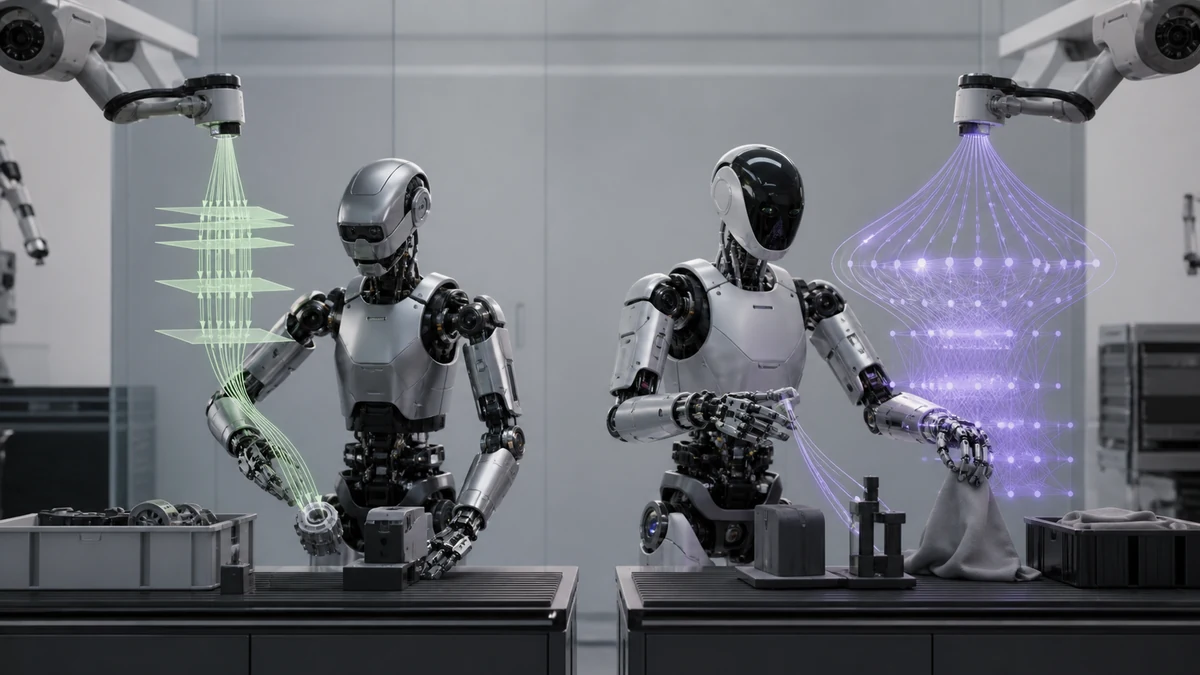
As of August 7, 2026, developers can download and work with NVIDIA Isaac GR00T N1.7, while GR00T N2 remains a preview. NVIDIA's open-model announcement says N2 is slated to become available by the end of the year, but it has not published a fixed date, downloadable checkpoint or production support terms for N2.
The practical decision is therefore not which of two released models to install. Use N1.7 for work that must start now, and treat N2 as an architecture and evaluation signal to track. Our N1.7 implementation guide covers the current model; this page stays focused on the N2 comparison.
N1.7 is available; N2 is still a preview
NVIDIA describes N1.7 as an open reasoning vision-language-action model for humanoids. The official Isaac-GR00T repository provides model weights and code, while the documented workflow lets a team inspect the release, run inference and post-train a policy today.
N2 was previewed at GTC as a next-generation robot foundation model built on DreamZero research. The phrase “slated to be available by the end of the year” is a target, not a release guarantee; procurement, integration and delivery plans should not depend on an unannounced day.
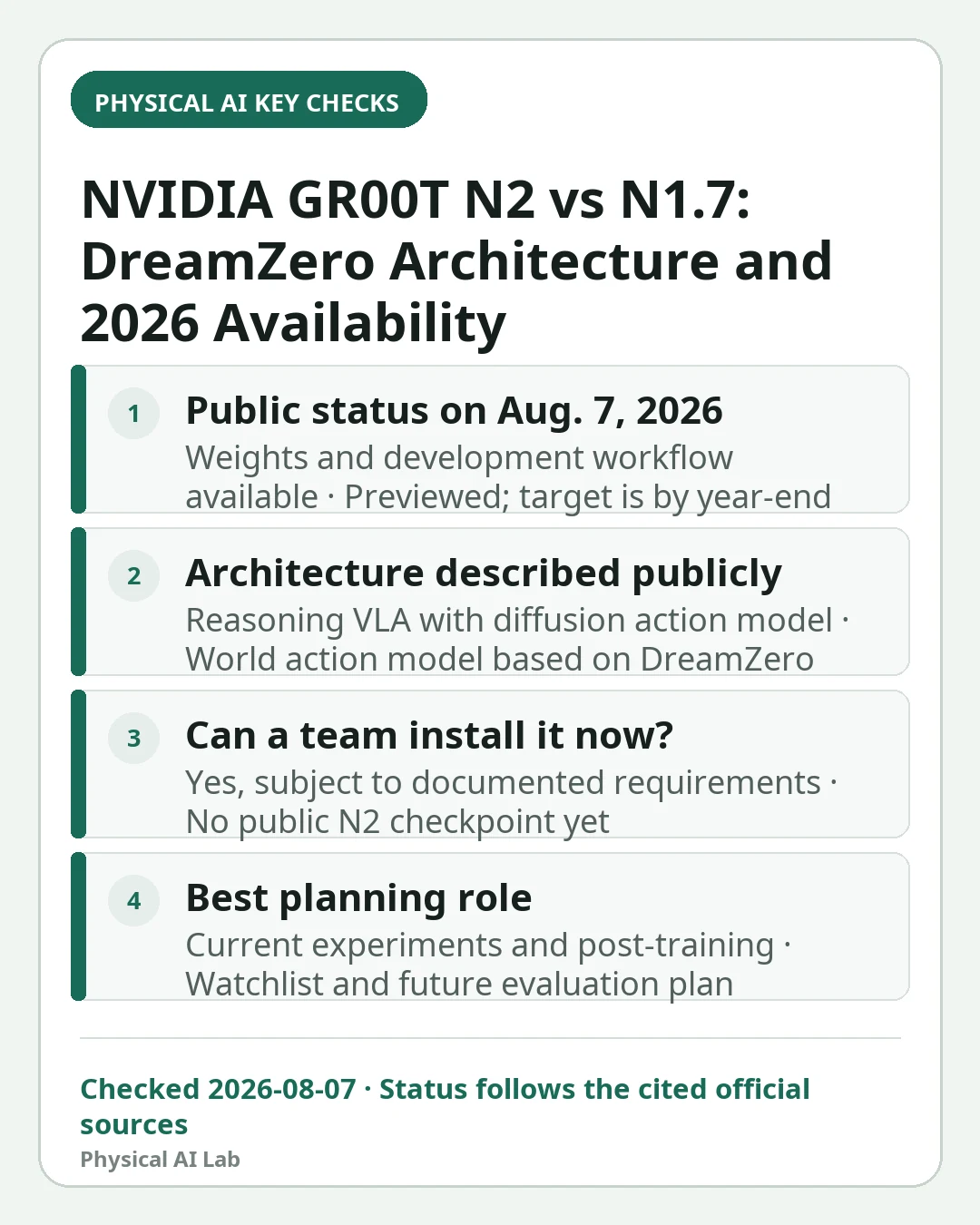
| Question | GR00T N1.7 | GR00T N2 |
|---|---|---|
| Public status on Aug. 7, 2026 | Weights and development workflow available | Previewed; target is by year-end |
| Architecture described publicly | Reasoning VLA with diffusion action model | World action model based on DreamZero |
| Can a team install it now? | Yes, subject to documented requirements | No public N2 checkpoint yet |
| Best planning role | Current experiments and post-training | Watchlist and future evaluation plan |
The architectural change is larger than a version number
N1.7 consumes images, language and robot state, then predicts action chunks through a VLA stack. NVIDIA's July technical guide says the release uses a Cosmos-Reason2-2B visual-language backbone and a diffusion transformer, with ONNX and TensorRT export support.
N2 is announced as a world action model. Instead of treating world prediction only as an auxiliary tool, the DreamZero direction jointly learns to predict future visual states and actions. For a general explanation of the two families, see VLA and VLM differences, but do not infer N2 implementation details that NVIDIA has not released.
What DreamZero contributes to the N2 story
DreamZero is the research basis named by NVIDIA, not a downloadable N2 specification. Its central idea is to combine a pretrained video model with a causal action expert so that predictive visual representations and robot actions are trained together.
That direction matters because a robot must reason about how contact and motion change a scene, not only map a command to a short action. It does not mean a model can safely imagine its way through every unfamiliar room or recover from every failure without task-specific data and controls.
| Public claim | What it supports | What it does not establish |
|---|---|---|
| More than twice the success of leading VLAs | NVIDIA's announced evaluation comparison | Universal advantage on every robot and task |
| No. 1 on MolmoSpaces and RoboArena | Standing on named generalist-policy leaderboards | Production uptime, safety or ROI |
| Based on DreamZero | World-action-model research direction | Final N2 parameter count or runtime requirements |
| Available by end of 2026 | Published release target | A guaranteed launch date or support contract |
Read the benchmark claims inside their named scope
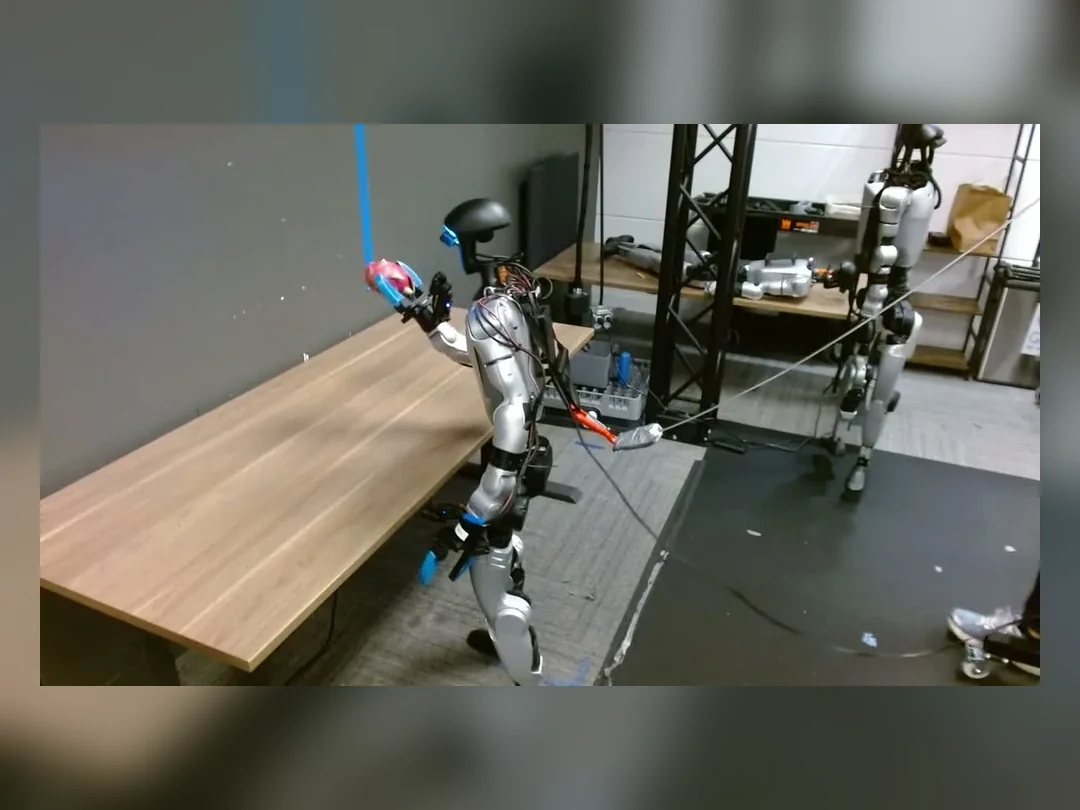
NVIDIA reports that N2 succeeds at new tasks in new environments more than twice as often as leading VLA models and ranks first on MolmoSpaces and RoboArena. Those are useful signals because they name comparison settings rather than offering only a demo montage.
They are still benchmark results reported before public N2 access. A deployment decision needs robot-specific success rate, latency, recovery behavior and human-intervention data. The robot VLA evaluation guide explains how to build that local test set.
Choose N1.7 for current development work
A team with a 2026 milestone can begin with N1.7, reproduce a documented task, record its own demonstrations and evaluate a post-trained checkpoint in simulation before moving to hardware. This creates a baseline that can later be rerun against N2.
Do not pause a funded project merely because a higher-numbered preview exists. Conversely, avoid locking a long-lived interface around undocumented N2 assumptions; keep observation schemas, action adapters and evaluation harnesses modular.
Recheck four items when N2 actually ships
Confirm the official checkpoint, license, supported embodiments and minimum compute first. Then compare the released architecture and benchmark protocol with the preview language, because names and capabilities can change before release.
Finally, rerun the same held-out tasks used for N1.7 and measure intervention rate as well as success. A polished new-task demo is evidence of a capability under stated conditions, not proof of autonomous commercial operation across an entire facility.
Frequently asked questions
Can I download GR00T N2 now?
No public N2 checkpoint was available as of August 7, 2026. NVIDIA has previewed the model and stated an end-of-year availability target; N1.7 is the version developers can access now.
Is GR00T N2 simply a larger N1.7?
NVIDIA presents it as a next-generation world action model based on DreamZero research, so the announced distinction is architectural, not merely a larger version number. Final implementation details await release.
Does the leaderboard result prove N2 is production-ready?
No. Named leaderboards help compare research policies, but production readiness also requires robot-specific latency, recovery, safety, uptime and intervention measurements.
Official sources checked
- NVIDIA open-model announcement with the GR00T N2 preview
- NVIDIA robotics announcement with N1.7 and N2 status
- NVIDIA GR00T N1.7 end-to-end development guide
- NVIDIA Isaac-GR00T repository
- DreamZero research project
Last checked: August 7, 2026