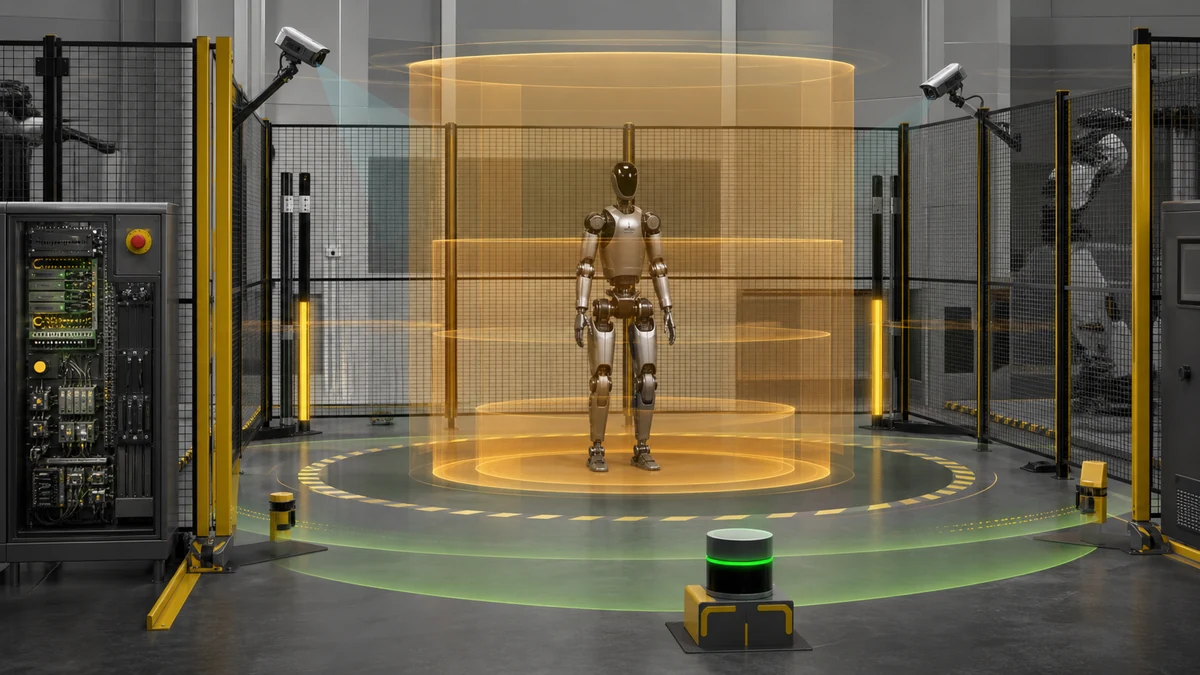
NVIDIA Halos for Robotics is a full-stack safety platform spanning IGX Thor, Halos OS and Core, sensing and validation components, an Outside-In safety-agent blueprint and inspection-lab services. NVIDIA calls it an industry-first system; that superlative is the company's claim, not an independently adjudicated market fact.
The practical boundary is equally important: the official product page lists Halos Core and Outside-In in early access, while inspection work can help an integrator prepare evidence before final third-party certification. This article maps that boundary; the broader physical AI safety layers guide covers system architecture beyond one vendor.
Halos is a portfolio, not one certification switch
The product page groups compute, operating software, safety functions, sensor bridging, external monitoring and inspection under the Halos name. Each part addresses a different layer, so buying compatible hardware cannot certify an entire robot automatically.
An integrator still owns the application-level hazard analysis, safety requirements, implementation, verification and evidence for the final machine. The exact certification route depends on the robot, task, environment and applicable standards.
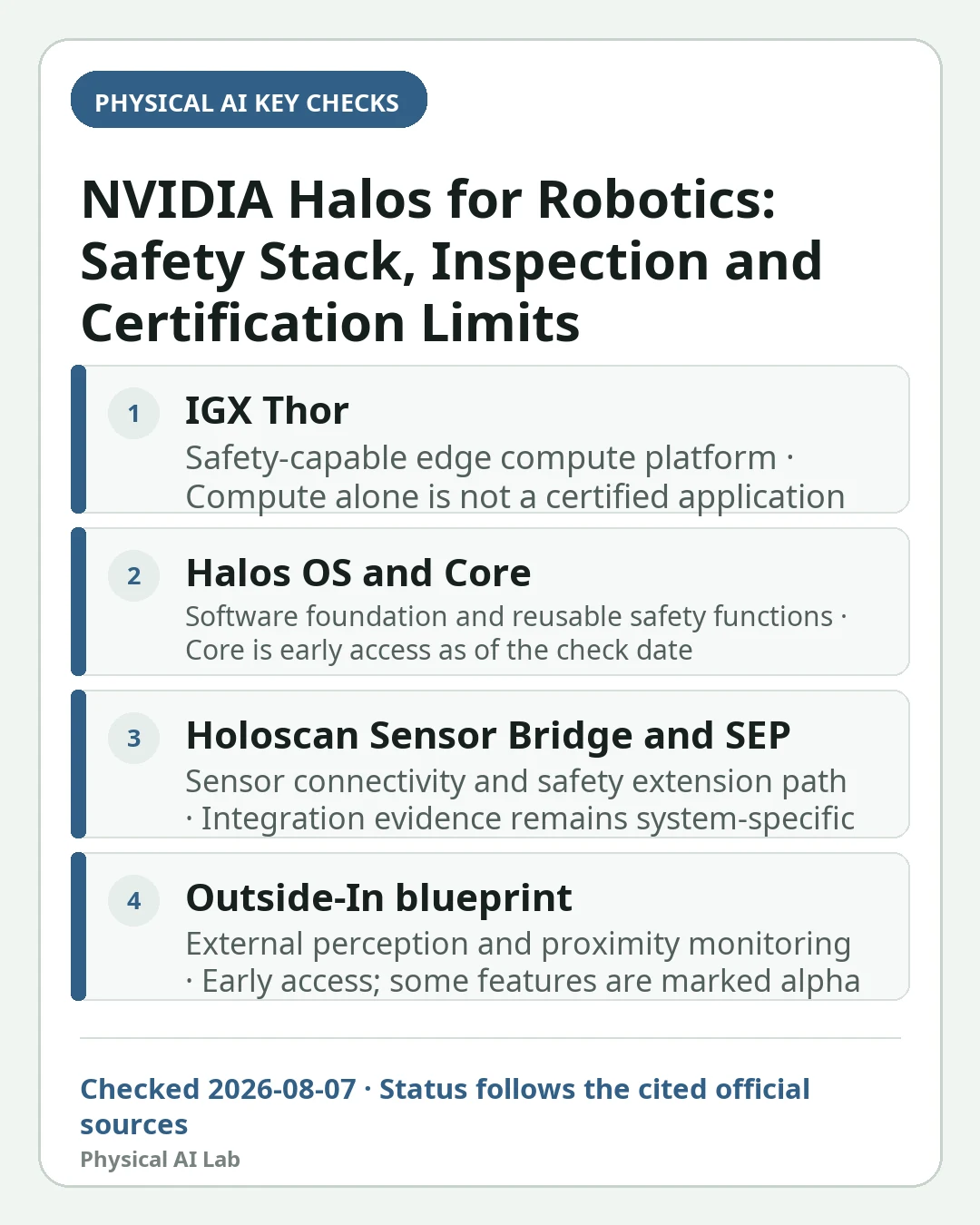
| Halos element | Published role | Boundary to retain |
|---|---|---|
| IGX Thor | Safety-capable edge compute platform | Compute alone is not a certified application |
| Halos OS and Core | Software foundation and reusable safety functions | Core is early access as of the check date |
| Holoscan Sensor Bridge and SEP | Sensor connectivity and safety extension path | Integration evidence remains system-specific |
| Outside-In blueprint | External perception and proximity monitoring | Early access; some features are marked alpha |
| Inspection lab | Pre-assessment and integration inspection support | Not final third-party product certification |
Halos Core is available through an early-access path
NVIDIA's product information describes Halos Core access for registered developers and lists Linux and Linux with QNX configurations. Early access means teams should confirm version, support terms, target hardware and production restrictions before designing a committed safety case around it.
The correct engineering record names the exact release and configuration used. A marketing family name is too broad for traceability because APIs, supported platforms and safety documentation can change between early-access and generally available releases.
Outside-In monitors the robot from the environment
The Outside-In blueprint uses external cameras and safety agents for functions such as proximity monitoring, out-of-distribution detection and camera-blockage detection. This can complement onboard sensing by observing the workcell from a different viewpoint.
The current Outside-In release notes label the package early access and identify some alpha features that should not be used in production. A demo of detection or hardware-in-the-loop testing therefore supports evaluation, not a claim that every component is production-qualified.
.jpg)
Inspection readiness and certification are separate gates
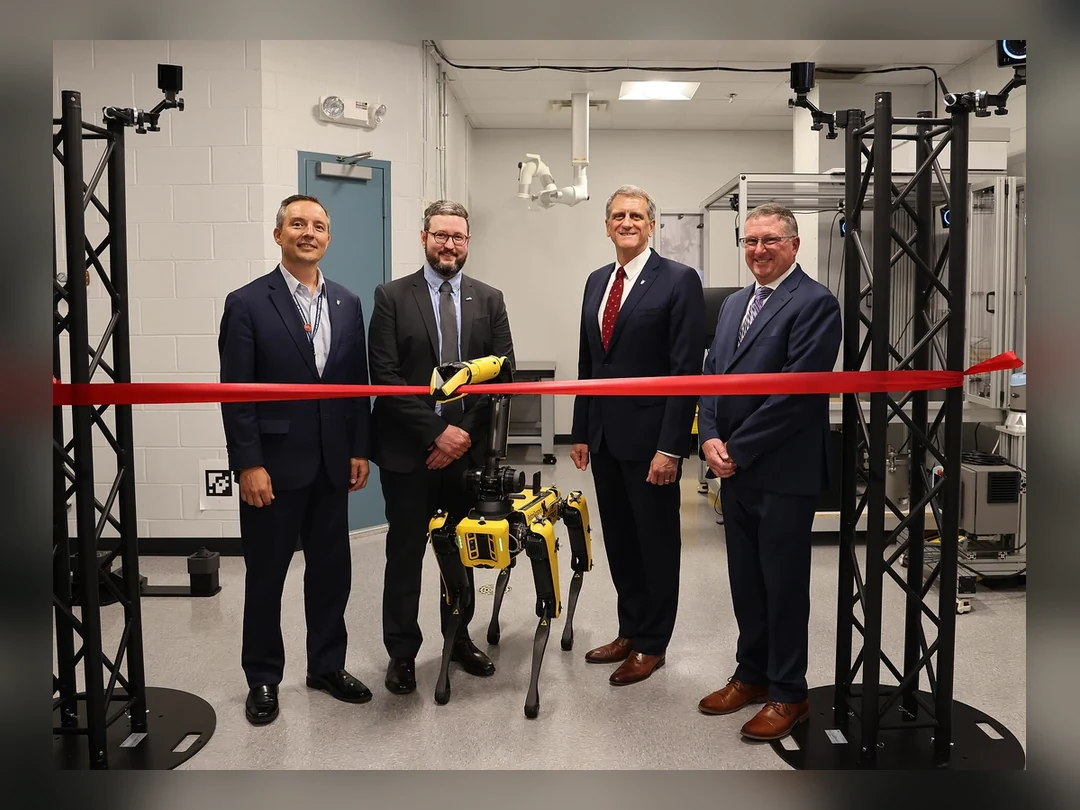
NVIDIA says its inspection lab is ANAB-accredited and can help partners inspect integrations before final third-party certification. The useful conclusion is that teams can prepare and find gaps earlier, not that the lab announcement certifies any robot that uses Halos.
Certification applies to a defined product or system configuration and evidence package. Changes to sensors, software, motion limits, installation or intended use can require additional assessment.
| Stage | Typical evidence | Permitted conclusion |
|---|---|---|
| Concept | Hazards and safety requirements | A safety approach is proposed |
| Implementation | Architecture, traceability and component records | Requirements have an implementation path |
| Inspection/readiness | Test results and gap findings | The integration is being prepared for assessment |
| Final third-party certification | Assessor decision for a defined configuration | Only the certified scope may be claimed |
| Operation | Site validation, maintenance and change control | Safety remains managed after certification |
Even a well-performing VLA needs independent protection
A learned model can improve perception and behavior but may fail outside its training distribution. Safety-related stop or speed-limiting functions should not be inferred from a policy's average task success, confidence score or polished demonstration.
Use the VLA evaluation guide to measure task behavior and the runtime safety shield guide to understand software constraints, while keeping required independent protective functions in the system safety case.
How to evaluate Halos for a project
Start with the hazards and required safety functions, then map each requirement to a Halos component, another subsystem or an operational control. Record access state, release version, supported hardware, evidence artifact and responsible assessor for every mapping.
Finally, test normal work, foreseeable misuse, sensor blockage, communication loss, model uncertainty, reset and maintenance states. A full-stack offering can reduce integration effort, but only a complete application-level verification shows whether the assembled system meets its requirements.
Frequently asked questions
Does using NVIDIA Halos certify a robot?
No. Halos supplies components, tools and inspection support. Final certification applies to a defined integrated product or system and requires the relevant independent assessment.
Are Halos Core and Outside-In generally available?
NVIDIA lists both through early-access paths as of August 7, 2026. Teams must confirm the exact release, terms and production restrictions before use.
What does the NVIDIA inspection lab prove?
Its work can help inspect integrations and prepare evidence before final third-party certification. It does not automatically certify every Halos-based robot.
Official sources checked
- NVIDIA Halos for Robotics announcement
- NVIDIA technical overview of Halos for Robotics
- NVIDIA Halos for Robotics product page
- NVIDIA Halos Outside-In release notes
Last checked: August 7, 2026