A delivery contract should answer which store serves which address today, what happens when weather closes the route, and who resolves a missing handoff. A city on a rollout list is not yet a service promise to every household.
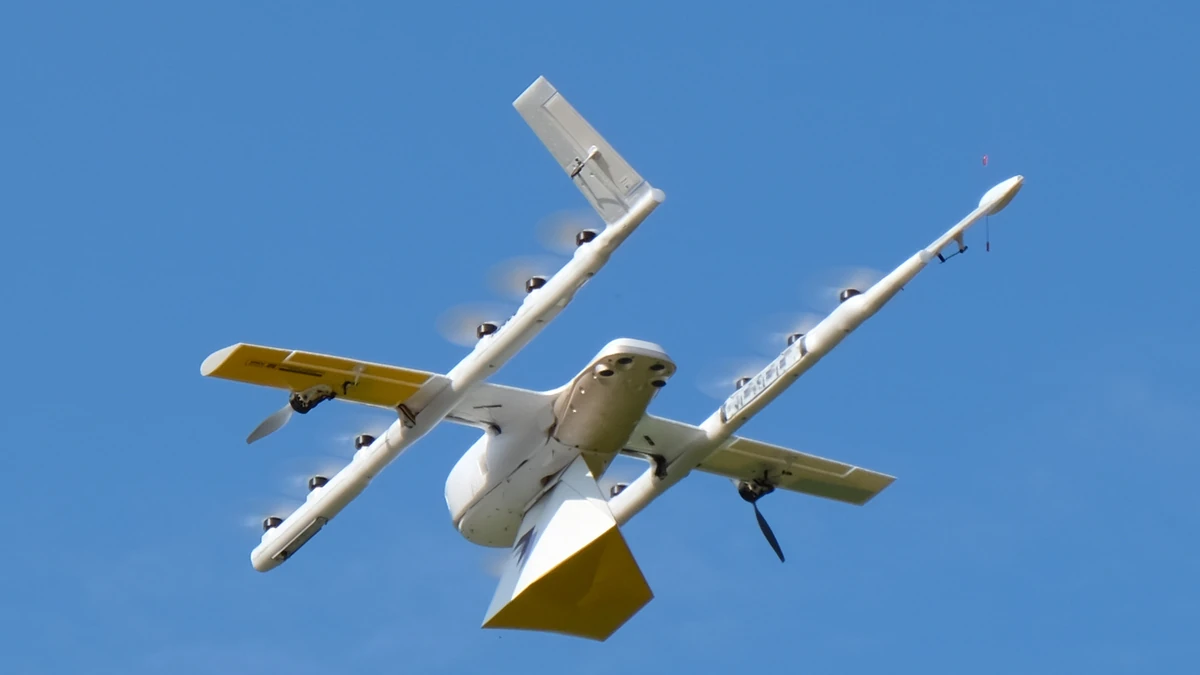

Define the delivery job and its current footprint
Wing’s June 2026 announcement names Memphis, New Orleans, Philadelphia, Phoenix, San Diego, the San Francisco Bay Area, and Salt Lake City as expansion markets and says the plan would bring its US footprint to nearly 20 markets. That language does not mean all seven became orderable on the announcement date. A market, an operating store, an eligible address, and an available delivery slot are distinct states. Announcements should be converted into address-level service states.
Check store, address, product, and handoff readiness
Wing and Walmart need a participating store, compliant launch and delivery areas, stocked eligible products, a reachable customer address, weather within limits, functioning aircraft and support systems, and a safe handoff point. Walmart previously described an approximate six-mile aircraft range, but that is not a guaranteed store radius or delivery time. Buildings, airspace, routing, community constraints, and waitlists can make nearby addresses ineligible. Aircraft range is only one gate in retail fulfillment.
| Workflow handoff | Primary owner | Acceptance signal | Common exception |
|---|---|---|---|
| Order to store | Walmart commerce system | Eligible basket and slot | Out of stock |
| Pick to aircraft | Store and launch team | Correct sealed payload | Late or wrong item |
| Route release | Flight operation | Weather, aircraft, and airspace clear | Closure or system fault |
| Aircraft to customer | Wing operation and customer | Safe confirmed handoff | Blocked point or absence |
| Exception to recovery | Named contractual owner | Refund, return, and incident closure | Payload or aircraft recovery |
Pilot the complete order-to-recovery workflow
Trace order acceptance, picking, packing, aircraft loading, route release, takeoff, flight, lowering or handoff, confirmation, and exception recovery. Inject out-of-stock items, late picking, a blocked handoff point, wind change, link loss, customer absence, and a forced return. Compare the drone path with curbside or road delivery for the same basket rather than treating flight time as the end-to-end service time. The customer clock begins before takeoff and continues after landing.
- load time
- route release
- weather limit
- airspace limit
- handoff point
Measure customer success, not airborne packages alone
Wing says its network has completed more than one million commercial deliveries; the figure is not disclosed as Walmart-only volume. It does not publish unit economics, on-time rate, incident rate, or the eligible-demand denominator. Measure order-to-handoff time, cancellation, redelivery, customer contact, wrong or damaged item, weather availability, aircraft utilization, and store labor. A completed flight without a successful handoff is not a completed customer job. Cumulative network volume is not a Walmart-specific economics report.
| Exception | Immediate owner | Customer response | Evidence to retain |
|---|---|---|---|
| Weather cancellation | Flight operation | Reschedule or refund | Weather and decision timestamp |
| Store delay | Walmart store | Updated slot | Pick and release times |
| Blocked delivery point | Operation and customer | Alternate or return | Site image and contact log |
| Link or aircraft fault | Wing support | Safe return or recovery | Telemetry and maintenance action |
| Wrong or damaged item | Retail and delivery contract | Replacement or refund | Basket, packing, and handoff record |
Assign weather, exception, and recovery ownership
Weather rules need a service promise and a customer communication owner. Store teams own packing and release; Wing or its operating structure owns aircraft and flight-system response; the site agreement should name ground-area security, lost payload, emergency landing, recovery, refunds, and data. The outdoor robotics test guide adds environmental and communication cases that a sunny-day launch misses. Exception ownership determines whether a novel delivery feels reliable.
Scale only when planned markets become repeatable operations
A January 2026 plan said 150 additional Walmart stores would be added over the following year, targeting more than 270 delivery locations in 2027. Those are plans and targets, not completed deployments. Scale evidence will arrive as opening dates, active stores, eligible households, service hours, completed orders, cancellation distributions, repeat use, and operating cost. Expansion should be judged market by market.
A 2027 target becomes evidence only as locations open and produce denominators.
Questions readers ask next
Which named markets and Walmart locations are taking orders now, and which remain planned openings on the 2027 expansion schedule?
Hidden cost sits in store picking, launch-site staffing, weather downtime, customer support, airspace and site work, recovery, maintenance, and low route density. Measure the full order workflow; aircraft flight time alone omits most retail labor.
After one million deliveries, what route density, weather availability, merchant workflow and ground-support costs still determine unit economics?
The public milestones do not establish per-order profit or a universal payback period. Unit economics require local eligible demand, repeat use, basket mix, store labor, aircraft utilization, cancellation, support, and capital allocation.
Official source trail: