Robot risk assessment identifies how people can be harmed across the application lifecycle and selects controls until residual risk is acceptable under the applicable process. It covers more than robot-arm faults: tools, process energy, workpieces, layout, software, people and operating modes share the boundary.
FMEA, HAZOP and STPA are complementary analysis techniques. FMEA begins with failure modes, HAZOP explores deviations from design intent and STPA examines unsafe control actions and inadequate constraints, including scenarios in which individual components have not failed.
This guide is educational, not a compliance determination. Use it with the Physical AI safety-layers guide and runtime safety-shield guide.
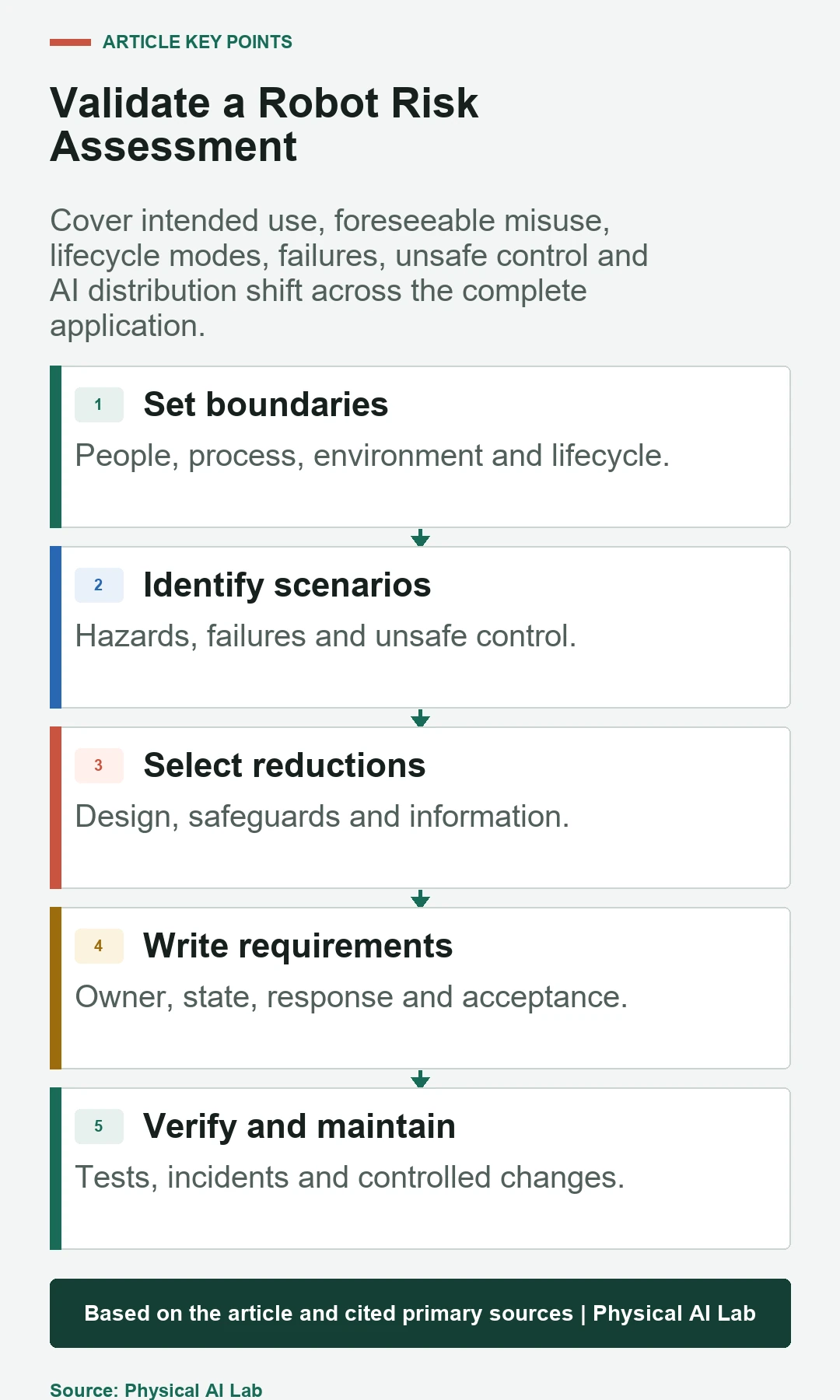
Set the complete system and lifecycle boundary
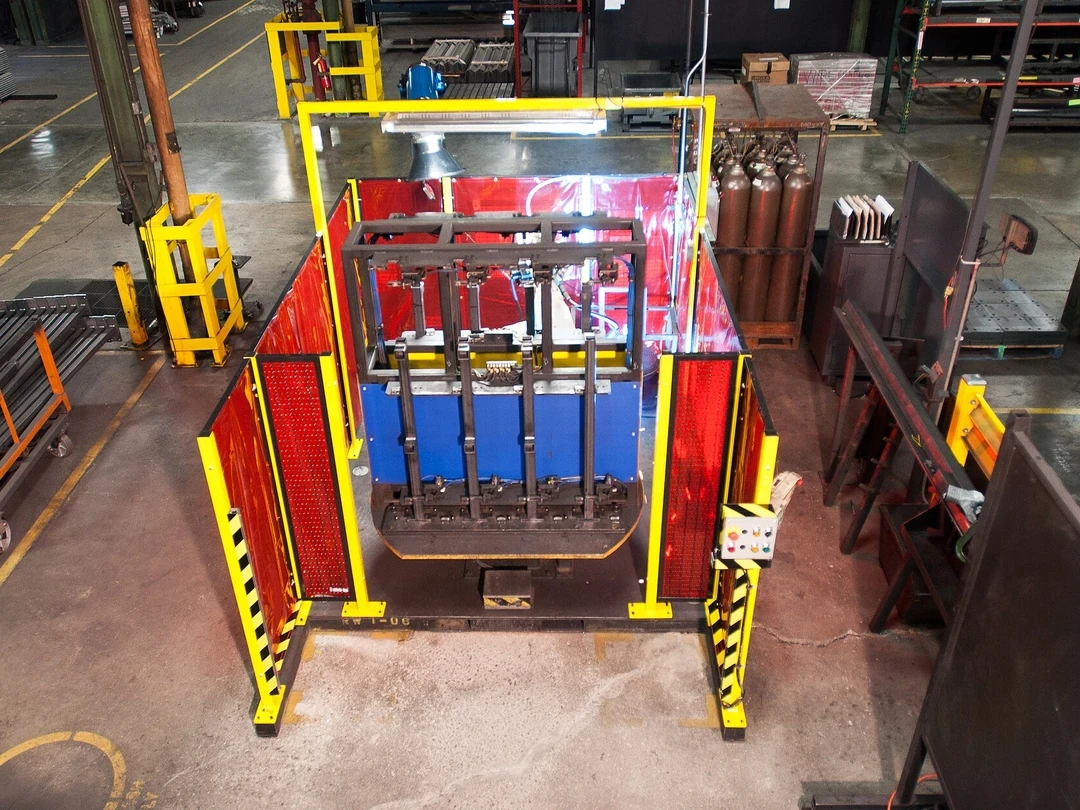
Define robot, tool, workpiece, fixtures, process energy, controls, networks, environment and interacting people. Cover transport, installation, setup, teaching, automatic operation, cleaning, recovery, maintenance and decommissioning.
Write intended use, reasonably foreseeable misuse, access routes, operator competence and environmental limits. Excluding a mode because production is not supposed to use it does not remove foreseeable exposure.

Define losses, hazards and acceptance rules first
Name unacceptable losses such as injury, exposure, dropped load or loss of control. Connect them to hazardous system states and credible scenarios before assigning scores.
Document the risk-estimation method and escalation rules. Numeric ranks help prioritize work but do not turn uncertainty into objective truth or permit serious hazards to disappear through multiplication.
| Method | Starts from | Finds well | Blind spot if used alone |
|---|---|---|---|
| FMEA | Component or function failure | Failure effects and detection | Unsafe normal interaction |
| HAZOP | Deviation from design intent | Process and command deviations | Complex control structure |
| STPA | Losses and control constraints | Unsafe control interactions | Detailed component reliability |
| Incident review | Observed event | Real operating evidence | Unknown unobserved cases |
| Task analysis | Human work sequence | Exposure and misuse | Latent technical failures |
Use FMEA for failure effects and diagnostics
List functions, failure modes, local and system effects, causes, existing controls and detection. Follow failures through safety functions rather than stopping at a component symptom.
Treat common-cause and dependent failures separately. A diagnostic that shares power, timing or software with the failed function may not provide independent coverage.
Use HAZOP for deviations from intent
Apply guide words to commands and process variables: no, more, less, reverse, early, late, other than or part of. For a robot, deviations may involve speed, force, position, identity, sequence, timing and authority.
Record cause, consequence, safeguard and action. HAZOP works best with a multidisciplinary team that understands both process physics and control implementation.
Use STPA for unsafe control scenarios
Model controllers, controlled process, feedback and control actions. Ask whether an action is not provided, provided when unsafe, provided too early or late, or applied too long or stopped too soon.
The MIT STPA Handbook explains the method. Apply it within a defined project and retain evidence; using the name STPA does not guarantee complete scenario coverage.
Cover AI distribution shift and authority conflicts
AI robot hazards include unfamiliar observations, brittle language grounding, delayed inference, stale world state and a policy requesting motion outside the verified envelope. These are not always reducible to a failed hardware part.
Analyze conflicts among autonomy, teleoperation, safety PLC, human intervention and recovery controllers. Define who has authority, how transitions occur and what state is safe when channels disagree.
Select risk reduction in a hierarchy
Prefer eliminating hazards or reducing them through inherently safer design, then safeguards and complementary protective measures, then information and training. A warning cannot compensate for an avoidable pinch point or exposed process energy.
Verify that a control works in every relevant mode and does not create a new hazard. Record residual risks that must be communicated and managed.
Turn findings into testable safety requirements
Each material scenario should produce an owned requirement with trigger, state, response time, final condition, fault behavior and acceptance evidence. Avoid statements such as system shall be safe or AI shall be reliable.
Link requirements to design elements and verification cases in both directions. An implemented safeguard without a traced hazard and a hazard without a verification case are both gaps.
Use current standards and guidance carefully
The ISO catalog states that ISO 12100:2010 remains the current published machinery risk-assessment edition while a replacement draft is under development. Project applicability and transition rules must be checked at decision time.
Use the actual normative texts, Type-C standards and jurisdictional rules with competent professionals. This article explains analysis structure and does not assign a required risk level.
Include operations, incidents and near misses
Field observations reveal shortcuts, workload, nuisance stops and recovery practices missing from design workshops. Feed incidents, near misses, interventions and maintenance findings back into scenarios and controls.
NIOSH maintains a robotics safety research program relevant to workplace evidence. Treat public guidance as supporting material, not a substitute for application assessment.
Reassess every material change
Trigger review after tools, payload, program, speed, layout, sensors, firmware, AI model, data, network, operator role or operating environment changes. Compare the change with hazard assumptions and safety-function validation.
Connect emerging failures to the failure-mining guide but keep protective requirements independent of learning updates.
| Trace link | Required artifact | Audit question | Failure |
|---|---|---|---|
| Hazard to control | Risk decision | Why this control | Unjustified design |
| Control to requirement | Specification | What must happen | Vague intent |
| Requirement to test | Case and result | How verified | Paper control |
| Test to baseline | Configuration | What was tested | Version gap |
| Change to reassessment | Impact record | What became invalid | Stale safety file |
Release a living risk record
Preserve boundaries, assumptions, participants, methods, scenarios, estimates, controls, residual risks, requirements, tests, configuration baseline, owner and reassessment triggers. Keep disagreements and uncertain evidence visible.
Close review with the following checks.
- Cover all lifecycle modes and foreseeable misuse.
- Combine component, deviation and control-scenario views.
- Treat AI shift and authority transitions explicitly.
- Trace every material hazard to a verified control.
- Maintain the assessment through incidents and changes.
Frequently asked questions
Is FMEA alone a complete robot risk assessment?
No. It is useful for failure modes but can miss unsafe interactions and normal-operation hazards.
Can a low RPN be ignored?
Not automatically; severity, uncertainty, legal requirements and method-specific rules still require judgment.
Does STPA replace FMEA?
No. They answer different questions and are often complementary.
Who should participate?
Include design, controls, process, safety, operations, maintenance and affected user expertise.
Does an AI model update trigger reassessment?
Yes when behavior, distribution assumptions, timing, interfaces or verified controls may change.
Hazard-to-Requirement Traceability Boundary
A robot risk assessment succeeds through traceability from hazard scenario to implemented requirement, verified evidence and controlled change—not through the name or score of one analysis method.