Skip to content

Physical AI Lab

  • Home
  • Physical AI
  • VLA Models
  • Sim-to-Real
  • Foundation Models
  • Humanoid Robots
  • 한국어
  • 日本語
  • 简体中文
  • 繁體中文

Physical AI Companies

English articles about physical ai companies at Physical AI Lab.

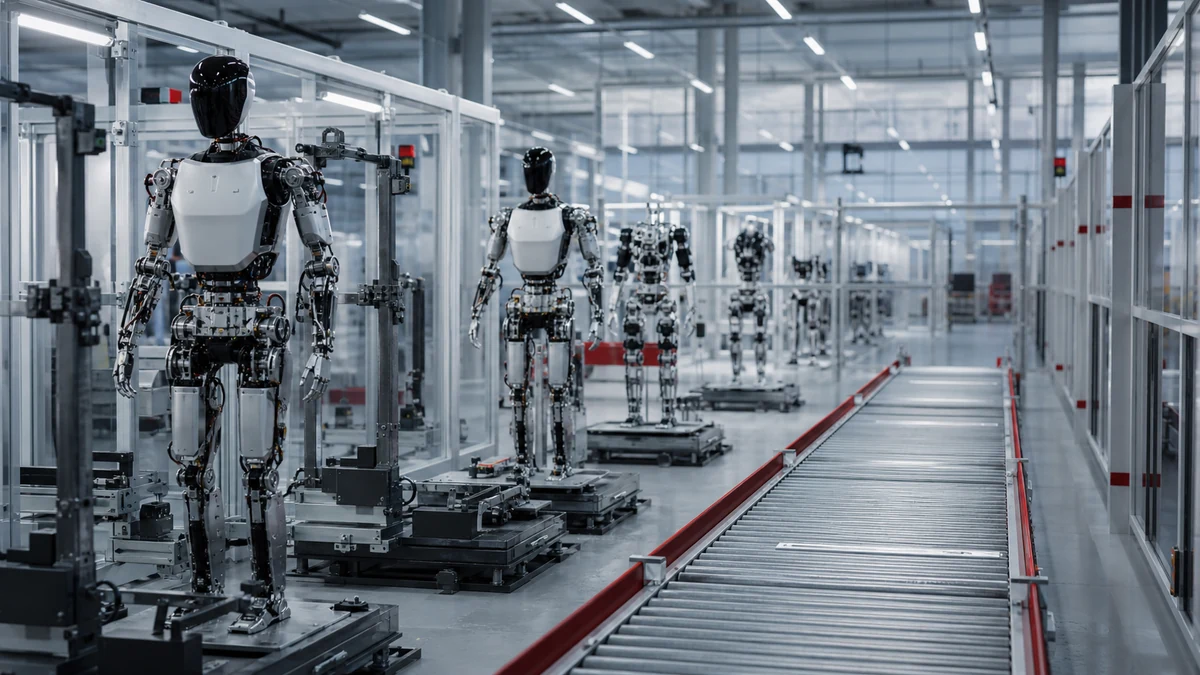
Figure BotQ Production Fact-Check: Why One Robot per Hour Is Not Annual Output
Published: August 7, 2026 by Physical AI Lab
Generic editorial robot concept illustrating Figure BotQ Production Fact-Check: Why One Robot per Hour Is Not Annual Output

Figure has published meaningful evidence that BotQ is scaling. The numbers describe different things, however: cycle time, designed capacity, completed robots and external deliveries cannot be used interchangeably.
Categories Physical AI Companies

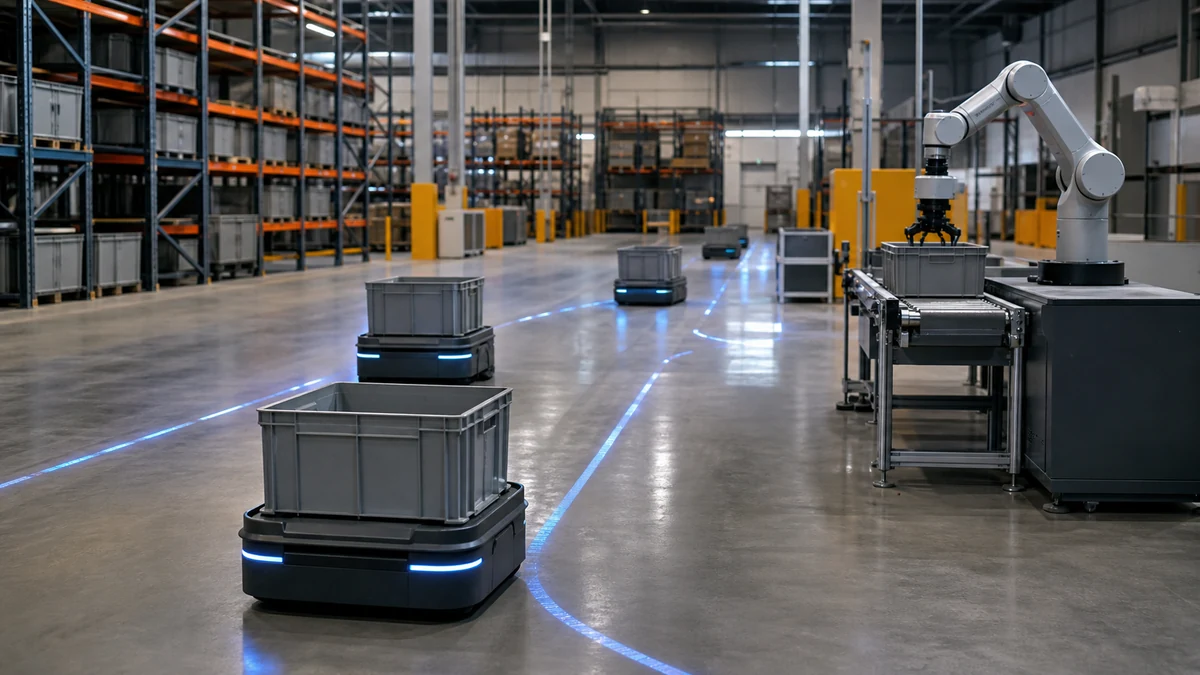
Why Skild AI Acquired Zebra’s Robotics Business: Fetch Robots and Warehouse AI

Published: August 7, 2026 by Physical AI Lab
Generic editorial robot concept illustrating Why Skild AI Acquired Zebra's Robotics Business: Fetch Robots and Warehouse AI

Skild AI completed the acquisition of Zebra Technologies’ robotics automation business, formerly Fetch Robotics. The transaction transfers an established AMR and orchestration base; deploying the Skild Brain across it is the buyer’s forward integration plan, not a published warehouse-wide result.

Categories Physical AI Companies

Unitree UnifoLM-WMA vs VLA: Training and Deployment for G1 and Z1

Published: August 7, 2026 by Physical AI Lab
Generic editorial robot concept illustrating Unitree UnifoLM-WMA vs VLA: Training and Deployment for G1 and Z1

UnifoLM-WMA-0 combines future-video modeling with an action head and can run in simulation or decision-making modes. UnifoLM-VLA-0 maps visual-language context to actions through a VLA workflow aimed at humanoid manipulation; neither repository is turnkey autonomy for every Unitree robot.

Categories Physical AI Companies

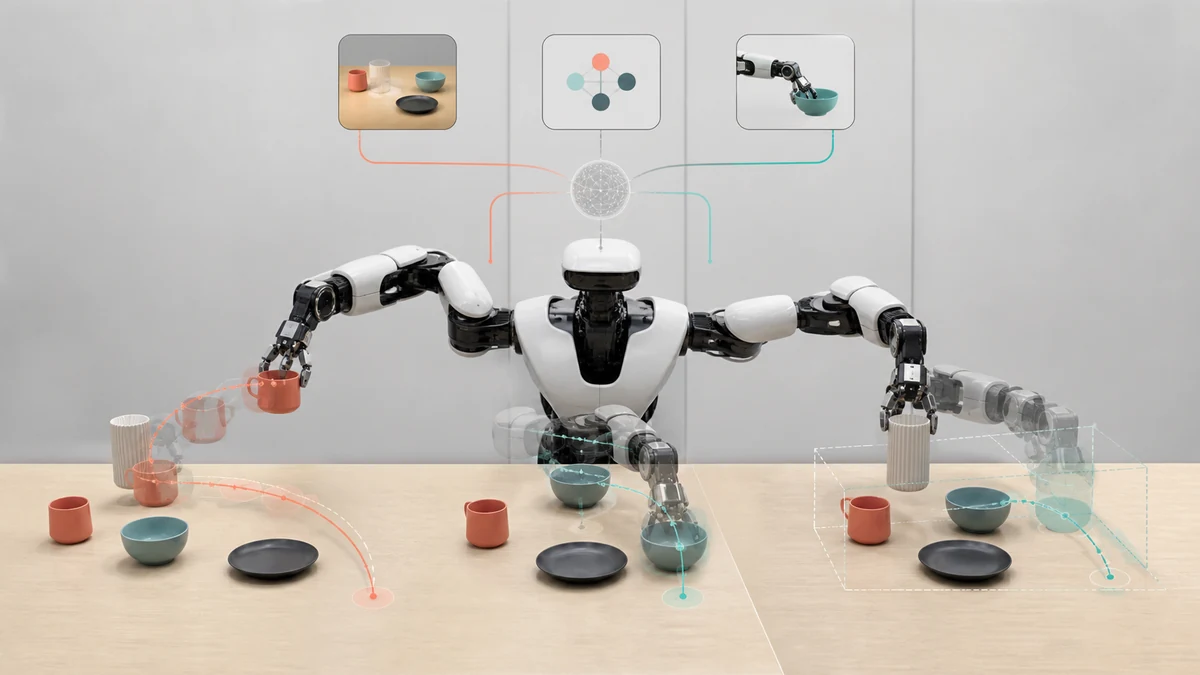
Physical Intelligence π0.7 Explained: A Steerable VLA for Unseen Robot Tasks

Published: August 7, 2026 by Physical AI Lab
Generic editorial robot concept illustrating Physical Intelligence π0.7 Explained: A Steerable VLA for Unseen Robot Tasks

π0.7 is called steerable because its prompt can specify not only the task but also how it should be performed, using language, episode metadata and subgoal images. Its reported generalization is broad research evidence, not a public commercial API or unrestricted autonomy claim.

Categories Physical AI Companies

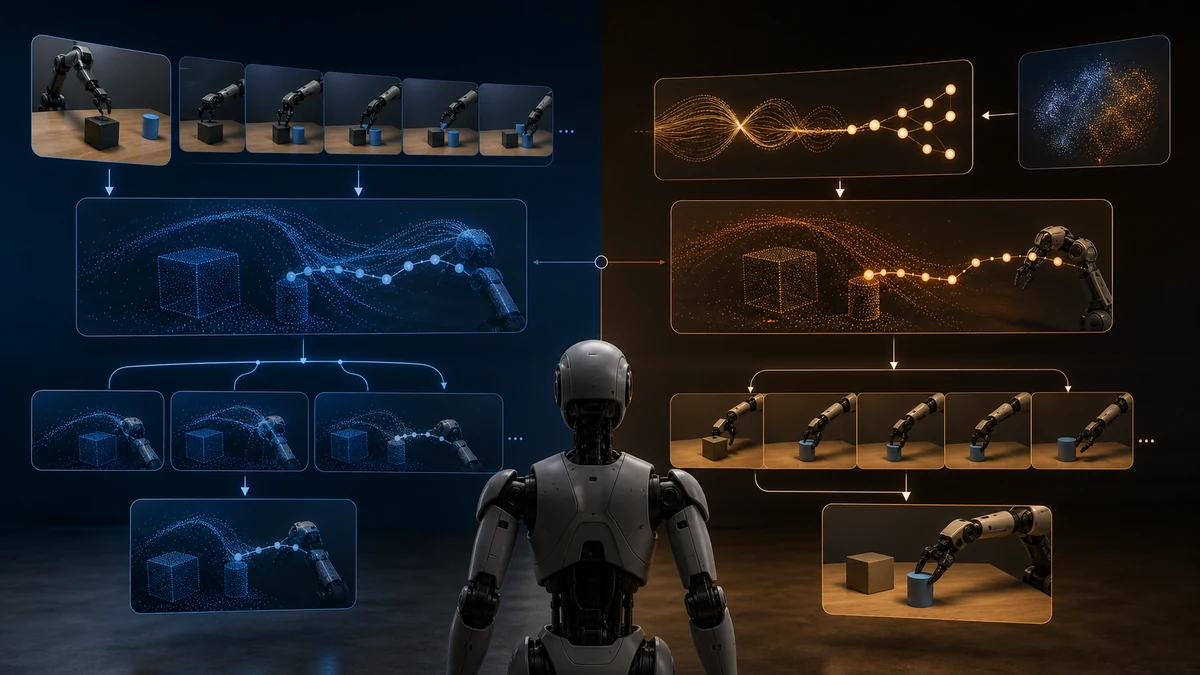
How the 1X World Model Controls NEO: From Video Prediction to Robot Actions

Published: August 7, 2026 by Physical AI Lab
Generic editorial robot concept illustrating How the 1X World Model Controls NEO: From Video Prediction to Robot Actions

1XWM first generates a short future video conditioned on NEO’s view and a text prompt. An inverse dynamics model then estimates the robot action trajectory between generated frames, but plausible video does not guarantee successful physical execution.

Categories Physical AI Companies

NVIDIA GR00T N2 vs N1.7: DreamZero Architecture and 2026 Availability

Published: August 7, 2026 by Physical AI Lab
Generic editorial robot concept illustrating NVIDIA GR00T N2 vs N1.7: DreamZero Architecture and 2026 Availability

GR00T N1.7 is available now with open weights and a documented development path. GR00T N2 is a next-generation preview based on DreamZero research, with availability targeted for the end of 2026 rather than a fixed release date.

Categories Physical AI Companies

NVIDIA Cosmos 3 Super vs Nano vs Edge: Choose by Workload and Availability

Published: August 7, 2026 by Physical AI Lab
Generic editorial robot concept illustrating NVIDIA Cosmos 3 Super vs Nano vs Edge: Choose by Workload and Availability

Super targets maximum datacenter quality, Nano efficient workstation inference, and Edge on-device reasoning including Jetson. Choose by output, latency budget, execution location and current access—not by model name alone.

Categories Physical AI Companies

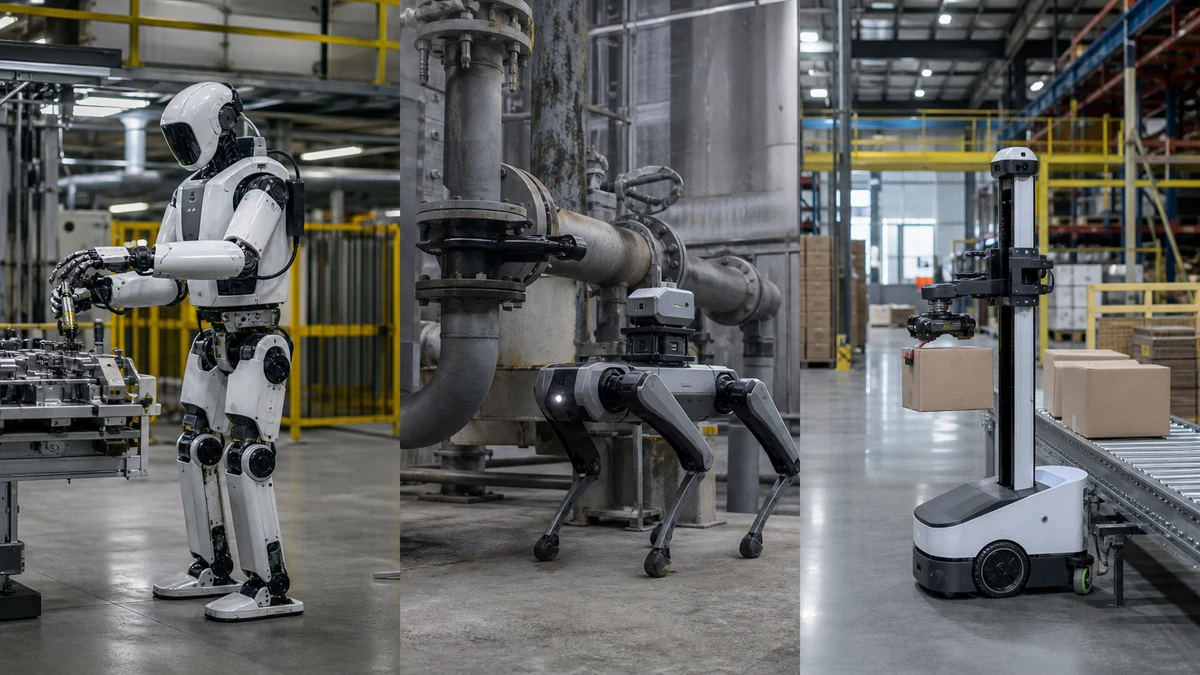
Boston Dynamics Atlas vs Spot vs Stretch: What Job Does Each Robot Do?

Published: August 7, 2026 by Physical AI Lab
Generic editorial robot concept illustrating Boston Dynamics Atlas vs Spot vs Stretch: What Job Does Each Robot Do?

Atlas targets human-scale industrial handling, Spot carries sensors through inspection routes, and Stretch unloads and picks cases in warehouses. They are not three interchangeable buying options.

Categories Physical AI Companies

Is NVIDIA Building a Humanoid Robot? The GR00T Reference Design Explained

Published: August 7, 2026 by Physical AI Lab
Generic editorial robot concept illustrating Is NVIDIA Building a Humanoid Robot? The GR00T Reference Design Explained

NVIDIA has not become a consumer-humanoid manufacturer. Its GR00T Reference Humanoid combines partner hardware with NVIDIA compute and an open development stack to create a reproducible research platform.

Categories Physical AI Companies

Reachy Mini Lite vs Wireless: Current Price, Assembly and Compute Differences

Published: August 7, 2026 · Updated: September 22, 2026 by Physical AI Lab
Generic editorial robot concept illustrating Reachy Mini Lite vs Wireless: Current Price, Assembly and Compute Differences

The current official purchase screen lists Lite at $299 and Wireless at $499. The practical choice is whether your robot can stay tethered to a host computer or needs onboard compute and wireless operation.

Categories Physical AI Companies
Older posts
Newer posts
← Previous Page1 … Page11 Page12 Page13 Page14 Next →

Explore Physical AI

  • Physical AI Fundamentals
  • Vision-Language-Action Models
  • Sim-to-Real Transfer
  • Robot Foundation Models
  • Humanoid Robots

View all English articles

About This Site

Physical AI Lab publishes independent, source-linked guides to embodied AI, robotics and real-world deployment.

Read the Korean edition · 日本語版を読む · 简体中文版 · 繁體中文版

© 2026 Physical AI Lab · English Edition · 한국어 · 日本語 · 简体中文 · 繁體中文