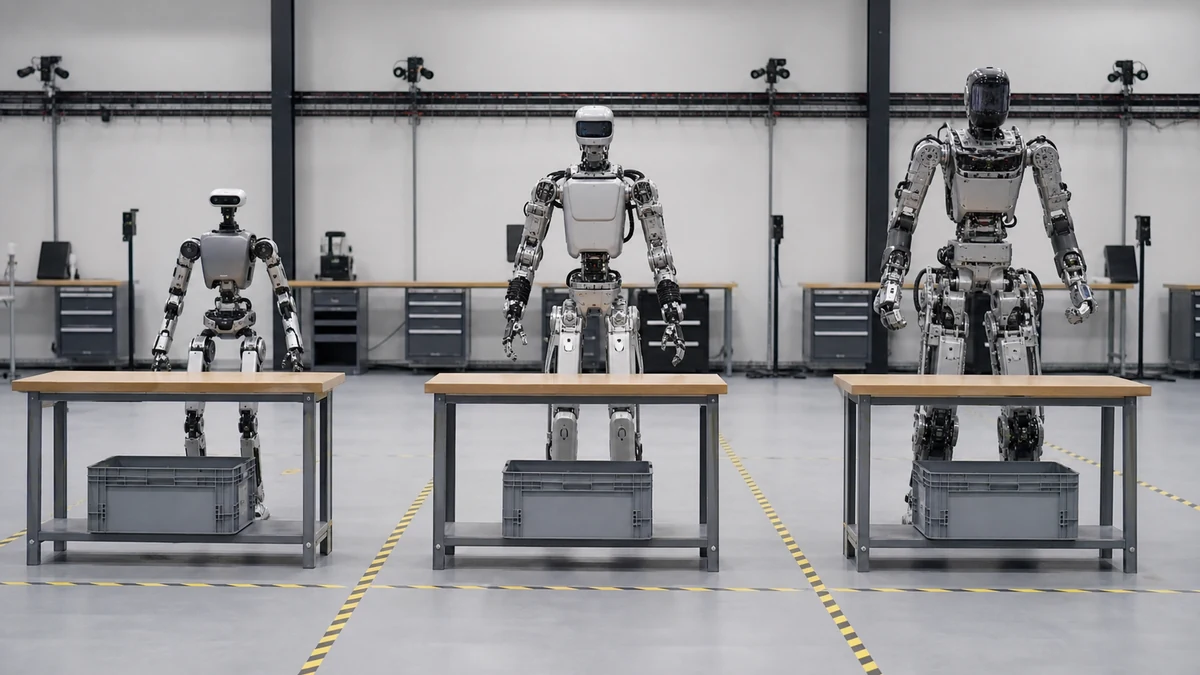
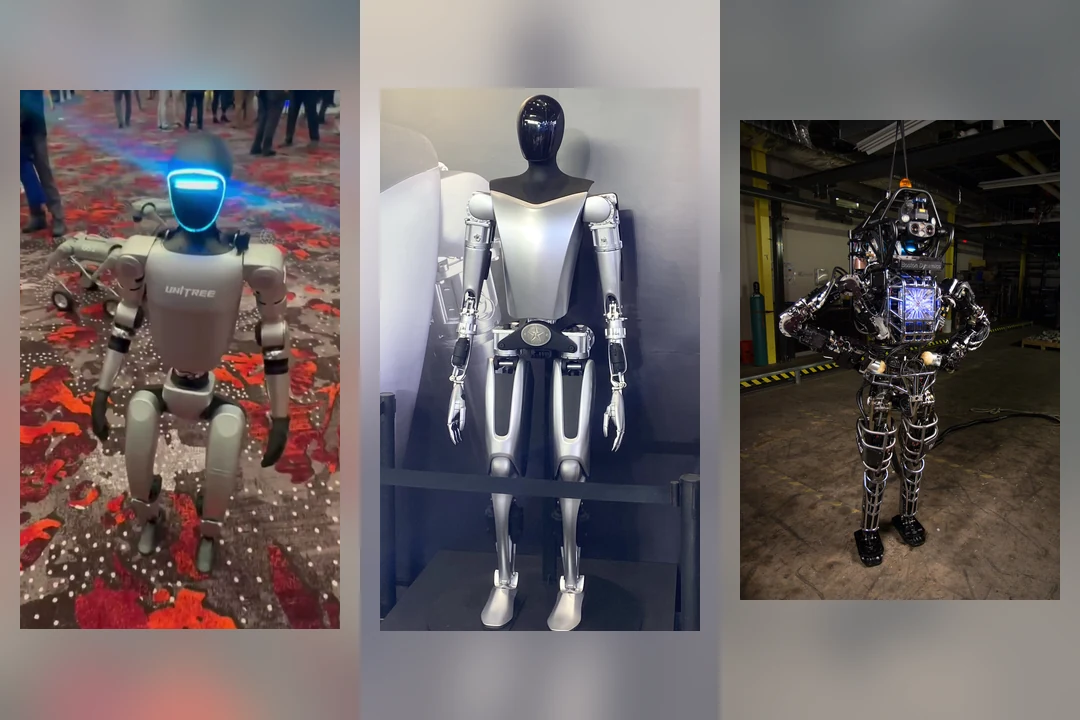
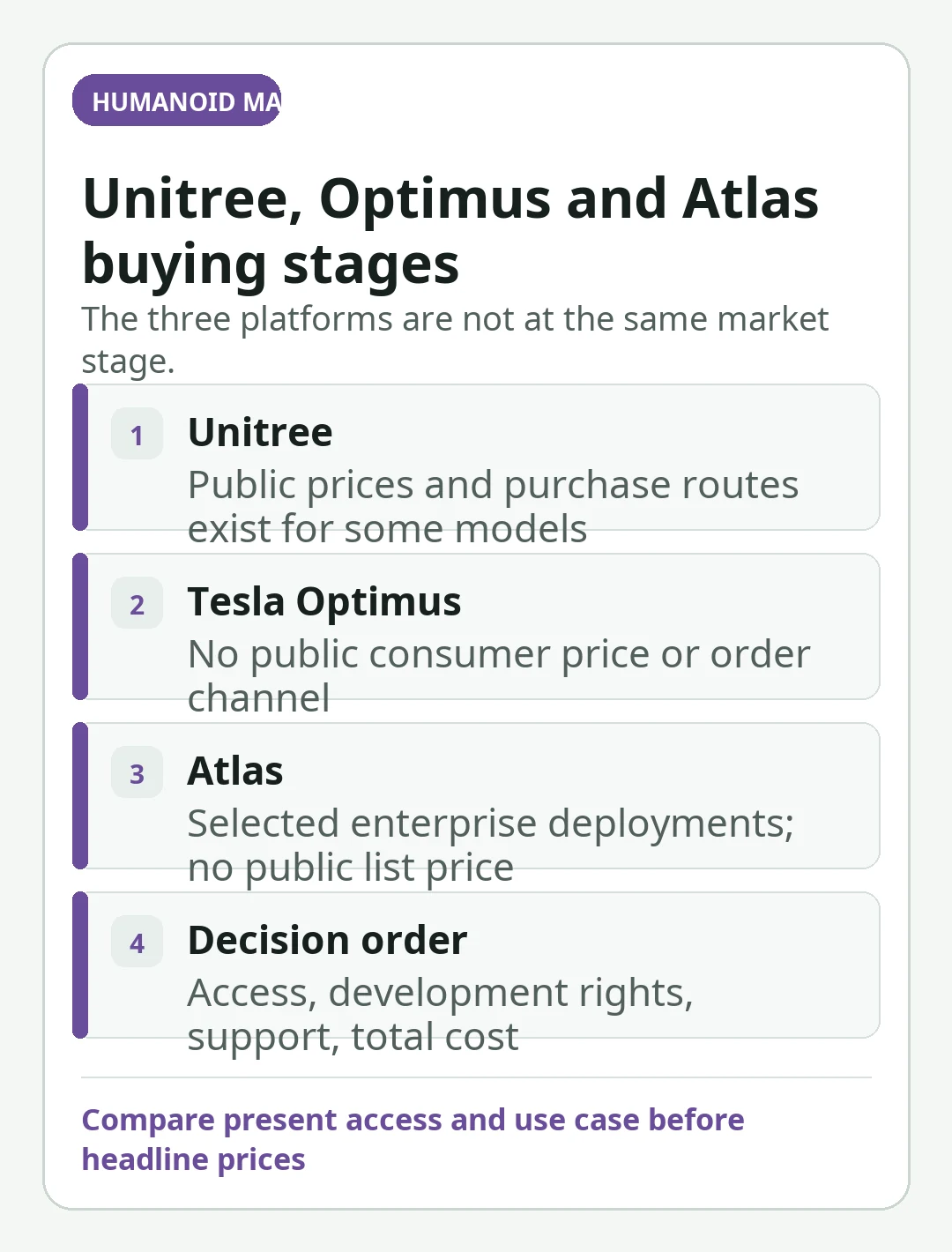
As of August 6, 2026, Unitree is the only one of these three vendors publishing list prices for several humanoids that a buyer can actively evaluate. Tesla has not opened Optimus orders or published a current product price. Boston Dynamics has moved Atlas into early enterprise deployment, but its 2026 allocation is committed and pricing remains private. Treating all three as retail products would give a false picture of what is available now.
Availability matters more than the most dramatic demo
The table separates a listed price, a sales conversation, a customer deployment and a production plan. Those are different milestones. Unitree prices exclude tax and shipping. “Not published” means the current official material does not provide the number; it does not mean the specification is zero or the capability is absent.
Unitree publishes model-level prices and specifications for the R1, G1 and H2. Tesla’s AI page states the goal for Optimus but offers neither a price nor an order process. The Atlas product page provides enterprise specifications and a contact route rather than a list price.
This article compares procurement and deployment stage rather than ranking sticker prices. For price types and total deployment cost across brands, use the humanoid robot price guide.
| Robot and model | Public price | Access today | Published specifications | Autonomy evidence and intended use |
|---|---|---|---|---|
| Unitree R1 AIR / R1 / R1 EDU | $4,900 / $5,900 / contact sales | A public price and sales/cooperation route exist. Regional stock and lead time still require confirmation. | 1.23 m tall; about 27 or 29 kg with battery; 20, 26 or 26–40 DoF; about 1 hour runtime | Unitree describes joint and sensor interfaces plus multimodal functions. Standard models emphasize motion and use; EDU is the development variant. No comparable task-success rate is published. |
| Unitree G1 / G1 EDU | $13,500 / contact sales | The base model has a list price; EDU is quote-based. Tax, shipping and local support are separate. | 1.32 m; about 35 kg; 23 or 23–43 DoF; about 2 hours; depth camera and 3D LiDAR | The page cites imitation and reinforcement learning and ongoing OTA updates. Secondary development is listed only for EDU, so researchers need the exact configuration. |
| Unitree H2 / H2 EDU | $29,900 / contact sales | The base model has a public price and EDU has a sales route. Confirm destination, options and delivery by quote. | 1.82 m; about 70 kg; 31 DoF; about 3 hours; arm payload about 7 kg rated and 15 kg peak | Unitree presents motion replication and multiple work scenarios. Secondary development is listed for EDU; field task metrics are not published. |
| Unitree H1 / H1-2 | H1 store display $90,000 with "contact for real price" / H1-2 not published | H1 has an official store display, but the real price is sales-led. Confirm H1-2 configuration, price and lead time separately. | H1: about 1.80 m, 47 kg and published speed of 3.3 m/s. H1-2: about 1.78 m, 70 kg and 27 DoF | Unitree describes autonomous walking and running over complex terrain for H1. That is not the same as a measured rate of completing general-purpose jobs unattended. |
| Tesla Optimus | Not published | No public consumer order page or open enterprise pilot application was found. | Tesla does not publish a consolidated current product sheet for dimensions, weight, runtime or payload. | The stated goal is an autonomous biped for unsafe, repetitive or boring work. Filings discuss preparations for large-scale production, not quantified customer deployment performance. |
| Boston Dynamics Atlas | Not published | Enterprise consultation and qualification. The 2026 allocation is committed; Boston Dynamics plans to add customers in 2027. | 1.9 m; 90 kg; 56 DoF; 4 hours; 30 kg sustained and 50 kg instantaneous capacity; IP67 | Boston Dynamics reports minimally supervised material handling, workflow integration and autonomous travel to swap batteries. Atlas is aimed at industrial operations. |
Unitree is a range of machines, not one price point
Within the R1, G1 and H2 families shown in the table, R1 AIR has the lowest displayed price, but that does not make it the best research purchase. Unitree's store separately lists the R1-D application platform from $4,290 through sales contact; its price and specifications should not be substituted for R1 AIR. The R1 and G1 stores explicitly exclude secondary development from their base products and route development buyers to EDU.
A useful shorthand is: R1 for a smaller, lighter platform; G1 for a mid-size platform with published depth-camera and 3D LiDAR hardware; and H2 for human scale and higher published arm loads. Specifications from the H1 and H1-2 page must not be carried over to H2. Put the exact model, base-versus-EDU trim, hand and compute option on the quotation.
The web price is only a starting point. Freight, duties and tax, spare batteries, guarding, operator training, maintenance and software terms can push the total deployment cost well above the chassis price.
Optimus and Atlas are unavailable for different reasons
Tesla describes Optimus as a general-purpose autonomous humanoid. Its Q2 2026 Form 10-Q says Tesla is preparing and investing for large-scale production. A factory buildout or production plan is not an order opening, a customer delivery or a price. Optimus belongs on a technology watchlist today, not a normal procurement shortlist.
Atlas is one stage further along. Boston Dynamics has published an enterprise adoption path and says it began production of the product version. Its January 2026 announcement says all 2026 deployments were committed to Hyundai’s Robotics Metaplant Application Center and Google DeepMind, with additional customers planned for 2027. That is an early, selected enterprise rollout rather than a retail launch.
Atlas’s navigation and battery-swap abilities are company-reported product capabilities. The vendors do not publish a shared test for interventions, task success or throughput in the same environment, so an overall ‘most autonomous’ ranking would not be defensible.


Choose the procurement path that matches the job
For a personal lab or a constrained research budget, start with R1, then ask whether the project requires the R1 EDU development access. G1 EDU is a more plausible starting point for sensor-rich research and longer runtime. H2 EDU is the closer fit when human scale and higher arm loads are essential.
An industrial team considering Atlas should define the job before contacting sales: part mass and geometry, pick pose, travel distance, floor and aisle conditions, safety zones, WMS or MES integration, and the acceptable rate of human intervention. Those details determine whether a pilot is meaningful.
A team tracking Optimus should replace price speculation with evidence gates. Wait for an official order path, a current model specification sheet, uncut repeated-task evidence, intervention rates, and support and warranty terms. Until then, there is no procurement package to compare.
| Check before committing | Why it changes the decision |
|---|---|
| Exact model, trim, hand and compute option | DoF and development access vary inside the same brand. |
| Landed quote including tax, shipping and duties | A dollar list price is not the total project cost. |
| Continuous task footage and intervention log | A short highlight cannot establish repeatable autonomy. |
| Guarding, emergency stop, training and insurance | A humanoid can transmit substantial force near people and equipment. |
| Parts, batteries, repair and software support | Being purchasable is different from being operable for years. |
The useful answer is stage, not a universal winner
For a team that wants hardware to test now, Unitree offers the clearest public procurement starting point. Atlas presents the most explicit industrial material-handling proposition, but its announced 2026 deployment allocation was fully committed and adoption is selective. Optimus may be moving toward production, yet there is no official basis for treating it as a product a customer can order today.
This comparison uses official material checked on August 6, 2026. It excludes converted local prices, unofficial reservations, reseller stock and social-media specification estimates. Any change to a price page, order route or customer deployment should trigger an update to the availability verdict.
Guides for the next buying or deployment decision
To investigate each platform after the market-stage comparison, continue with Unitree robot price and buying guide, Tesla Optimus price and release status, Boston Dynamics Atlas 2026 guide, and Physical AI company ecosystem. Together they add budget, claim-verification and present-access context.
Frequently asked questions
Which humanoid can an individual buy now?
Unitree publishes prices for R1, G1 and H2, so a buyer can begin a real purchasing inquiry. Country availability, stock, shipping, tax and support still need confirmation. Optimus has no public order route, while Atlas is aimed at selected enterprise deployments.
Is the lowest-priced R1 AIR automatically the best research robot?
No. Unitree’s specification table lists secondary development for R1 EDU, not the standard R1 variants. Confirm control access, sensor data, SDK support, hand options and onboard compute before choosing by price.
Does an official demo prove that the robot works autonomously?
Not by itself. A demo may omit editing, teleoperation, prior environment setup, failures and human interventions. Comparable evidence needs repeated trials, success rate, intervention rate and actual task time.
Official sources checked
- Unitree R1 official product page
- Unitree G1 official product page
- Unitree H1 and H1-2 official product page
- Unitree H2 official product page
- Tesla AI & Robotics
- Tesla Q2 2026 Form 10-Q
- Boston Dynamics Atlas official product page
- Boston Dynamics 2026 Atlas announcement
- Unitree official humanoid store collection
- Unitree R1-D official store page
Last checked: August 6, 2026