Robot Force and Torque Sensors: Placement, Calibration, Control and Validation
Learn robot force torque sensor placement, range, cross-talk, drift, overload, calibration, coordinate transforms, filtering and control validation.
English articles about robot data and hardware at Physical AI Lab.
Learn robot force torque sensor placement, range, cross-talk, drift, overload, calibration, coordinate transforms, filtering and control validation.
Choose robot encoders by absolute or incremental output, optical or magnetic sensing, accuracy, latency, dual feedback and validation.
Learn frameless robot motor integration, including rotor, stator, air gap, bearings, cooling, feedback, commutation and joint validation.
Compare robot reducer types by ratio, backlash, stiffness, efficiency, shock load, packaging, control behavior and lifetime validation.
Learn robot actuator structure from motor and transmission to encoders, torque sensing, drives, bearings, brakes, housing and thermal design.
Map the humanoid robot actuator industry across motors, reducers, encoders, bearings, drives, joint modules, testing and manufacturing scale.
Learn edge AI for robots, including onboard inference, latency, power, thermal limits, safety, updates and the right edge-cloud workload split.
Compare robot cameras, depth, lidar, IMUs, encoders, force-torque and tactile sensors for Physical AI, fusion, calibration and safety.
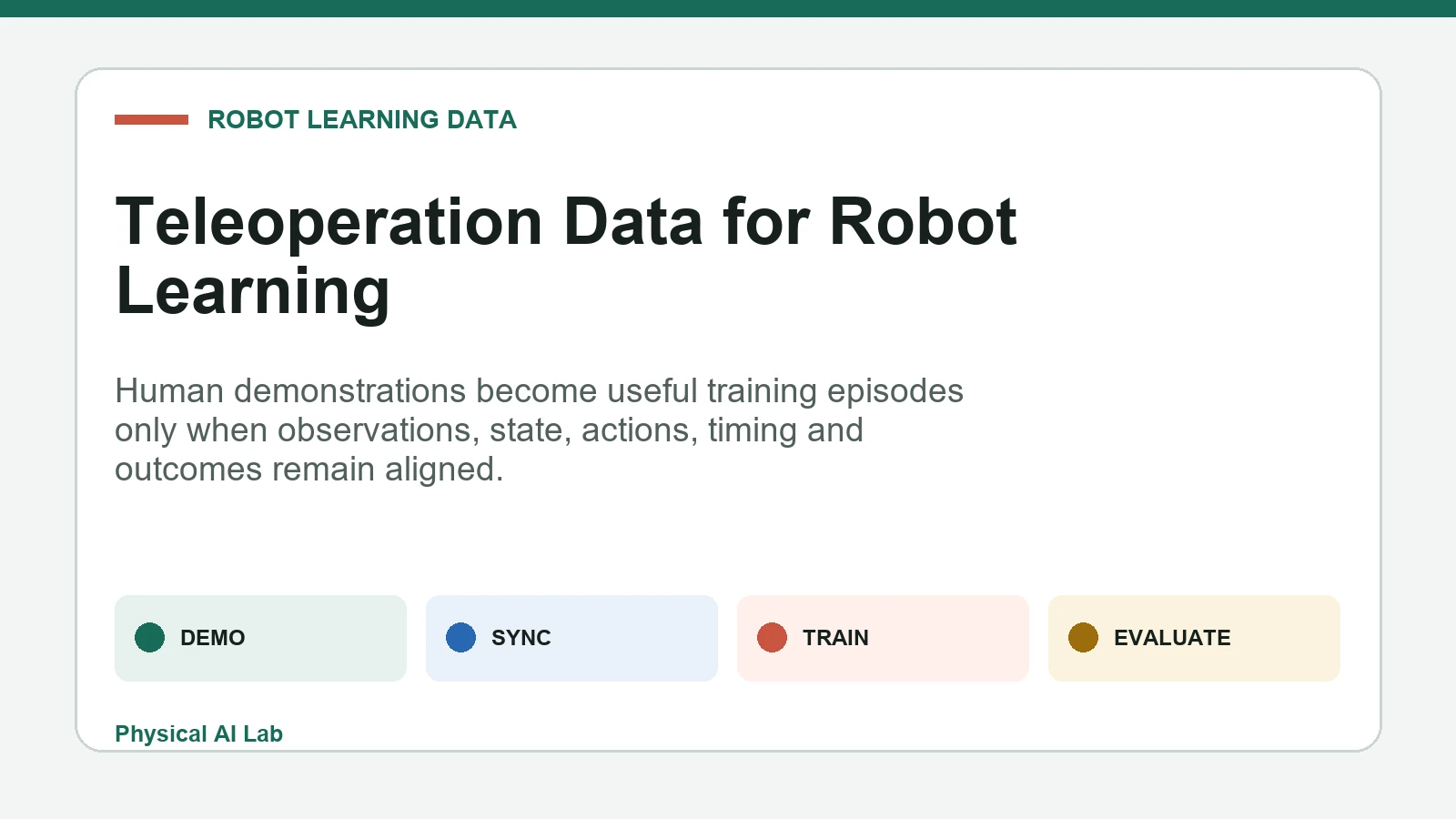
Learn how teleoperation data records human robot demonstrations, synchronizes observations and actions, supports policy training and captures recovery.
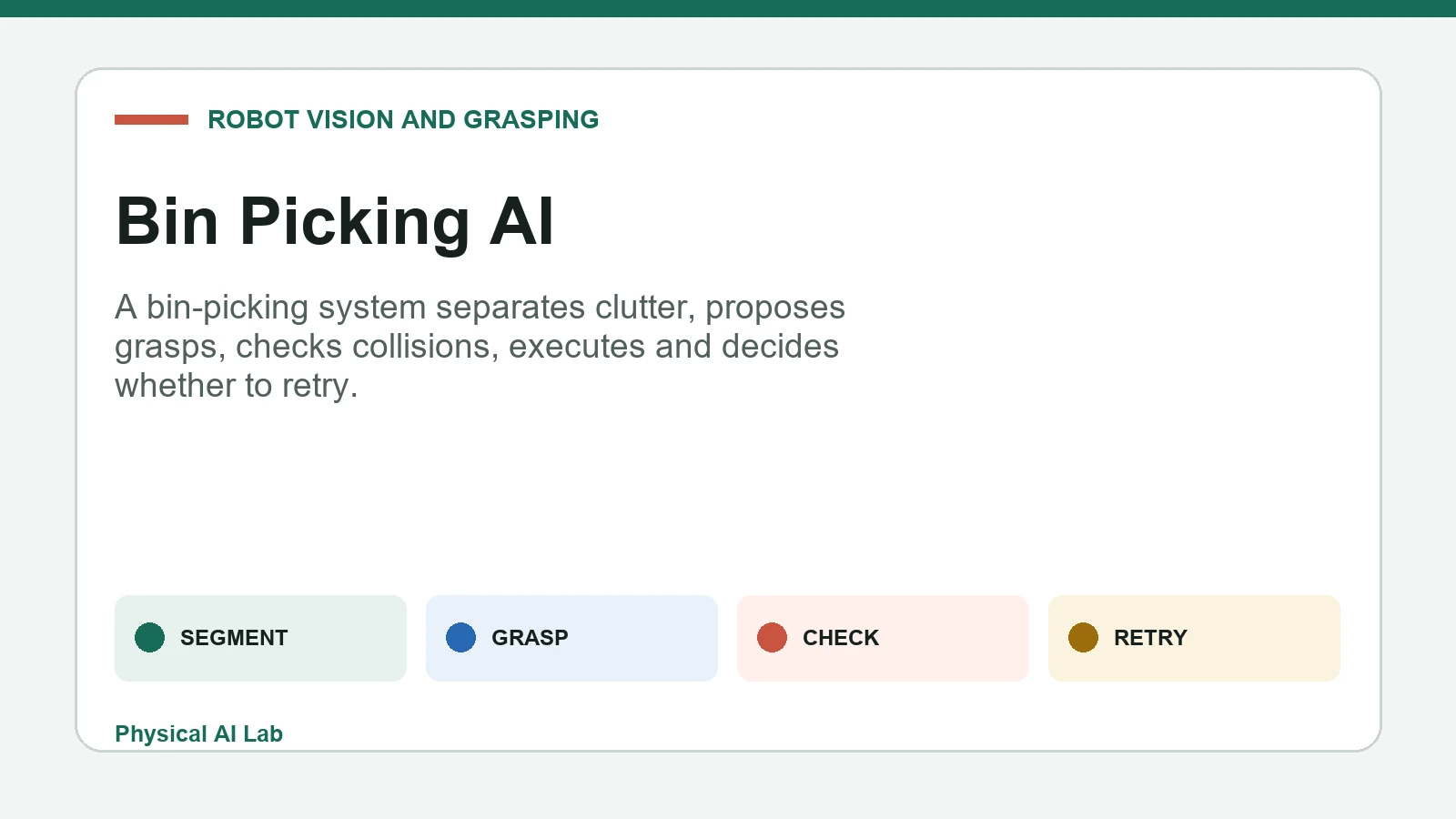
Learn how bin-picking AI handles clutter through sensing, object separation, grasp ranking, collision checking, verification and retry logic.