Robot Observability: Logs, Metrics and Distributed Traces
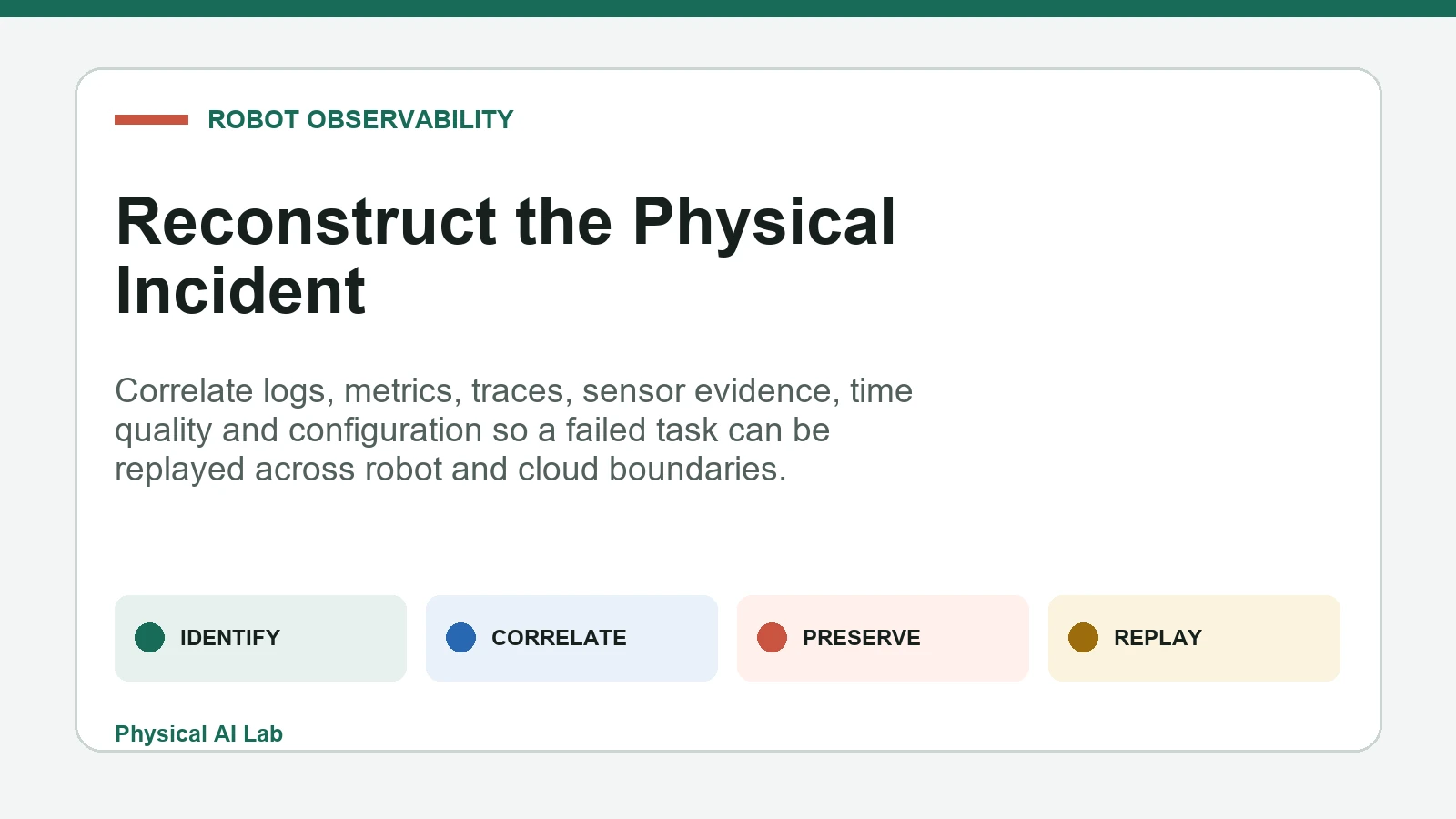
Build robot observability with correlated logs, metrics, traces, physical evidence, time quality, configuration lineage, retention budgets and incident replay.
English articles about robot data and hardware at Physical AI Lab.
Build robot observability with correlated logs, metrics, traces, physical evidence, time quality, configuration lineage, retention budgets and incident replay.
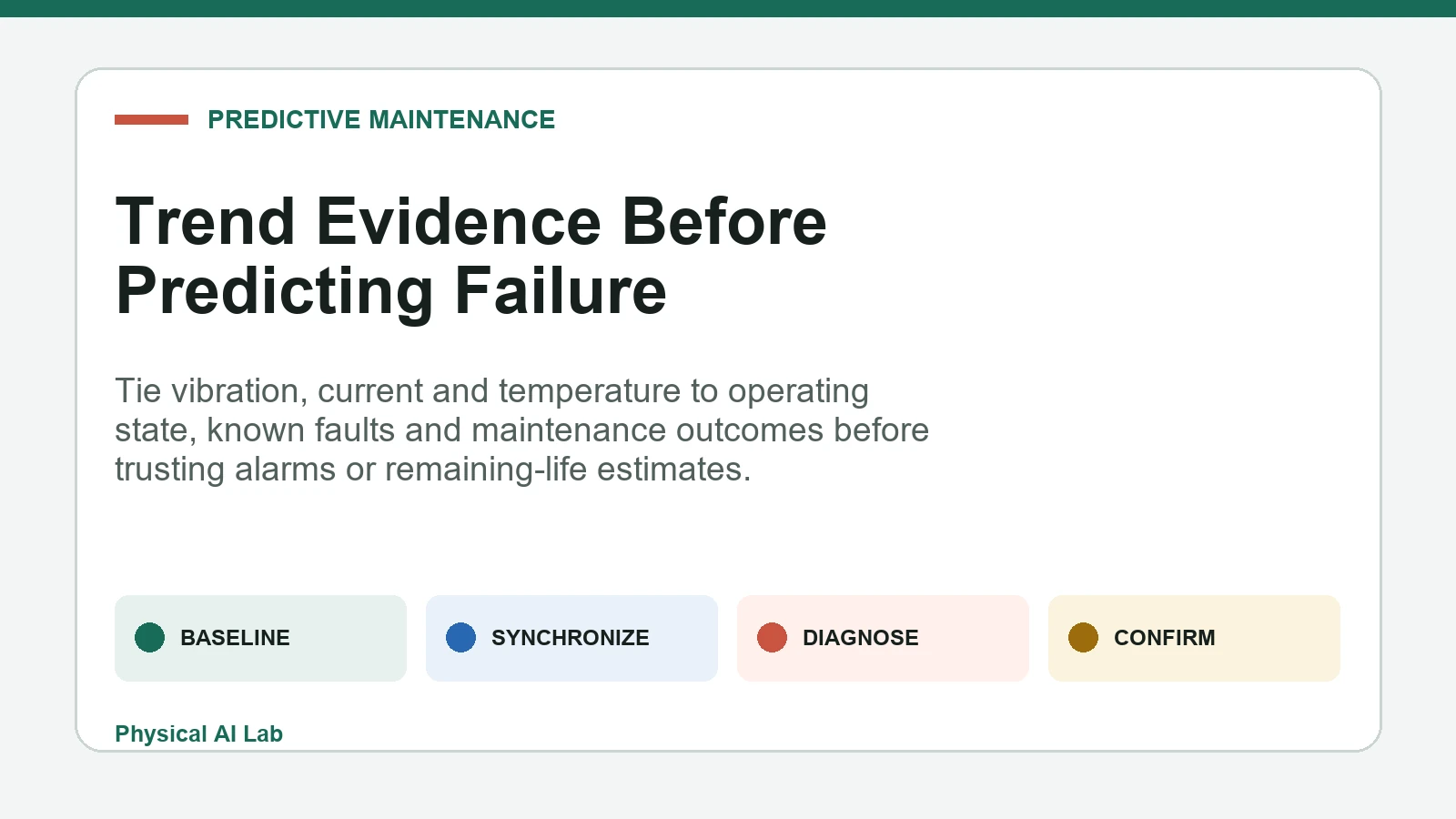
Build robot predictive maintenance with vibration, motor current and temperature baselines, context normalization, alert validation, prognosis and service feedback.
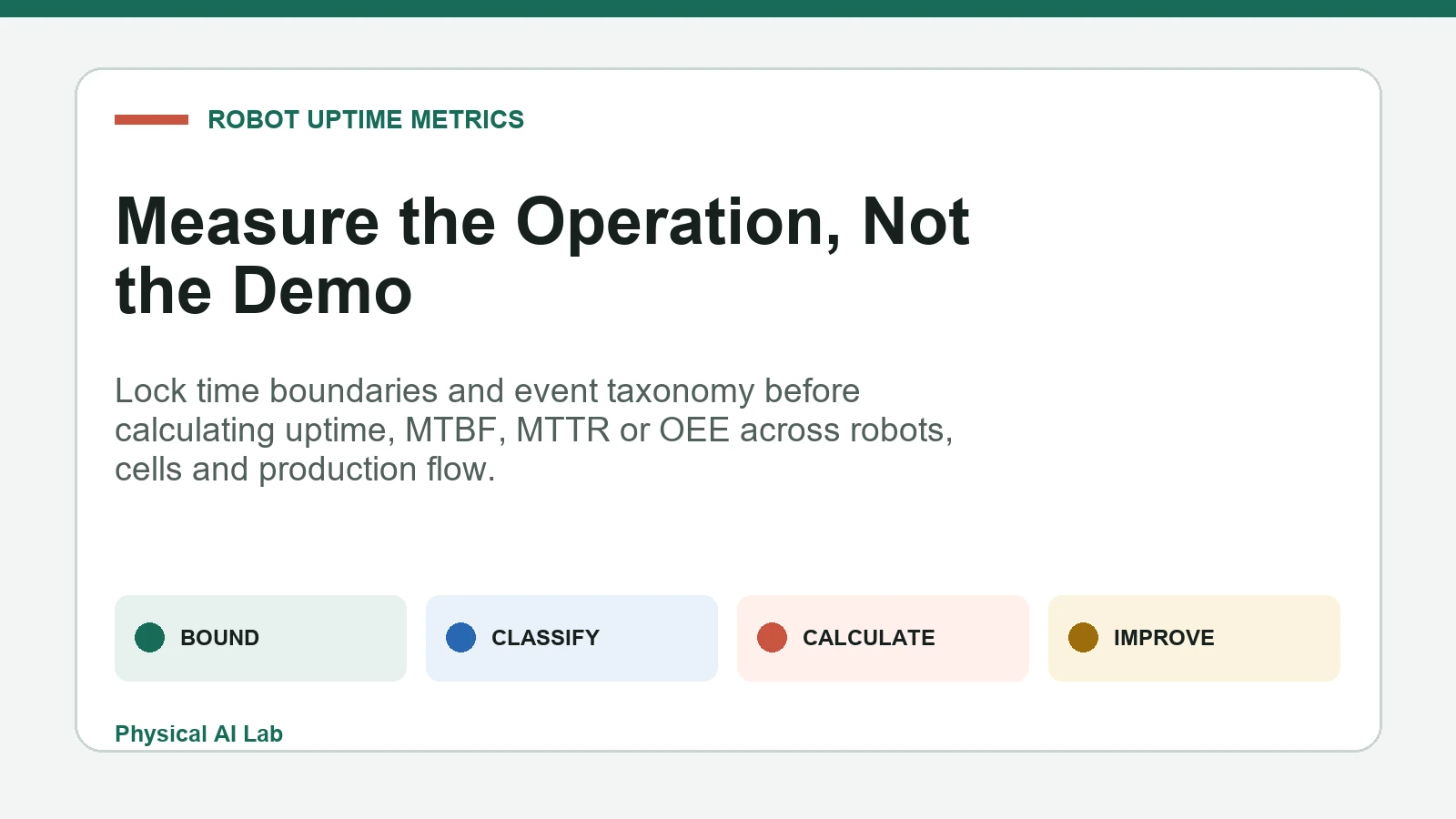
Calculate robot uptime, MTBF, MTTR and OEE with defined denominators, event states, repair intervals, production losses and auditable improvement evidence.
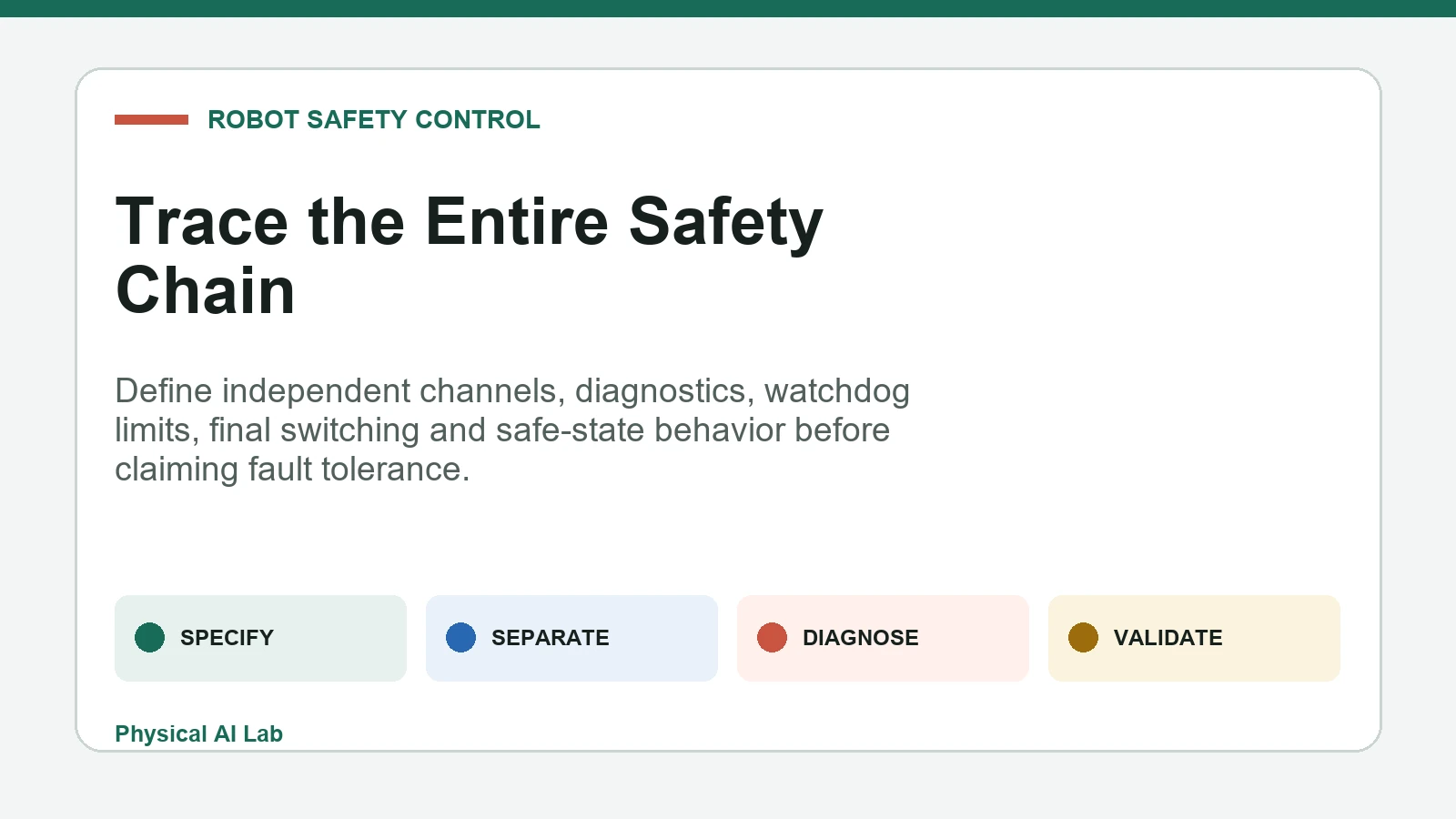
Design robot safety controls with dual channels, diagnostics, watchdog limits, safety PLC boundaries, output feedback, fault injection and validation evidence.
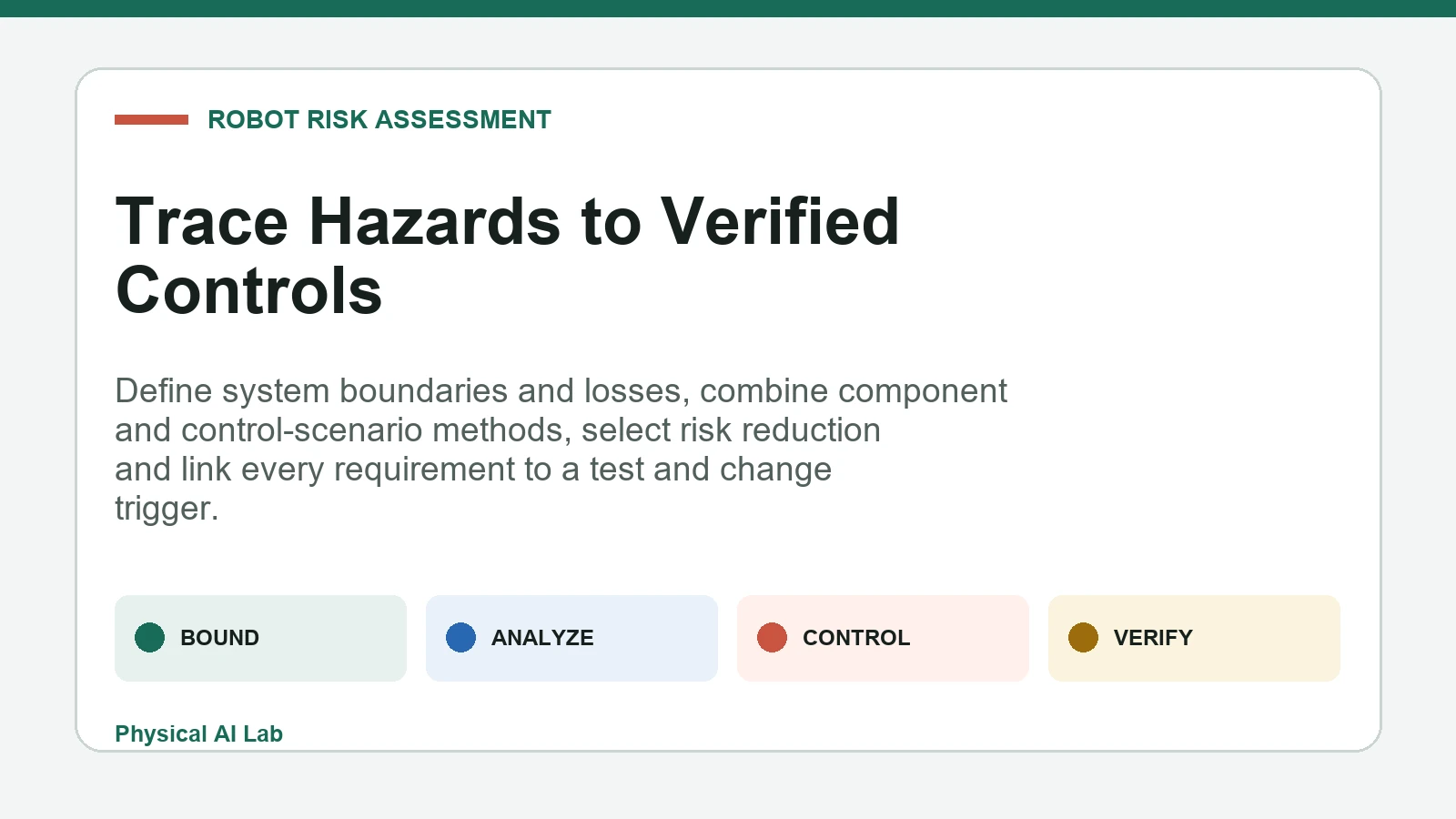
Use FMEA, HAZOP and STPA for robot risk assessment. Cover lifecycle hazards, failures, unsafe control, AI shift, risk reduction, verification and changes.
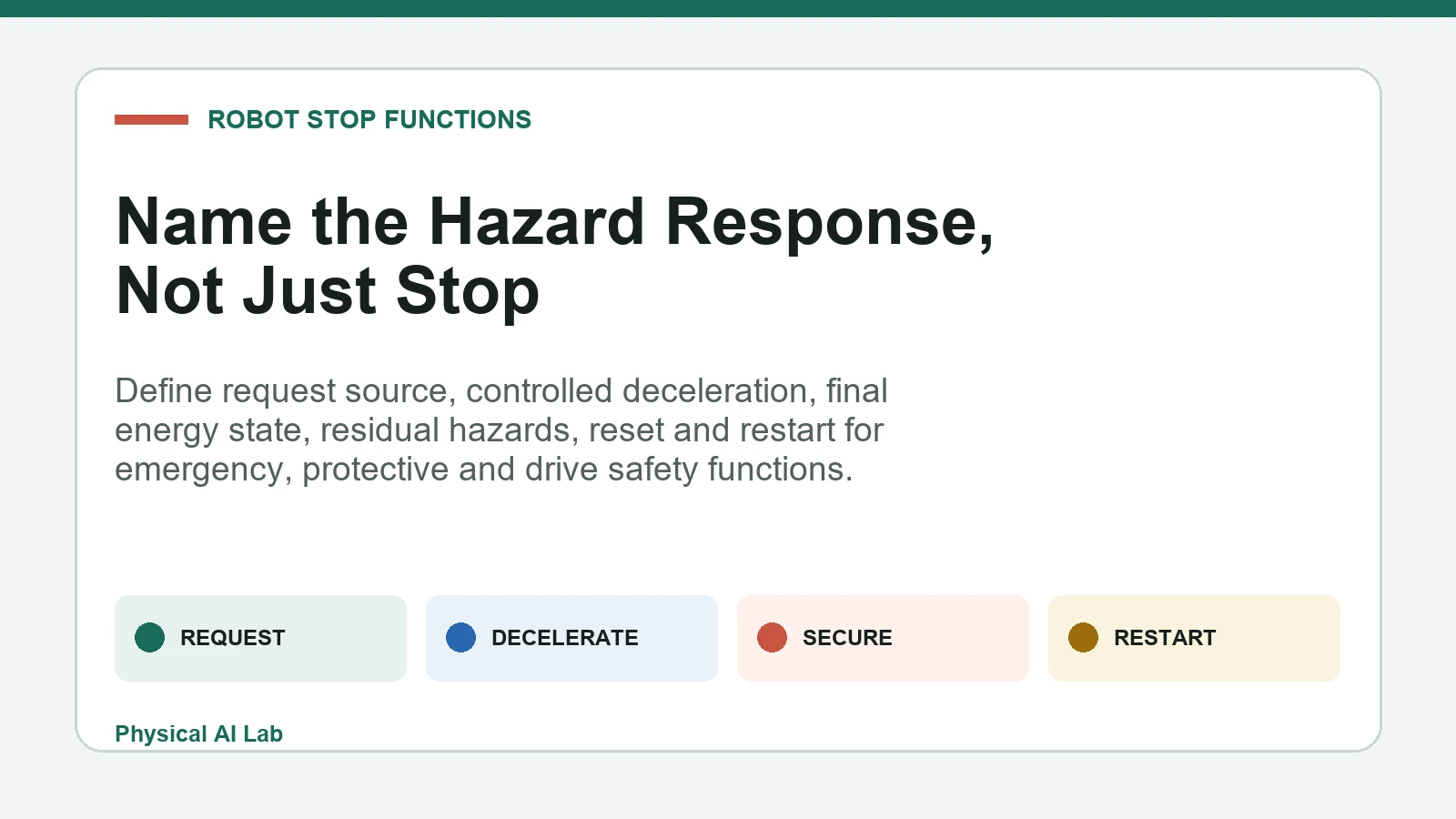
Compare robot emergency, protective and safe stops. Define purpose, stop sequence, energy state, adverse stopping tests, faults, reset, restart and isolation.
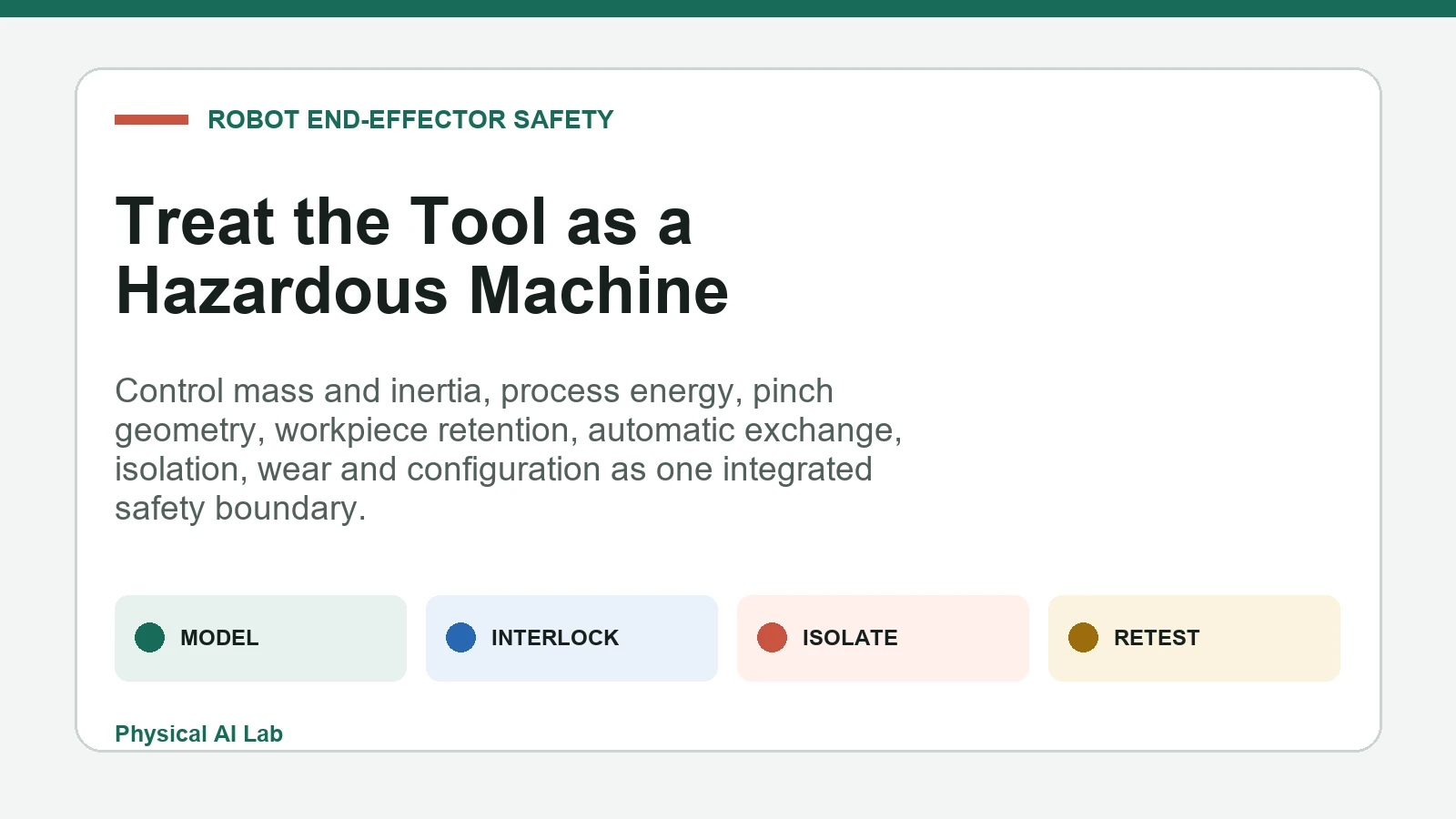
Assess robot end-effector safety for grippers, tools and changers. Cover dynamics, pinch points, energy, workpiece retention, interlocks, isolation and wear.
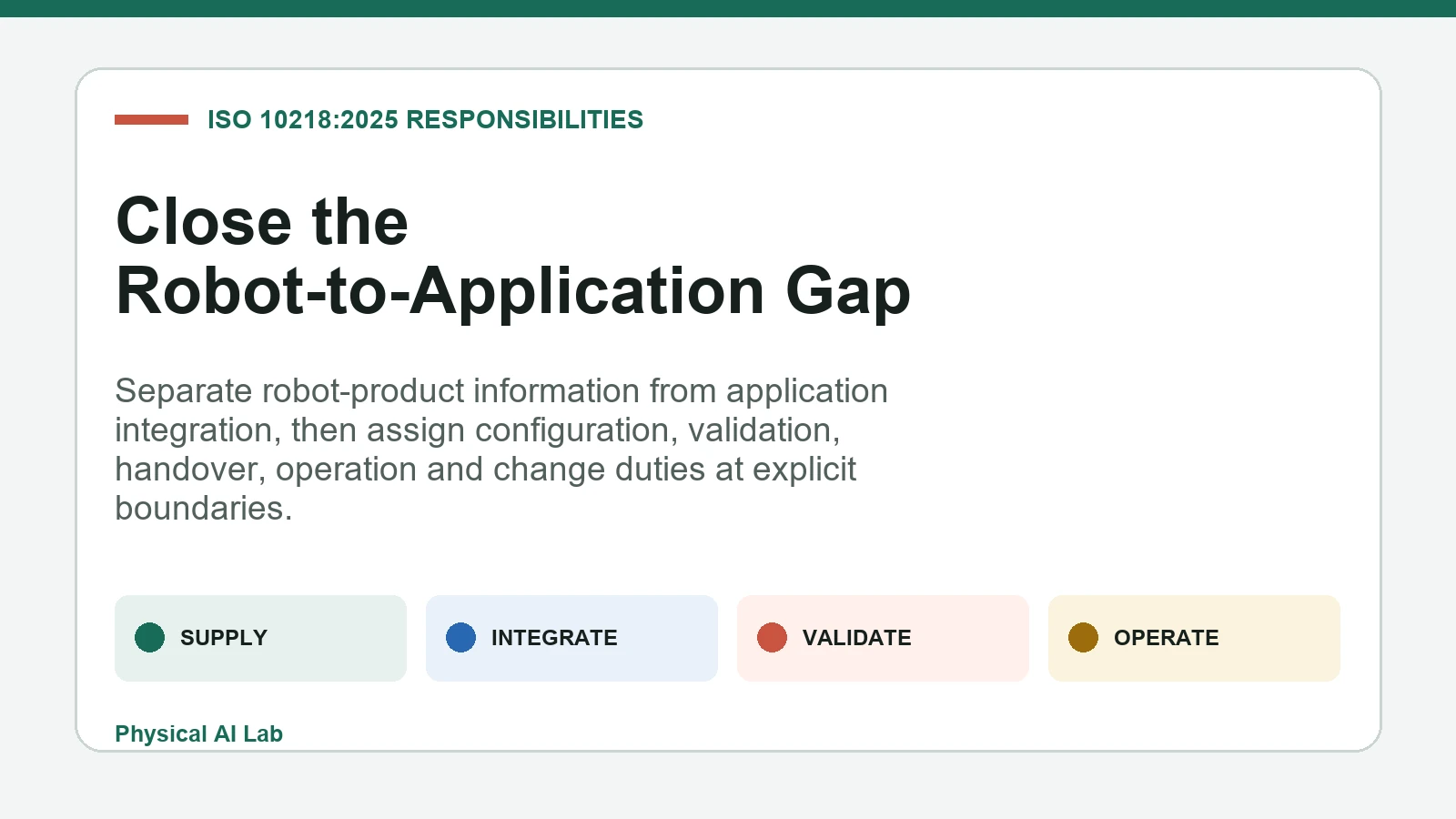
Understand ISO 10218:2025 robot manufacturer, integrator and user responsibilities for limits, application risk, safety validation, handover and changes.
Validate collaborative robot PFL contact with scenario matrices, force and pressure waveforms, effective mass, calibrated testing, risk reduction and retests.
Ground open-vocabulary robot commands to manipulable 3D instances. Validate text queries, boxes, masks, depth, tracking, grasp checks and ambiguity handling.